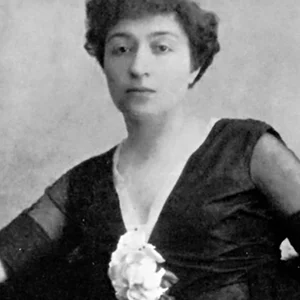

Nusch Éluard, born Maria Benz (1906-1946), was an artist, model, and muse of the Surrealist movement. The companion and later wife of the poet Paul Éluard, she inspired poets and painters, and herself created Surrealist collages. Her sudden death in 1946 plunged Éluard into profound despair.
Nusch
Nusch
5 min read
Frequently asked questions
Key Facts
- Born Maria Benz on 21 June 1906 in Mulhouse
- Met Paul Éluard in 1930, whom she married in 1934
- Model for Man Ray and Pablo Picasso, immortalized in numerous photographic and painted portraits
- Created Surrealist collages in the 1930s
- Died suddenly of a cerebral hemorrhage on 28 November 1946 in Paris, which devastated Éluard
Works & Achievements
Personal compositions assembling cut-out images in the surrealist vein, which reveal Nusch as a creator and not merely as a model.
Her body and face, photographed by Man Ray, give shape to this iconic book-object embodying the alliance between poetry and image.
Picasso made several painted and drawn portraits of Nusch, attesting to her place within the circle of artists.
She inspired numerous poems, notably *Les Yeux fertiles*, making her one of the great female figures of surrealist poetry.
Alongside Paul Éluard, she took part in clandestine life and in supporting the Resistance during the Occupation.
Anecdotes
Nusch was not born into the world of Parisian artists: under her real name, Maria Benz, she came into the world in Mulhouse in 1906, into a family of fairground performers. As a child, she travelled across Europe with a touring troupe, which gave her an early taste for performance and the stage.
Before becoming one of the figures of Surrealism, Nusch earned her living in Paris as a model and as the partner in a hypnosis act presented in popular theatres such as the Grand-Guignol. It was this quiet, graceful young woman whom Paul Éluard met in 1930.
Paul Éluard and Nusch married in 1934. The poet dedicated many poems to her, including the collection *Facile* (1935), illustrated with photographs by Man Ray in which she appears as the model: a book that became emblematic of the fusion between poetry and image.
Nusch was the model for some of the greatest artists of her time: Pablo Picasso painted her on several occasions and Man Ray photographed her. But she also created Surrealist collages herself, cutting out and assembling images to compose dreamlike worlds.
During the Occupation, Éluard and Nusch took part in the Resistance and lived in hiding. The sudden death of Nusch, carried off by a cerebral haemorrhage in November 1946, plunged Paul Éluard into a despair to which his poems of mourning bear witness.
Primary Sources
You rise the water unfolds / You lie down the water blooms. — Lines addressed to Nusch, the model for the book's images.
We shall not grow old together. / Here is the day / Too many: time overflows.
A collection in which Éluard celebrates Nusch's face and presence, accompanied by a portrait by Picasso.
Key Places
Town in Alsace where Maria Benz, known as Nusch, was born in 1906 into a family of travelling fairground performers.
Capital where Nusch worked as a model and artist, met Éluard and lived at the heart of the Surrealist scene; she died there in 1946.
Parisian theatre in the Pigalle district where Nusch took part in stage acts at the start of her career.
Village in the south of France where the Éluards stayed with Picasso, Dora Maar and their friends during the summers before the war.
Typical Objects

A work composed by cutting out and assembling pre-existing images to create unexpected associations. Nusch made some herself, in the spirit of the movement.

A tool of Man Ray, who photographed Nusch for the collection “Facile.” Photography was a central medium of Surrealism.

A book blending poetry and images, like “Facile,” where Éluard's verses converse with Nusch's photographs.

The collagist's basic materials: scissors, glue, and images from magazines or engravings, assembled to compose dreamlike scenes.

An outfit worn during the stage and hypnosis acts that Nusch took part in early on in the Parisian theaters.
School Curriculum
Vocabulary & Tags
Key Vocabulary
Daily Life
Morning
In the Paris of the interwar years, Nusch often started her days late, in keeping with the bohemian rhythm of artists. The morning might be spent posing for a painter or photographer, or working on her own collages.
Afternoon
Afternoons were spent visiting studios, strolling about, and meeting with the Surrealist circle — Picasso, Man Ray, Dora Maar, Breton. There they discussed art, poetry, and politics over a coffee.
Evening
Evenings brought the group together in the cafés of Montparnasse or Saint-Germain, places of intellectual ferment where friendships, debates, and plans for exhibitions or books took shape.
Food
Their diet followed the modest French cooking of the time; during the Occupation, restrictions and ration coupons made food scarce and daily life difficult.
Clothing
Nusch dressed with a simple, modern elegance, in the fashion of the 1930s; her slender figure and delicate face inspired photographers and painters.
Housing
The Éluard couple lived in Parisian apartments surrounded by artworks given to them by their painter friends, in the heart of the neighborhoods frequented by the avant-garde.
Historical Timeline
Period Vocabulary
Liens externes & ressources
Références
Œuvres
Collages surréalistes
années 1930-1940
Modèle de « Facile » (photographies de Man Ray)
1935
Portraits par Pablo Picasso
1936-1937
Muse des poèmes de Paul Éluard
1934-1946
Engagement dans la Résistance
1940-1944