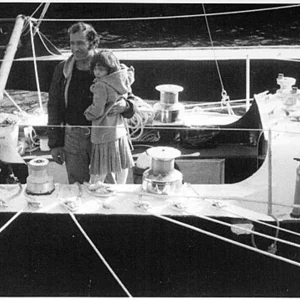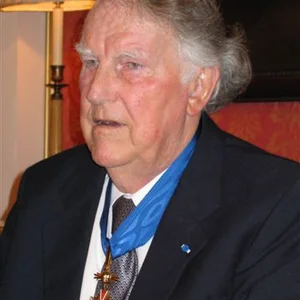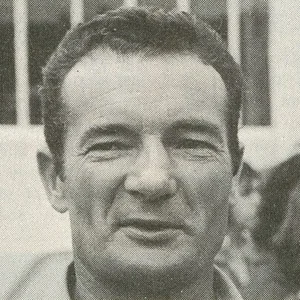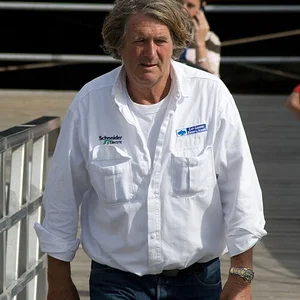

French sailor born in 1944, a crew member for Éric Tabarly before becoming the skipper of large multihulls. The holder of the crewed round-the-world sailing record, he won the Jules Verne Trophy and became a media figure known for his outspokenness.
Olivier de Kersauson(1944 — ?)
Olivier de Kersauson
France
6 min read
Frequently asked questions
Key Facts
- Born on 20 July 1944 in Bonnétable, in the Sarthe department.
- A crew member for Éric Tabarly from the late 1960s, notably aboard the Pen Duick yachts.
- Won the Jules Verne Trophy in 1997 aboard Sport-Elec (a round-the-world voyage in roughly 71 days).
- Set a new crewed round-the-world record in 2004 with the maxi-trimaran Geronimo.
- Died on 2 March 2025, after a career as a sailor coupled with fame as a radio and television commentator.
Works & Achievements
Kersauson learned his trade alongside the greatest French sailor and became his right-hand man aboard the Pen Duick yachts.
Crewed circumnavigation of the world under sail in 71 days and 14 hours, the world record at the time.
A new crewed round-the-world record in just over 63 days, reclaiming the trophy from Bruno Peyron.
Aboard this giant trimaran, Kersauson also set several crewed records for ocean crossings.
A commentator famous for his blunt, outspoken style, notably on the radio show “Le Tribunal des flagrants délires,” he made the sea and sailing popular with the general public.
A collection of reflections in which Kersauson shares his vision of the sea, of freedom, and of society.
Anecdotes
In his early twenties, Olivier de Kersauson signed on as a crew member for Éric Tabarly, the greatest French sailor of his day. For nearly ten years, he learned everything about offshore racing aboard the Pen Duick yachts and became the master's right-hand man. All his life he would repeat that Tabarly had taught him the sea and the pursuit of excellence.
Kersauson named his enormous trimaran “Géronimo,” after the famous Apache chief. This multihull, over 30 meters long and one of the largest racing yachts of its time, allowed him to set records around the globe. The name cracked like a war cry hurled at the oceans.
In 2004, aboard Géronimo, Kersauson completed a crewed round-the-world sailing voyage in just over 63 days and claimed the Jules Verne Trophy. He beat the record held by his rival Bruno Peyron by a little more than a day, after more than two months at sea. A few minutes shaved off each day had been enough to make the difference.
Known for his blunt tongue and deep voice, Kersauson became a star of radio and television. On the show “Le Tribunal des flagrants délires” on France Inter, his cutting humor made all of France laugh. People tuned in as much for his quips as for his exploits at sea.
Weary of the Parisian bustle, Kersauson settled in Tahiti, in French Polynesia, as close as he could get to the Pacific Ocean. There he led a life far from the spotlight, faithful to his love of the sea and wide open spaces.
Primary Sources
Olivier de Kersauson and the crew of the trimaran Sport-Elec complete a crewed sailing circumnavigation of the globe in 71 days, 14 hours and 22 minutes, a new world record.
Aboard the maxi-trimaran Géronimo, Olivier de Kersauson reclaims the Jules Verne Trophy by improving the crewed round-the-world record, in just over 63 days.
In this book, the navigator shares his vision of the sea, of freedom and of mankind, with the outspokenness that made his reputation.
Key Places
Village on the Gulf of Morbihan where Olivier de Kersauson was born in 1944, in a region deeply turned toward the sea.
Iconic Breton offshore-racing port where the Pen Duick yachts were moored; Kersauson learned the ropes there alongside Éric Tabarly.
Breton island crossed by the start and finish line of the Jules Verne Trophy, between the Créac'h lighthouse and Lizard Point in England.
Southern tip of the Americas, a passage dreaded by sailors; rounding it is a key stage of Kersauson's round-the-world voyages.
Pacific island where Kersauson chose to live, far from the media frenzy and as close as possible to the ocean.
Typical Objects

The huge trimarans like Sport-Elec and Géronimo were Kersauson's machines: three hulls to race across the oceans at very high speed.

An award given to the crew holding the round-the-world sailing record; Kersauson won it in 1997 and again in 2004.

Waterproof clothing, often yellow or red, that protects the sailor from spray and waves breaking over the deck in the cold seas of the Deep South.

Before GPS, the sextant was used to fix one's position by measuring the height of the sun or a star; Kersauson learned this celestial navigation from Tabarly.

The tiller steers the boat by acting on the rudder; holding it for hours on end, in all weather, is part of the skipper's daily routine.

When sailing solo, the autopilot holds the course while the sailor sleeps, eats or repairs the boat.
School Curriculum
Vocabulary & Tags
Key Vocabulary
Daily Life
Morning
During a race, the day is structured around the watch system: crew members take turns day and night at the helm and trimming the sails. Upon waking, the skipper checks the weather forecast, verifies the heading and the condition of the boat, then gulps down a freeze-dried breakfast rehydrated with hot water.
Afternoon
The afternoon is devoted to maneuvers: changing sails, gybing, monitoring the hulls, and repairing whatever breaks. On a trimaran flying along at full speed, the slightest lapse can cost you the record.
Evening
In the evening, the cold and fatigue set in, especially in the seas of the Deep South. The night watches follow one another in the darkness, listening to the sounds of the hull and the wind in the rigging.
Food
On board, you mostly eat freeze-dried (dehydrated) meals rehydrated with hot water, energy bars, and dried fruit. Fresh water is precious, often produced by a desalinator. Everything is designed for weight and energy, not for pleasure.
Clothing
The sailor wears thermal layers under waterproof oilskins, along with boots and gloves. In heavy weather, the safety harness stays clipped on at all times to avoid falling overboard.
Housing
You live in a narrow, noisy hull cluttered with ropes and electronics. You sleep in stretches of just a few hours on tilted bunks, amid the din and the constant motion of the boat.
Historical Timeline
Period Vocabulary
Liens externes & ressources
Références
Œuvres
Équipier d'Éric Tabarly sur les Pen Duick
années 1960-1970
Trophée Jules Verne sur Sport-Elec
1997
Trophée Jules Verne sur Géronimo
2004
Géronimo, maxi-trimaran de records
2001-2005
Carrière médiatique (radio et télévision)
années 1980-2010
« Le Monde comme il me parle » (livre)
2003