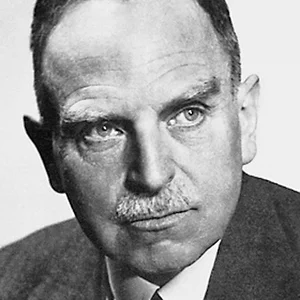

German chemist (1879–1968), awarded the Nobel Prize in Chemistry in 1944. He discovered nuclear fission of uranium in 1938 with Fritz Strassmann, paving the way for atomic energy.
Otto Hahn(1879 — 1968)
Otto Hahn
Troisième Reich, république de Weimar, Empire allemand, Allemagne de l'Ouest
8 min read
Frequently asked questions
Famous Quotes
« Science knows no borders, but scientists have responsibilities toward humanity.»
Key Facts
- 1879: Born in Frankfurt am Main
- 1938: Discovery of nuclear fission of uranium with Fritz Strassmann
- 1944: Nobel Prize in Chemistry for the discovery of fission
- 1957: Signatory of the Göttingen Manifesto against nuclear armament of Germany
- 1968: Died in Göttingen
Works & Achievements
Hahn isolated these two new radioactive isotopes during his stays in London and Montreal. These discoveries immediately placed him among the leading nuclear chemists of his generation.
Hahn and Meitner isolated protactinium, element number 91, after years of patient research in Berlin. This discovery confirmed the strength of their scientific collaboration spanning more than two decades.
By bombarding uranium with neutrons, Hahn and Strassmann produced barium — proof that the uranium nucleus was splitting into two parts. This discovery, whose theoretical explanation was provided by Meitner and Frisch, gave rise to atomic energy and the A-bomb.
Official publication of the discovery of nuclear fission, co-signed with Fritz Strassmann. This paper is one of the most cited in the history of twentieth-century physics.
A public manifesto signed by Hahn and seventeen German physicists refusing any participation in the manufacture or use of nuclear weapons in Germany. A founding document of the international movement of scientists against atomic proliferation.
An autobiographical work published in the year of his death, in which Hahn retraces his scientific career and revisits the ethical dilemmas posed by the discovery of fission and its military applications.
Anecdotes
In December 1938, Otto Hahn and Fritz Strassmann were working in their Berlin laboratories over the Christmas holidays. They obtained a completely unexpected result: by bombarding uranium with neutrons, they produced barium, a far lighter element. Hahn immediately wrote to his former collaborator Lise Meitner, who had taken refuge in Sweden, as he did not yet understand this revolutionary phenomenon.
Lise Meitner, an Austrian Jewish physicist who had worked with Hahn for thirty years, was forced to flee Nazi Germany in 1938. It was she who, together with her nephew Otto Robert Frisch, provided the theoretical explanation of nuclear fission. Yet when the 1944 Nobel Prize in Chemistry was awarded, only Otto Hahn was recognized — a historical injustice widely acknowledged by the scientific community.
In August 1945, Otto Hahn and around ten German scientists were interned by the Allies at Farm Hall manor in England. When the radio announced the atomic bombing of Hiroshima, Hahn was devastated: convinced that he had indirectly caused the deaths of hundreds of thousands of people, he sank into profound despair. His colleagues had to watch over him throughout the night to prevent him from taking his own life.
In 1957, Hahn organized and signed the "Göttingen Declaration
co-signed by eighteen prominent German physicists. Made public in April 1957, the document categorically refused to allow Germany to be equipped with nuclear weapons. It stands as one of the first major manifestos by scientists against nuclear proliferation, and it directly contributed to West Germany officially renouncing nuclear arms.
Otto Hahn began his career working in London under Sir William Ramsay, then in Montreal with Ernest Rutherford. It was there that he discovered new radioactive elements such as radiothorium and mesothorium, earning an international reputation as early as 1905–1906, well before the discovery that would make him famous around the world.
Primary Sources
“Our results are so extraordinary that we dare not publish them ourselves. [...] It is possible that uranium does indeed split into barium and krypton.”
“By bombarding uranium with slow neutrons, we obtain barium isotopes, which leads us to conclude that the uranium nucleus splits into two nuclei of comparable masses.”
“The discovery of the fission of heavy uranium opens up considerable technical possibilities, for which humanity will have to assume responsibility with the greatest wisdom.”
“We refuse to participate in any way whatsoever in the production, testing, or use of atomic weapons.”
“When I learned that Hiroshima had been destroyed by a uranium bomb, I was deeply shaken. I felt partly responsible for the deaths of those hundreds of thousands of innocent people.”
Key Places
Birthplace of Otto Hahn, born on 8 March 1879 into a prosperous middle-class family. It was here that he completed his secondary education before leaving to study chemistry in Marburg.
Hahn's principal workplace for over thirty years. It was in these laboratories that he conducted, together with Fritz Strassmann, the uranium bombardment experiments that led to the discovery of nuclear fission in December 1938.
Hahn worked here in 1904–1905 under Nobel laureate Sir William Ramsay, discovering radiothorium. This stay in London marked the beginning of his international research career in radioactivity.
From 1905 to 1906, Hahn worked alongside Ernest Rutherford in Montreal, isolating several new radioactive isotopes. This collaboration shaped his expertise in nuclear chemistry.
The country house where Hahn and nine other German nuclear scientists were interned by the Allies from April to December 1945 (Operation Epsilon). It was here that he learned of the bombing of Hiroshima, which deeply shook him.
Hahn settled in Göttingen after the war and served as president of the Max Planck Society there from 1948 to 1960. He died in the city on 28 July 1968 following an accidental fall.
Typical Objects

An instrument used by Hahn to detect and measure the radiation emitted by radioactive substances. It was with this type of device that he identified new radioactive elements during his early work in London and Montreal.

In the 1930s, radioactive materials were handled behind thick lead screens to protect scientists. Hahn and his team used these safeguards in their Berlin laboratory, without yet fully understanding all the long-term risks.

To bombard uranium and trigger fission, Hahn and Strassmann used a neutron-emitting source obtained by mixing radium and beryllium. It was with this tool that fission was discovered in December 1938.

A device used to identify the chemical elements produced during a nuclear reaction by separating ions according to their mass. Its use was decisive in confirming that the bombardment of uranium did indeed produce barium — proof of fission.

Hahn meticulously recorded every experiment in his notebooks. The notebooks from his Berlin laboratory are among the most frequently cited historical documents for tracing the discovery of nuclear fission.

It was while listening to the radio at Farm Hall (England) in August 1945 that Hahn and his interned colleagues learned of the bombing of Hiroshima. This everyday object is associated with one of the most dramatic moments of his life.
School Curriculum
Vocabulary & Tags
Key Vocabulary
Daily Life
Morning
Otto Hahn arrived early at his laboratory at the Kaiser Wilhelm Institute, usually by 8 a.m. He spent the morning reviewing the previous day's results, recorded in his notebooks, and setting up the day's experiments with his assistants. He smoked a pipe while working, a habit common among scientists of the era.
Afternoon
The afternoon was reserved for delicate procedures: preparing radioactive sources, taking spectrometer measurements, and analyzing chemical precipitates. Hahn also supervised his doctoral students and discussed results with his collaborators, including Lise Meitner for many years. Informal meetings around a blackboard were a regular occurrence.
Evening
In the evenings, Hahn returned to his villa in Dahlem, a residential neighborhood of Berlin that was home to many scholars from the Kaiser Wilhelm Institute. He read scientific journals and kept up an extensive international correspondence. A lover of classical music, he would sometimes unwind at the piano. His family life was quiet and middle-class, far removed from Berlin's social scene.
Food
Like many Germans of his generation, Hahn ate in a traditional fashion: rye bread, cold cuts, potatoes, and seasonal vegetables. During wartime, food rationing affected the entire population of Berlin. On his stays abroad — in London and Montreal — he discovered British and North American cuisine.
Clothing
In the laboratory, Hahn wore a white chemist's coat over his usual three-piece suit. Outside of work, he dressed with the understated elegance typical of the German scientific bourgeoisie: a dark suit, white shirt, and tie. Protective equipment against radiation was very rudimentary for the time: a simple lab coat and occasionally thick rubber gloves.
Housing
Hahn lived in a comfortable villa in the Dahlem district of Berlin, a short walk from the Kaiser Wilhelm Institute. This leafy neighborhood, nicknamed the "German Oxford," was home to many professors and Institute directors. After the war, he moved to a more modest residence in Göttingen, an intellectual hub of West Germany.
Historical Timeline
Period Vocabulary
Liens externes & ressources
Références
Œuvres
Découverte du radiothorium et du mésothorium
1905-1907
Découverte du protactinium (avec Lise Meitner)
1918
Découverte expérimentale de la fission nucléaire (avec Fritz Strassmann)
Décembre 1938
Article fondateur : « Über den Nachweis und das Verhalten der bei der Bestrahlung des Urans... », Naturwissenschaften
Janvier 1939
Déclaration de Göttingen
Avril 1957
Mein Leben (Mon existence) — autobiographie
1968