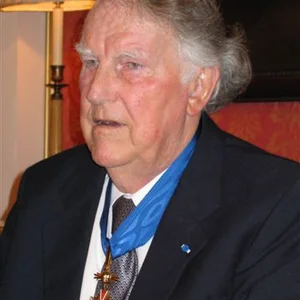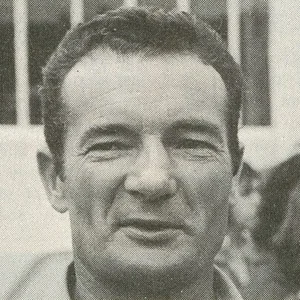

American mountaineer and businessman (1929–2015), Richard Bass was the first person to climb the Seven Summits — the highest peak on each continent. He reached the summit of Everest on April 30, 1985, at the age of 55, becoming the oldest climber to have done so at the time.
Richard Bass(1929 — 2015)
Richard Bass
États-Unis
9 min read
Frequently asked questions
Key Facts
- Born on December 21, 1929, in Texas, United States
- First person to climb the Seven Summits (the highest peak on each continent), a concept he helped popularize
- Reached the summit of Everest on April 30, 1985, at the age of 55 — a world record for the oldest climber at the time
- Co-authored the book 'Seven Summits' (1986) with Frank Wells, recounting his achievements
- Died on March 25, 2015
Works & Achievements
The world's first completion of the Seven Summits — the highest peak on each continent — between 1983 and 1985. This unprecedented achievement created a new benchmark challenge in mountaineering worldwide, inspiring thousands of adventurers across every continent ever since.
A memoir co-written with Frank Wells and Rick Ridgeway recounting the Seven Summits adventure, published by Warner Books. This book brought the concept to a global audience and remains an essential reference in exploration and mountaineering literature.
Establishment of one of the most renowned ski resorts in the United States in the mountains of Utah. This bold project transformed a wild mountain area into an international alpine ski destination, showcasing Bass's entrepreneurial vision.
By reaching the summit of Everest at age 55, Bass set the world record as the oldest climber to conquer the roof of the world, proving that determination and preparation can overcome the barriers of age in extreme sports.
Anecdotes
Richard Bass was not a professional mountaineer but a Texas businessman with a passion for mountains. In 1982, at over 50 years old, he decided to climb the highest peak on each continent — a challenge no one had yet accomplished. His contagious enthusiasm convinced Frank Wells, president of Warner Bros., to join him on this extraordinary adventure, which the two of them named the “Seven Summits.”
Everest proved to be the hardest climb for Bass: he failed four times before finally reaching the summit on April 30, 1985. At 55, he became the oldest mountaineer to have conquered Everest at the time, proving that determination and perseverance could make up for a lack of technical experience and advanced age.
Bass had legendary energy and talkativeness in the mountaineering world. His rope-mates recalled that he could talk non-stop for hours even at very high altitude, much to the amusement of the Sherpas and professional guides who accompanied him. This good humor earned him the affectionate nickname “Dick” among everyone who had climbed alongside him.
As founder of the Snowbird ski resort in Utah in 1971, Bass had transformed a wild mountain terrain into one of the most renowned ski resorts in the United States. This bold real estate venture had instilled in him a taste for calculated risk and great mountain challenges, mentally preparing him for his future Seven Summits adventure.
During the ascent of Vinson Massif in Antarctica, Bass and his team were among the first civilian mountaineers to set foot on that frozen continent as part of a private expedition. Extreme cold dropping as low as -40°C and the complete isolation of the white continent made this climb particularly grueling, even for a man accustomed to the harsh winter conditions of the Rockies.
Primary Sources
Bass describes his philosophy: 'It is not the mountain we conquer, but ourselves. Each summit taught me something new about my own limits and about what a human being can achieve when they refuse to give up.'
Richard Bass (United States) reached the summit on April 30, 1985, becoming at age 55 the oldest mountaineer to have climbed Mount Everest. This ascent completed his project of climbing the highest peak on each continent, making him the first person to accomplish this goal.
Bass explains: 'People would ask me what a businessman had to do on the world's highest mountains. I would tell them that business had taught me one thing: when you set an ambitious goal and you truly believe in it, you always find a way to reach it.'
Key Places
The roof of the world at 8,849 meters, Everest was the last and most difficult of the Seven Summits for Bass, reached on April 30, 1985, after four failed attempts. This victory completed his Seven Summits challenge and made him a legend of world mountaineering.
A ski resort founded by Bass in 1971 in Utah's Wasatch Mountains, Snowbird is both his major entrepreneurial achievement and a symbol of his love for the mountains. It was in this alpine environment that he developed and nurtured his passion for mountaineering.
The highest peak in South America and the entire Western Hemisphere at 6,961 meters, Aconcagua was one of Bass's first major ascents during his Seven Summits project, allowing him to test his ability to perform at high altitude.
The highest peak in Antarctica at 4,892 meters, the Vinson Massif represented one of the most extreme challenges of Bass's project, set in one of the most isolated and coldest environments on Earth, accessible only by plane from Punta Arenas, Chile.
The highest peak in Africa at 5,895 meters, Kilimanjaro was one of the first stops in Bass's Seven Summits project. A snow-capped volcano towering over the savannas of East Africa, it remains one of the most climbed summits in the world today.
Typical Objects

The mountaineer's indispensable tool, the ice axe allowed Bass to secure himself on icy slopes and perform self-arrests in case of a slip. It was his most faithful companion on each of the Seven Summits, a symbol of classic twentieth-century alpinism.

Strapped to high-mountain boots, these steel crampons provided grip on ice and hardened snow. Bass used them on terrain as varied as the glaciers of Vinson Massif in Antarctica and the snow couloirs of Everest above 7,000 metres.

Above 8,000 metres on Everest, Bass used compressed oxygen cylinders and a breathing mask to compensate for the thinning air in the 'death zone'. Without this equipment, survival above 8,000 m is impossible for most climbers.

An essential technical garment for enduring the extreme temperatures (-40°C and below) at high altitude, the goose-down suit protected Bass from deadly cold during his bivouacs and nighttime ascents through Everest's death zone.

Lightweight, resistant to fierce winds (over 200 km/h on Everest), and built to bear the weight of snow, the high-altitude tent was the climbers' precarious shelter at high camps. Bass spent restless nights inside one before each summit push.

Essential navigation instruments before the GPS era, the altimeter allowed Bass to measure his elevation gain and gauge the effort still ahead, while the compass guided the team through whiteout conditions — the weather state in which snow and sky merge into a single white blur.

Made up of a thermal inner liner and a rigid outer shell, these technical boots protected the feet from extreme cold and ensured secure crampon attachment. Their innovative design in the 1980s greatly reduced the risk of frostbite.
School Curriculum
Vocabulary & Tags
Key Vocabulary
Tags
Daily Life
Morning
During his high-altitude expeditions, Bass rose before dawn to take advantage of the most stable weather conditions, usually between 1 and 3 a.m. on summit days. He began by hydrating with hot tea or broth, methodically layered his technical clothing, and checked his gear. Sherpas prepared meals in the kitchen tents at the high camps.
Afternoon
Major ascents took place early in the morning and wrapped up before noon to avoid the afternoon storms typical at high altitude. The afternoon was devoted to mandatory rest to recover from the effort, gear checks, and strategic discussions with guides and Sherpas about the next stages. Bass was known for his animated monologues, which kept the group's spirits up during these long hours of waiting.
Evening
Evenings at high-altitude camps were defined by the intense cold that set in at sunset. Bass and his companions gathered in the tents to share freeze-dried meals rehydrated with boiling water, review weather reports received by radio, and mentally prepare for the next day's push. Bass went to bed early, well aware of the need to be in peak condition for the challenges ahead.
Food
At high altitude, the diet consisted almost entirely of freeze-dried, calorie-dense foods that were easy to carry. Bass ate energy bars, nuts, chocolate, and dehydrated meals quickly rehydrated with hot water. Constant hydration was essential to counter the effects of altitude and dehydration. In his everyday life in Texas, Bass enjoyed hearty American cooking — grilled meats and substantial dishes — in keeping with his action-oriented temperament.
Clothing
On major expeditions, Bass wore a layered system: a thermal base layer, fleece jacket and trousers, and over everything a down suit for the outdoors. His double high-altitude boots were fitted with crampons, complemented by waterproof gaiters. Glacier goggles with full UV protection, a balaclava, and thick gloves completed his outfit in the death zone. In his business life in Texas, he wore the relaxed attire typical of the Texan milieu of the 1970s–1980s.
Housing
During expeditions, Bass lived in technical high-altitude tents at the various high camps. At Everest Base Camp (5,364 m on the Nepal side), conditions were relatively comfortable, with more spacious tents, a kitchen tent, and sometimes a communal mess tent. In ordinary life, Bass lived in Texas, where his success in the oil business afforded him considerable comfort; he also owned accommodation near his Snowbird resort in Utah.
Historical Timeline
Period Vocabulary
Liens externes & ressources
Références
Œuvres
Première réalisation des Seven Summits
1983-1985
Seven Summits (livre)
1986
Création et développement de Snowbird Ski Resort
1971
Record d'âge sur l'Everest
1985