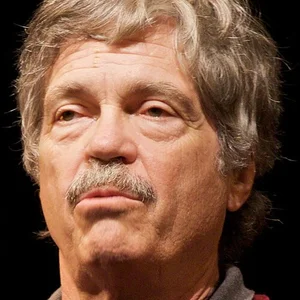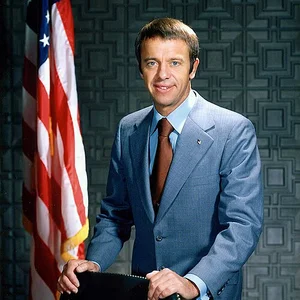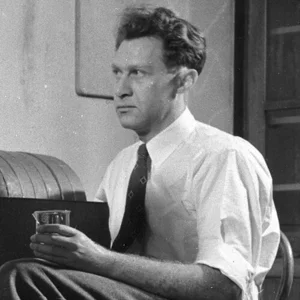

Robert Marshak was an American theoretical physicist specializing in particle physics. He is known for his theory explaining the energy of stars and for his contribution to the theory of the weak interaction.
Robert Marshak(1916 — 1992)
Robert Marshak
États-Unis
6 min read
Frequently asked questions
Key Facts
- Born in 1916 in New York, died in 1992
- Proposed the two-meson hypothesis (pion and muon) in 1947 to solve the meson problem
- Formulated the V-A theory of the weak interaction in 1958, together with George Sudarshan
- Founded the Rochester Conferences on high-energy physics in 1950
- President of the City College of New York from 1970 to 1979
Works & Achievements
Proposal that the pion and the muon are two distinct particles, solving a major puzzle in particle physics.
Unified description of the weak force, one of the most important theoretical contributions in particle physics.
Mechanism explaining how stars can rapidly lose their energy through neutrino emission.
Creation of an annual international gathering that became a major event in high-energy physics.
Landmark book synthesizing knowledge about mesons for an entire generation of physicists.
Leadership of a major New York public university, marked by his commitment to equal opportunity.
Anecdotes
In 1947, Robert Marshak put forward a bold idea to solve a puzzle that had stumped physicists: he proposed that there were in fact TWO different particles where everyone had been looking for just one. The particle predicted by the Japanese theorist Yukawa (the pion) and the one observed in cosmic rays (the muon) were not the same. This “two-meson hypothesis” was quickly confirmed and remains a model of scientific reasoning.
In the 1940s, Marshak and the famous George Gamow imagined a mechanism explaining how certain stars lose their energy very quickly through tiny ghostly particles called neutrinos. Gamow named it the “Urca process,” after a casino in Rio de Janeiro where money disappeared as fast as it did at the gaming tables: the star’s energy vanished in the same way.
In 1957, with his student George Sudarshan, Marshak developed the “V minus A” theory of the weak interaction, one of the fundamental forces of nature. First presented at a conference, the idea was soon taken up by other, more famous physicists, which long deprived Marshak of the recognition he deserved for this major breakthrough.
In 1950, Marshak founded the “Rochester Conferences,” major international gatherings where particle physicists from around the world come to compare their ideas. Now an institution, they still exist today and remain one of the most important meetings in the field.
Having become president of the City College of New York in 1970, at the height of student unrest, Marshak energetically defended access to university for young people from working-class neighborhoods. The particle physicist also proved to be a leader committed to equal opportunity.
Primary Sources
The authors propose that the universal weak interaction has a vector-minus-axial-vector (V−A) structure, unifying beta decays and muon decay under a single law.
A synthesis work in which Marshak gathers and organizes knowledge about mesons, particles newly discovered at the heart of postwar nuclear physics.
The authors analyze the nuclear reactions that take place at the center of stars and explain how they produce the energy radiated by the Sun and other celestial bodies.
The mechanism described shows that the emission of neutrinos can very rapidly drain energy from a star's core, accelerating its collapse.
Key Places
Borough of New York where Robert Marshak was born in 1916, into a modest family of immigrants.
University where Marshak earned his undergraduate degree in 1936, revealing his early talent for physics.
Place where Marshak prepared his doctorate under the supervision of Hans Bethe, future Nobel laureate, completed in 1939.
University where Marshak spent most of his career, led the physics department, and founded the Rochester Conferences.
Institution of which Marshak was president from 1970 to 1979, championing access to university for all.
Mexican seaside resort where Robert Marshak died by drowning in 1992.
Typical Objects

The theoretical physicist's everyday working tool, on which equations are written and ideas debated. It was here that Marshak sketched out his theory of the weak interaction.

A detector that makes the tracks of moving particles visible thanks to a mist of vapor. It was with such instruments that the mesons of cosmic rays were observed.

A mechanical calculating instrument used by physicists before the arrival of computers. It made it possible to perform multiplications and divisions quickly.

A large machine that propels particles at very high speed to make them collide and study matter. At the heart of the research discussed at the Rochester Conferences.

A leading scientific journal where the great discoveries of physics are published. Marshak published several of his major articles in it.

An essential tool for writing articles and scientific correspondence before the computer age. Physicists' manuscripts passed through it before publication.
School Curriculum
Vocabulary & Tags
Key Vocabulary
Tags
Daily Life
Morning
An academic, Marshak often began his day by reading the latest scientific journals and his correspondence with colleagues around the world. Mornings were devoted to working through calculations at the blackboard and preparing lectures.
Afternoon
Afternoons were divided between teaching students, physics department meetings, and lively discussions with his doctoral students. It was in these exchanges that new ideas often took shape.
Evening
In the evening, Marshak continued thinking through the theoretical problems he was working on and wrote his papers. He also devoted time to organizing the major international conferences he had founded.
Food
Like most twentieth-century American academics, he ate simple meals, often at the campus restaurant or cafeteria. Working lunches with colleagues were a chance to carry on scientific debates.
Clothing
Marshak wore the classic attire of the university professor of his era: a suit, shirt, and tie. This understated style suited both the lecture hall and international conferences.
Housing
He lived in housing close to the campuses where he worked, in Rochester and later New York. His home regularly welcomed colleagues and students for scientific discussions.
Historical Timeline
Period Vocabulary
Liens externes & ressources
Références
Œuvres
Hypothèse des deux mésons
1947
Théorie V−A de l'interaction faible (avec E. C. G. Sudarshan)
1957
Processus Urca (avec George Gamow)
1941
Fondation des Conférences de Rochester
1950
« Meson Physics » (ouvrage)
1952
Présidence du City College of New York
1970-1979