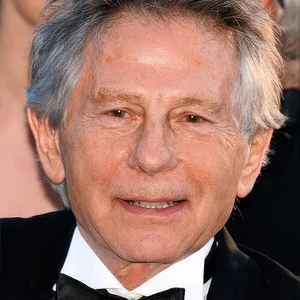

Roman Polanski is a Franco-Polish director, producer, and screenwriter born in 1933. A survivor of the Kraków Ghetto during the Holocaust, he became one of the leading figures of international cinema, moving between psychological thrillers and historical dramas.
Roman Polanski(1933 — ?)
Roman Polanski
Pologne, France
6 min read
Frequently asked questions
Key Facts
- Born in Paris in 1933, with a childhood marked by survival in the Kraków Ghetto during the Second World War
- First acclaimed feature film, Knife in the Water (1962), made in Poland and nominated for the Academy Award for Best Foreign Language Film
- Directed Hollywood classics such as Rosemary's Baby (1968) and Chinatown (1974)
- The murder of his wife Sharon Tate by Charles Manson's cult in 1969
- Academy Award for Best Director and the Palme d'Or for The Pianist (2002), depicting the Holocaust in Warsaw
Works & Achievements
First feature film, a tense chamber piece aboard a sailboat, nominated for the Academy Award for Best Foreign Film and an international breakthrough.
First film shot in the West, a chilling descent into a young woman's madness that established his talent for the psychological thriller.
A masterpiece of dread that became a cult classic and cemented his reputation in Hollywood.
A film noir regarded as one of the high points of 1970s American cinema.
A polished adaptation of Thomas Hardy's novel, awarded several technical Oscars and a César.
The story of a Jewish pianist's survival in the Warsaw ghetto; Palme d'Or at Cannes and the Academy Award for Best Director.
A critically acclaimed political thriller that earned him the Silver Bear for Best Director in Berlin.
Anecdotes
A Jewish child in Kraków during the Second World War, Roman Polanski escapes the ghetto through a gap in the barbed wire. Hidden by Polish peasant families under a false identity, he survives the Holocaust, while his mother is murdered at Auschwitz. These years of fear and hiding would leave a lasting mark on his films.
In 1962, his very first feature film, Knife in the Water, shot in Poland with only three actors aboard a sailboat, is nominated for the Oscar for Best Foreign Film. This tense, confined drama makes him known the world over and opens the doors to the West.
In 2003, Polanski wins the Oscar for Best Director for The Pianist, but he cannot come to collect it: wanted by the American justice system, he would risk arrest the moment he set foot in the United States. It is the actor Harrison Ford who accepts the statuette on his behalf.
In the manner of Alfred Hitchcock, Polanski likes to slip brief cameos into his own films. In Chinatown, he himself plays the small-time thug who slices the nose of the detective played by Jack Nicholson.
In 1969, his wife, the actress Sharon Tate, then pregnant, is murdered in Los Angeles by members of Charles Manson's cult. This tragedy shakes Hollywood and would haunt the filmmaker's work for years to come.
Primary Sources
As far back as I can remember, the line between dream and reality has always been hopelessly blurred.
Roman Polanski pleads guilty to the charge of “unlawful sexual intercourse” with a thirteen-year-old minor, before fleeing the United States in 1978 to escape his sentencing.
In her memoir, Samantha Geimer recounts the events of 1977 from her own perspective and the shadow the case cast over her entire life.
Key Places
Polanski's birthplace in 1933 and his place of exile since 1978. Here he lives and works, beyond the reach of extradition to the United States.
The city of his childhood, where his family was confined to the ghetto under Nazi occupation. Here he lived through the tragedy of the Holocaust.
The prestigious school where Polanski learned the craft of directing in the 1950s. It has trained many great Polish filmmakers.
The capital of American cinema, where he filmed Rosemary's Baby and Chinatown. It is also the site of Sharon Tate's murder in 1969 and of his arrest in 1977.
The first step of his career in the West, where he directed Repulsion and Cul-de-sac in the mid-1960s.
Typical Objects

A heavy film camera using silver-halide 35mm film stock, the director's central tool throughout the 20th century. Polanski paid particular attention to framing and camera movement to create suspense.

A small hinged board clapped in front of the camera at the start of each take. It allows sound and image to be synchronized during editing and identifies the shots.

A text describing the story, dialogue and scenes of the film. Polanski co-wrote many of his screenplays, notably that of *The Pianist*.

A series of drawings depicting each shot of the film before filming, like a comic strip. It helps the director plan their framing precisely.

A roll of silver-halide film on which the images are recorded, then used for projection in theaters. Before digital, this was the physical medium of every film.

A folding canvas seat often bearing the director's name, which became the symbol of their authority on the film set.
School Curriculum
Vocabulary & Tags
Key Vocabulary
Daily Life
Morning
In the morning, Polanski reads and reworks scripts, studies storyboards, and discusses upcoming shots with his director of photography. The meticulous preparation of each scene is at the heart of his work.
Afternoon
The afternoon is spent on the film set, directing the actors and shooting multiple takes to capture the exact emotion he is after. Known for being demanding, he may redo a scene many times.
Evening
In the evening, he watches the “rushes” (the footage shot during the day) and prepares the editing with his collaborators. Dinners with screenwriters, producers, and actors often extend the working day.
Food
Settled in France, he enjoys a cosmopolitan cuisine blending French and Polish influences. Restaurant meals in Paris are also moments for work and professional encounters.
Clothing
Polanski favours a casual elegance typical of the film world: understated jackets, open shirts, and scarves, without the formality of a strict suit.
Housing
Since his exile in 1978, he has lived mainly in a Parisian apartment, dividing his time between the French capital and a mountain chalet, beyond the reach of American justice.
Historical Timeline
Period Vocabulary
Liens externes & ressources
Références
Œuvres
Rosemary's Baby
1968
Le Pianiste
2002
The Ghost Writer
2010