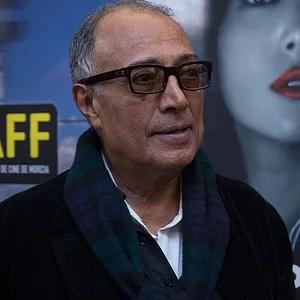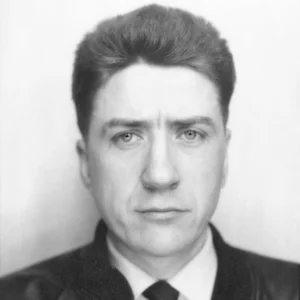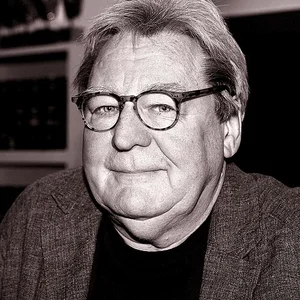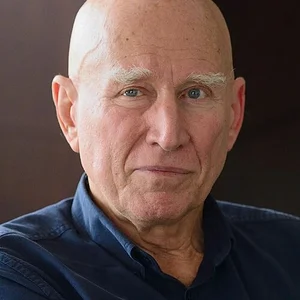

Brazilian photographer and photojournalist, a major figure of black-and-white documentary photography. He devoted his work to the living conditions of workers, to migrations, and to the beauty of nature, in an approach that is at once aesthetic and committed.
Sebastião Salgado(1944 — 2025)
Sebastião Salgado
France, Brésil
6 min read
Frequently asked questions
Key Facts
- Born on 8 February 1944 in Aimorés, in the state of Minas Gerais (Brazil).
- Originally an economist, he turned to photography in the early 1970s.
- Published in 1993 *Workers* (La Main de l'homme), a sweeping survey of manual labor around the world.
- From 2004 onward he created the *Genesis* project, celebrating the planet's preserved regions.
- With his wife Lélia he launched the Instituto Terra to reforest the Brazilian Atlantic forest; he died on 23 May 2025.
Works & Achievements
First major album, the fruit of seven years of travels across Latin America among peasants and rural communities.
A report on the famine in the Sahel produced with Doctors Without Borders, a major testimony to a humanitarian catastrophe.
A legendary series showing thousands of gold prospectors swarming in a giant mine, a striking image of human labor.
A vast tribute to manual labor around the world, from construction sites to factories, before its disappearance in the industrial age.
A multi-year investigation into migrants and refugees across all five continents, a plea for the dignity of displaced people.
Eight years of travels to photograph the regions and peoples of the planet still untouched, an ode to nature.
A documentary by Wim Wenders and Juliano Salgado tracing his life and work, nominated for an Oscar.
His final major project, devoted to the Amazon rainforest and its Indigenous peoples, accompanied by an immersive exhibition.
Anecdotes
Before becoming a photographer, Sebastião Salgado was an economist: holding a doctorate, he worked for the International Coffee Organization in London. It was during missions in Africa, around 1971, that he borrowed his wife Lélia's camera and discovered that images appealed to him far more than statistics. At nearly 30, he abandoned a well-mapped-out career for photography.
In 1981, Salgado happened to be in Washington the day a man shot President Ronald Reagan. There by chance for a story, he photographed the assassination attempt. These pictures went around the world and brought him immediate fame, but he always refused to define himself as a photographer of the moment: he preferred long projects spanning several years.
For his project “Genesis,” Salgado spent nearly eight years (2004-2013) photographing the regions of the planet that remained untouched: ice floes, deserts, forests, isolated peoples. He went so far as to travel by hot-air balloon, by canoe, and on foot for weeks to approach tribes and animals without frightening them.
Returning to Brazil in the 1990s, Salgado inherited the family farm, which had become a barren, dead land because of deforestation. With his wife Lélia, he decided to replant the forest there: their Instituto Terra has grown more than two million trees and has seen hundreds of vanished animal species return.
Director Wim Wenders, fascinated by one of his photographs bought years earlier, devoted a film to him with his son Juliano, “The Salt of the Earth” (2014). The documentary, nominated for an Oscar, revealed to the general public Salgado's vision of misery, war, and the beauty of the world.
Primary Sources
“Photography is a way of living, a way of understanding the world. I don't photograph a subject, I photograph a story that I am part of.”
“Every human being I photographed, I looked in the eye. To photograph is to share a moment of someone's life.”
“This book tells the story of humanity in motion. Millions of people leave their homes; I wanted to show their dignity, never their distress alone.”
“Nearly half of the planet remains as it was at the time of Genesis. I wanted to show this beauty to make people want to protect it.”
Key Places
Salgado's birthplace and site of the family farm, which he later transformed into a forest reserve with the Instituto Terra.
City of exile where Salgado settled in the late 1960s, became a photographer, and where he died in 2025.
A vast open-pit mine where tens of thousands of men dug by hand; his 1986 photographs taken there became world-famous.
An area struck by famine and drought in the 1980s, which he photographed for Doctors Without Borders, marking a turning point in his commitment.
The setting of his last great project, “Amazônia,” devoted to the forest and its indigenous peoples.
City where the young economist Salgado worked for the International Coffee Organization before turning to photography.
Typical Objects

A discreet, rugged rangefinder body that Salgado used for a long time on his assignments. Its small size let him work very close to people without intimidating them.

Salgado always favored black and white, which strips the image of the anecdotal and brings out light, contrast and emotion. It was his visual signature.

His photographs were printed in large format on baryta paper, designed by his wife Lélia for exhibitions and books. The large format gives the scenes an almost monumental power.

Salgado conceived his work as great book-projects such as “Workers,” “Exodus” or “Genesis.” Each album tells a complete story spanning several years.

For his expeditions lasting several months, Salgado carried camera bodies, lenses and supplies through extreme conditions, from the desert to the pack ice. He lived at the pace of the peoples he photographed.

A symbol of his ecological fight: with Lélia, he had more than two million trees replanted on his devastated native land. The forest and its wildlife returned there.
School Curriculum
Vocabulary & Tags
Key Vocabulary
Tags
Daily Life
Morning
On assignment, Salgado often rose before dawn to take advantage of the soft morning light, the most beautiful for black-and-white photography. He shared the early waking hours of the people he photographed, farmers, miners or fishermen, in order to earn their trust.
Afternoon
Afternoons were devoted to walking, observing and shooting, sometimes for hours to capture a single moment. During his expeditions, he could spend weeks in extreme conditions, desert, ice field or forest.
Evening
In the evening, he jotted down his impressions and prepared the next day's work. Back in Paris, evenings were spent choosing images with Lélia, who designed the prints, the books and the exhibitions.
Food
In the field, Salgado ate simply and often shared the food of the communities he travelled with. He adapted to local resources, sometimes scarce during his long, isolated expeditions.
Clothing
He wore plain, practical clothing suited to the climate and to walking, sturdy jackets and field boots. His attire stayed discreet so as not to impose himself on the people he photographed.
Housing
Salgado divided his life between his Paris studio, the base for his editing work, and long stays in the field where he lodged as close as possible to the inhabitants. At the end of his life, the reforested farm of the Instituto Terra in Brazil held an essential place.
Historical Timeline
Period Vocabulary
Liens externes & ressources
Références
Œuvres
Autres Amériques
1986
Sahel, l'homme en détresse
1986
Reportage sur la mine de Serra Pelada
1986
La Main de l'homme (Workers)
1993
Exodes (Migrations)
2000
Le Sel de la Terre (film)
2014