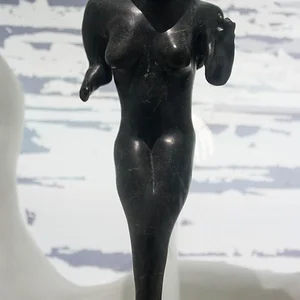

Sedna is the Inuit goddess of the sea and marine animals, drawn from the oral traditions of Arctic peoples (Inuit, Yupik). A central figure in circumpolar cosmology, she rules the ocean depths and determines the abundance or scarcity of sea game.
Sedna
Sedna
10 min read
Frequently asked questions
Key Facts
- According to Inuit oral tradition, Sedna was thrown into the sea by her father, and her severed fingers transformed into seals, walruses, and whales
- She dwells at the bottom of the Arctic Ocean in a realm called Adlivun, where the souls of the dead also reside
- Shamans (angakkuit) had to spiritually dive down to her to untangle her matted hair, thereby releasing the animals and ensuring a successful hunt
- Her myth exists in many variants across Inuit groups (Canadian Inuit, Greenlandic Inuit, Alaskan Yupik), reflecting an ancient circumpolar spread
- She is one of the most thoroughly documented divine figures in Arctic Indigenous mythologies, recorded from the 19th century onward by ethnologists such as Franz Boas
Works & Achievements
A collection of foundational stories passed down orally from generation to generation by Inuit, Yupik, and Aleut peoples. These narratives form the 'marine cosmogony' of the Arctic and have shaped hunting practices, shamanic rituals, and environmental ethics for millennia.
A collective ceremony in which the angakkuq entered a trance to journey to the ocean floor, comb Sedna's hair, and release the souls of animals. This fundamental ritual regulated the subsistence cycle of communities and maintained the balance between humans and the natural world.
Representations carved in ivory, soapstone, or whalebone depicting Sedna — often recognizable by her half-woman, half-fish body and fingerless hands — have been produced for centuries. These sculptures, first ritual then artistic, attest to the enduring vitality of the myth through to contemporary Inuit art.
A specific vocal genre, ayaya are semi-improvised drum-accompanied songs that evoke Sedna, the sea, and animals. Knud Rasmussen transcribed many examples; they represent a unique poetic form that expresses the intimate relationship between the goddess and the daily life of Arctic hunters.
Female vocal duels imitating the sounds of the Arctic environment (wind, sea, marine animals), performed during communal ceremonies. Certain sequences explicitly evoke Sedna's underwater world, making this practice a vehicle for transmitting the myth.
Anecdotes
According to the most widespread myth, Sedna was a young Inuit woman who was thrown into the icy ocean by her father from a boat. As she clung to the edge of the kayak, her father cut off her fingers joint by joint: each phalanx fell into the waves and transformed into a seal, walrus, or whale, thus populating the Arctic seas with all their wildlife.
In many versions of the myth, Sedna had married a deceitful being — sometimes a dog, sometimes a seabird (a fulmar) disguised as a man — who led her into a miserable existence on a wind-battered rock. This story reflects the Inuit communities' wariness of strangers and empty promises, and served as a moral lesson passed down from generation to generation.
Shamans (angakkuit) played a crucial role in relation to Sedna: during times of famine, they would undertake a spiritual journey to the bottom of the ocean to comb and untangle the goddess's matted hair. The souls of marine animals that had been killed, if not properly honored, remained trapped in her hair; freeing them ensured the return of prey for the community.
Sedna does not have a single name across all circumpolar cultures: the Inuit of Nunavut call her 'Nunavgak' or 'Arnapkapfaaluk' ('the great woman below'), while other communities call her 'Takanaluk' or 'Nerrivik' ('the meat dish'). This multiplicity of names reflects the great age and extraordinary spread of this myth across thousands of kilometers of the Arctic.
The figure of Sedna lies at the heart of a strict ethical system governing hunting: every animal killed had to be respected according to precise rituals (turning the seal's carcass toward the sea, not wasting the meat). Failure to follow these rules was believed to offend Sedna and provoke her anger, causing marine game to disappear and bringing famine to the entire community.
Primary Sources
There is a woman at the bottom of the sea, Sedna, whose severed fingers became the seals and walruses. Shamans descend to her to untangle her hair and appease her anger, thereby releasing the animals for the hunters.
Nunavgak lives at the bottom of the sea. All marine life comes from her. When men fail to respect the rules of the hunt, her hair becomes tangled and the animals remain trapped. The shaman must dive in spirit to untangle it.
It is said that she was thrown into the water by one who had married her under false pretenses. Her fingers, cut off one by one, became the creatures of the deep. She now governs the world below.
Sedna is the mistress of the seals. Without her consent, no animal allows itself to be caught. That is why the hunter always gives thanks to the slain animal and pours fresh water into the seal's mouth to honor the goddess.
The elders repeat the words of their elders: Sedna waits at the bottom of the waters. She is neither good nor evil; she is just. What you give her in respect, she returns to you as food.
Key Places
In Inuit cosmology, Adlivun is the underwater realm governed by Sedna, located beneath the surface of the Arctic Ocean. This is where the souls of sea animals reside, and where shamans would journey in spiritual trances to appease the goddess.
A large Arctic island considered one of the cradles of Thule Inuit culture and the territory where Franz Boas collected the first scholarly versions of the Sedna myth in 1883–1884. The region remains a living center of Inuit culture today.
A vast maritime expanse at the heart of Inuit territory, renowned for its abundance of seals, walruses, and beluga whales — animals directly associated with the Sedna myth. Coastal communities performed rituals in her honor before and after every hunting expedition.
A territory where the Sedna myth (known as 'Arnakuagsak' or 'Sassuma Arnaa') spread with the Thule culture around 1000 CE. Greenlandic shamans developed rich variations of the ritual combing of the goddess's hair.
The probable homeland of Thule culture and the point from which the Sedna myth spread eastward. The Yupik peoples of Alaska venerate a similar sea goddess, reflecting the circumpolar cultural unity surrounding this foundational figure.
Typical Objects

The central hunting tool of Inuit culture, the harpoon is directly tied to Sedna: it is through the harpoon that humans enter into relationship with the sea animals she governs. Each harpoon strike creates a symbolic debt owed to the goddess.

A lamp carved from soapstone and fueled by seal fat — the seal being an animal born from Sedna's fingers. The qulliq is the hearth of the Inuit family and represents the vital link between the ocean depths where Sedna reigns and human life on the surface.

A single-person hunting vessel made of seal skins stretched over a frame of bone. The kayak is the tool that allows hunters to navigate Sedna's domain; its use demands strict adherence to ritual so as not to offend the goddess.

A large frame drum made from whale bone or driftwood, covered with seal or bear skin. The angakkuq (shaman) used it to enter a trance and undertake the spiritual journey to the ocean floor in order to comb Sedna's hair.

A crescent-shaped knife used by Inuit women to skin and butcher sea animals. Symbolically linked to the processing of prey gifted by Sedna, its respectful use was part of the cycle of gratitude owed to the goddess.

A small carving depicting a sea animal or female figure, worn by hunters to earn Sedna's favor. These amulets attest to the central role the goddess played in the daily protective practices of Arctic communities.
School Curriculum
Vocabulary & Tags
Key Vocabulary
Tags
Daily Life
Morning
In Inuit cosmology, Sedna neither sleeps nor wakes like a human being: she reigns perpetually over the abyss. Yet shamans described how it is at dawn, as hunters prepare themselves, that her attention turns toward the surface — she 'senses' the preparations for the hunt and judges whether the men deserve the day's abundance.
Afternoon
As hunters set out across the ice or by kayak, Sedna watches their every move. Do they observe the proper rituals? Do they handle their tools with care? She guides animals toward the hunters or drives them away depending on the hunters' devotion. The open-sea afternoons are, for her, moments of full cosmic activity — distributing living creatures according to human merit.
Evening
In the evening, when the hunt is over, the rituals of gratitude begin: fresh water poured into the seal's mouth, the carcass oriented toward the sea. These gestures appease Sedna and release the animal's soul so it may be reborn. The shaman, in turn, may begin his nightly journey into the depths to untangle her hair and ensure the abundance of the following day.
Food
Sedna herself is nourished by the symbolic offerings of hunters: fresh water poured into the mouths of prey, the first bite of meat cast into the sea, fat burned in the qulliq. These offerings form her divine 'meal' and sustain the fundamental bond of reciprocity between the human world and the marine world she governs.
Clothing
Oral traditions describe Sedna as a woman whose long black hair floats through the underwater currents, tangled with the souls of animals that were not properly honored. She wears no clothing like mortals — instead, she is wrapped in the bodies of the sea creatures born from her. Seals, walruses, and whales form her living mantle in the deep.
Housing
Sedna dwells in Adlivun, the underwater realm located in the depths of the Arctic Ocean — a cold, dark, and silent place, far from the sun and the sea ice. It is there that the souls of the dead reside before their rebirth, and where marine animals gather as they await release to deserving hunters.
Historical Timeline
Period Vocabulary
Visual Style
Esthétique de la sculpture et de l'estampe inuites contemporaines : femme aux cheveux-algues, profondeurs arctiques bleu nuit, animaux marins nés de ses doigts dans une lumière filtrée sous la banquise.
Sound Ambience
Les profondeurs glacées de l'Arctique : craquements de la banquise, chants de bélugas, tambour chamanique lointain et silence abyssal du royaume de Sedna.
Liens externes & ressources
Références
Œuvres
Le mythe de Sedna — cycle de récits oraux circumpolaires
tradition immémoriale, premières transcriptions XIXe siècle
Rituel chamanique de la descente vers Sedna (Angakkuq tornassuk)
pratique ancestrale, attestée ethnographiquement dès le XIXe siècle
Sculptures inuites représentant Sedna
de l'Antiquité à nos jours
Chants et poèmes inuits (ayaya) sur Sedna
tradition orale continue
Katajjaq (jeux de gorge inuits) à thème marin
tradition immémoriale