 flip
flipPuliyodarai (Tamarind Rice from the Temple)
Puliyodarai (Tamarind Rice from the Temple)
Why this dish? Tamarind rice is THE traveler's dish of the Tamil: the acidity of tamarin preserves it for a whole day without reheating. When Ramanujan sailed for England in 1914, his family prepared this kind of dry rice and pickles so that a Brahmin could eat pure, far from any foreign kitchen.
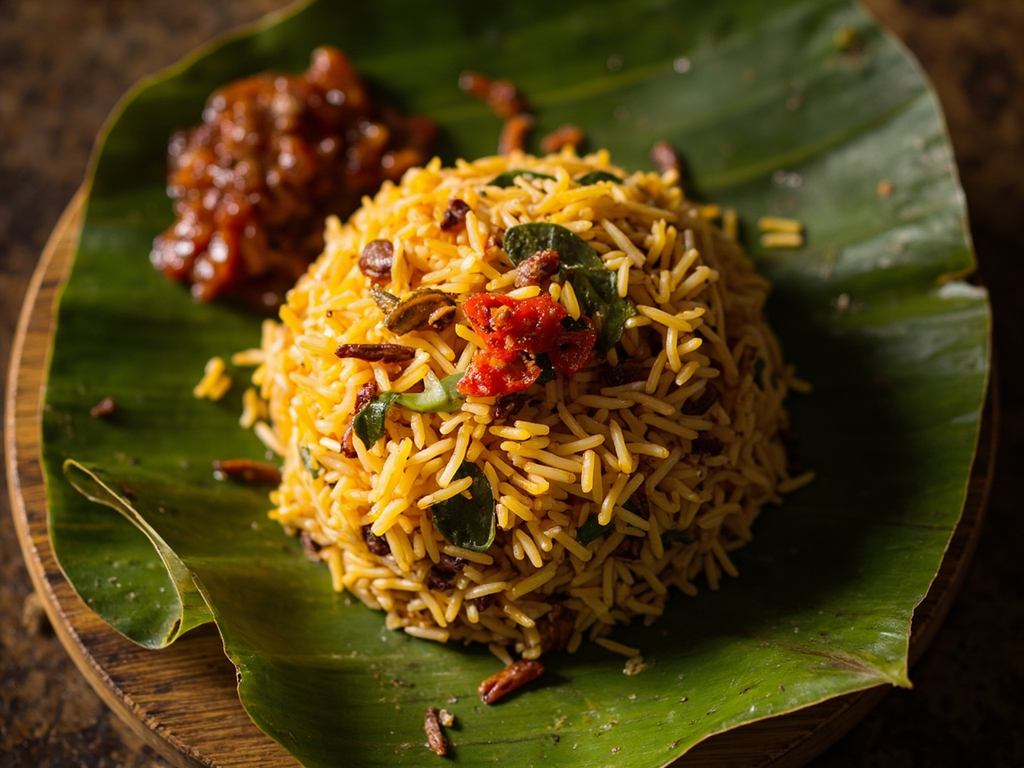
Rice coated with a spicy tamarind paste (pulikachal) with chili, mustard seeds, roasted lentils, and asafoetida, spiked with pepper. Dry, fragrant, it keeps and is eaten cold.
When you travel far, you don't take a tender meal that turns in an hour. You take this rice. My family would pound the tamarind into a dark paste, simmer it with mustard, chili, and asafoetida until the oil rose, shiny — that's how you know it will keep. On the boat to England, I dreaded everything that came out of others' kitchens; this dry, sour rice, and my pickles, were my Brahmin safeguard. Eat it cold, under a tree or on a ship's deck: it tastes of the road.
- •Cooked cooled rice — one large measure (base)
- •Tamarind — a ball the size of a lemon (sourness, preservation)
- •Dried chilies and pepper — to heat (spiciness)
- •Mustard seeds, roasted chana lentils, asafoetida, curry leaves — a spoonful each (tempering)
- •Sesame oil, salt — generously (binder, preservation)
Puliyodarai (Tamarind Rice from the Temple)
Rice coated with a spicy tamarind paste (pulikachal) with chili, mustard seeds, roasted lentils, and asafoetida, spiked with pepper. Dry, fragrant, it keeps and is eaten cold.
Why this dish? Tamarind rice is THE traveler's dish of the Tamil: the acidity of tamarin preserves it for a whole day without reheating. When Ramanujan sailed for England in 1914, his family prepared this kind of dry rice and pickles so that a Brahmin could eat pure, far from any foreign kitchen.
When you travel far, you don't take a tender meal that turns in an hour. You take this rice. My family would pound the tamarind into a dark paste, simmer it with mustard, chili, and asafoetida until the oil rose, shiny — that's how you know it will keep. On the boat to England, I dreaded everything that came out of others' kitchens; this dry, sour rice, and my pickles, were my Brahmin safeguard. Eat it cold, under a tree or on a ship's deck: it tastes of the road.
Ingredients (period version)
- Cooked cooled rice — one large measure (base)
- Tamarind — a ball the size of a lemon (sourness, preservation)
- Dried chilies and pepper — to heat (spiciness)
- Mustard seeds, roasted chana lentils, asafoetida, curry leaves — a spoonful each (tempering)
- Sesame oil, salt — generously (binder, preservation)
Ingredients
- Basmati or short-grain rice, cooked and cooled — 400 g (base)
- Tamarind paste — 3 tbsp (sourness)
- Sesame oil — 4 tbsp (tempering, preservation)
- Mustard seeds — 1 tsp (tempering)
- Chana dal and urad dal — 1 tbsp (crunch)
- Dried red chilies + crushed black pepper — 2 chilies + 1/2 tsp (spiciness)
- Asafoetida (hing), curry leaves, turmeric, salt — to taste (flavor)
Method
- Cook the rice, spread it and let it cool with a drizzle of oil to separate the grains.
- Heat sesame oil, crackle mustard seeds, dals, chilies, curry leaves, and asafoetida.
- Add tamarind paste, turmeric, pepper, and salt; simmer until the paste thickens and oil rises (the pulikachal).
- Fold this paste into the warm rice, mixing gently to coat well.
- Let rest one hour for flavors to penetrate; serve cold.
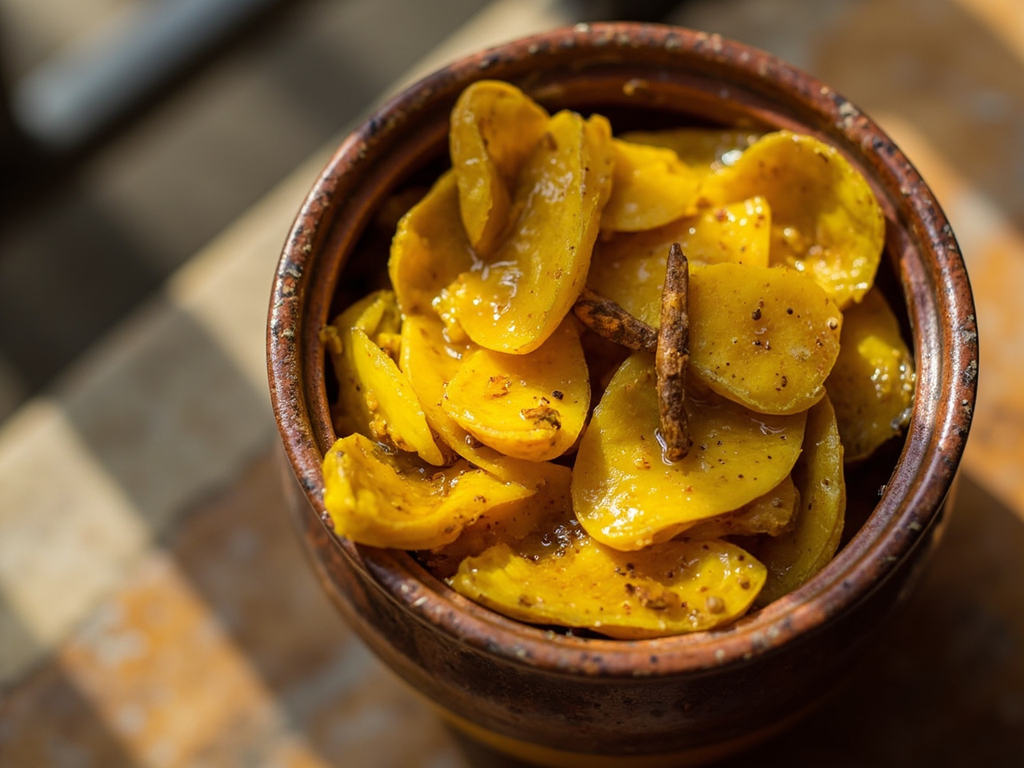
How it was made : The pulikachal, a base of tamarind cooked in oil, was prepared in large quantities and kept for days in earthenware jars: it was the household preserve. The acidity of tamarind and the oil acted as natural preservatives, perfect for pilgrimages and long crossings.
The contemporary twist : Presented as a ball pressed in a banana leaf tied with string, like a Tamil pilgrim's bento.
Sources : S. Meenakshi Ammal, Samaithu Paar (Cook and See), 1951 · Robert Kanigel, The Man Who Knew Infinity, 1991
Srinivasa Ramanujan · Charactorium