
Subutai was the principal general and strategist of Genghis Khan, and later of his son Ögedei. The architect of the great Mongol campaigns, he is regarded as one of the most brilliant military commanders in history, having led armies from China all the way to the gates of Central Europe.
Subutai(1175 — 1248)
Subutai
Empire mongol
6 min read
Frequently asked questions
Key Facts
- Born around 1175 into a tribe of the steppes (the Uriankhai), he joined Genghis Khan's entourage at a very young age.
- Commanded the campaigns against the Khwarazmian Empire (around 1219-1221) alongside Jebe.
- Led the great reconnaissance raid that crushed the Russians and the Cumans at the Battle of the Kalka in 1223.
- Directed the invasion of Russia and Central Europe, winning the battles of the Sajó (Mohi) and Legnica in 1241.
- Died around 1248 after serving under three great khans, never having lost a major campaign.
Works & Achievements
A reconnaissance expedition spanning several thousand kilometers with Jebe, across Persia, the Caucasus, and the Russian steppes: an unprecedented logistical feat.
The first major defeat inflicted on the Russian principalities, achieved through a feigned retreat that scattered the enemy before annihilating them.
A decisive campaign against northern China, crowned by the fall of Kaifeng and the collapse of the Jin dynasty.
A vast invasion planned by Subötaï, which subjugated Russia and carried the Mongol armies into the heart of Europe.
The conquest of the great city of the Rus', the gateway opening the road to Central Europe.
The coordination of two simultaneous offensives in Poland and Hungary, a model of large-scale strategic maneuver.
Anecdotes
Subötaï was not a Mongol prince: he came from the Uriankhai forest people and, according to tradition, his family were blacksmiths. Starting from the bottom of the ladder, he rose through talent alone to command entire armies — something exceptional in a society where power passed through bloodlines.
Around 1221-1223, Subötaï and the general Jebe led an extraordinary reconnaissance ride: they swept around the Caspian Sea, crossed the Caucasus, and defeated the Russian princes and the Cumans at the Kalka River in 1223, before returning to Mongolia. No one before them had dared such a distant and audacious raid.
In April 1241, in just two days, the Mongol armies crushed the Polish knights at Legnica and the Hungarian army at Mohi: Subötaï had coordinated these offensives several hundred kilometers apart, demonstrating a strategic vision ahead of his time.
Western Europe was perhaps saved by chance: in late 1241, news of the death of the Great Khan Ögödei reached the Mongol generals. By custom, the leaders had to return to elect a successor, and Subötaï pulled back his troops just as the road to Vienna seemed open.
Reputed to be undefeated, Subötaï is said to have led or planned dozens of campaigns over four decades. Modern historians often compare him to the greatest strategists in history for his mastery of intelligence, logistics, and coordinated maneuver.
Primary Sources
Subötaï the Brave is among the faithful companions of Genghis Khan who swear to serve their lord “like the rat that hoards, like the crow that gathers,” promising to follow him to the very end.
The Persian chronicler describes Subötaï as one of the greatest emirs of the army, the man entrusted with the most distant and most difficult campaigns of the empire.
A witness to the invasion of Hungary in 1241, the cleric recounts the terrifying speed of the Tatar horsemen and the rout of King Béla IV's army near the Sajó River.
The Persian author records the lightning-fast march of the Mongol armies across Khwarezm and beyond, emphasizing the discipline and coordination of Genghis Khan's generals.
Key Places
Cradle of the Uriankhai people and heartland of Genghis Khan's Mongolia, where Subutai grew up before joining the army.
Scene of the 1223 Mongol victory over the Russian princes and the Cumans, at the end of the great raid led by Subutai and Jebe.
Capital of the Jin Empire, which fell in 1233 after a long siege carried out by the Mongols under Subutai's command.
Site of the crushing Mongol victory of April 1241 over the army of King Béla IV, near the Sajó River.
Great city of Khwarezm captured by the Mongols in 1220, the starting point of Subutai's long ride around the Caspian Sea.
Land where Subutai returned to live out his final years and died in 1248, after more than forty years of campaigns.
Typical Objects
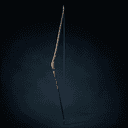
A short bow made of wood, horn and sinew, with formidable power. It could be drawn from a horse galloping at full speed, the decisive asset of the Mongol army.
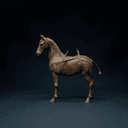
A small, sturdy and hardy Mongol horse, capable of long marches on little food. Each warrior led several of them so as to keep advancing without tiring.
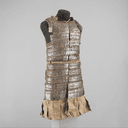
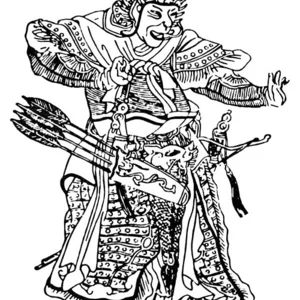
A cuirass made of small plates of hardened leather or metal laced together. Light and flexible, it protected the rider without hampering his movements.
📷 CC0 · Wikimedia Commons ↗
A tablet of wood, silver or gold serving as a pass and a symbol of authority in the Mongol empire. It gave its bearer access to the relay stations and resources of the state.
📷 CC BY-SA 3.0 · Wikimedia Commons ↗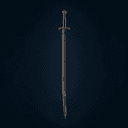
A curved single-edged saber, the cavalryman's close-combat weapon. Its curved blade was effective for delivering slashing blows at full gallop.
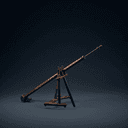
A throwing engine, often borrowed from Chinese and Persian engineers, used to break down city walls. Subutai knew how to integrate these siege techniques into cavalry armies.
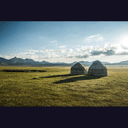
A round felt tent set on a wooden frame, the demountable dwelling of the Mongol nomads. It followed the army and the court in their movements.
📷 CC BY-SA 4.0 · Wikimedia Commons ↗School Curriculum
Vocabulary & Tags
Key Vocabulary
Daily Life
Morning
On campaign, the day began early: the horses, bows, and provisions were all checked over. Subutai received the scouts who had returned during the night, for intelligence guided every one of his decisions.
Afternoon
The afternoon was devoted to marches, maneuvers, and planning. The general charted routes, coordinated separate columns, and adapted his plans to the information brought back by the couriers of the relay network.
Evening
In the evening, the army set up its camp of yurts and campfires. Officers and commanders of tens gathered to pass on the next day's orders, while sentries kept watch over the herds and the surrounding approaches.
Food
Mongol warriors lived mainly on dried meat, mare's milk, and hardened cheese, all easy to carry. In times of scarcity they could also draw blood from their horses, which allowed them to travel vast distances without resupply.
Clothing
They wore the deel, a long wraparound robe cinched with a belt, completed by leather boots and fur-lined caps against the cold of the steppes. In battle, the rider added lamellar armor and sometimes a silk shirt beneath the cuirass.
Housing
A nomad, Subutai lived in a yurt, a round, collapsible felt tent carried from one camp to the next. The court and the army thus formed mobile cities that moved to the rhythm of the herds and the campaigns.
Historical Timeline
Period Vocabulary
Liens externes & ressources
Références
Œuvres
Grand raid autour de la mer Caspienne
1220-1223
Victoire de la rivière Kalka
1223
Conquête de l'empire Jin
1232-1234
Campagne d'Occident
1236-1242
Prise de Kiev
1240
Double victoire de Legnica et Mohi
1241