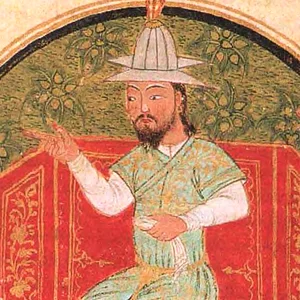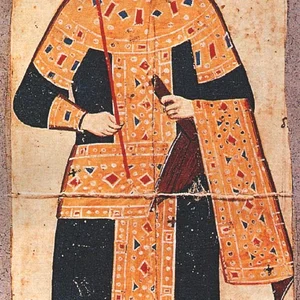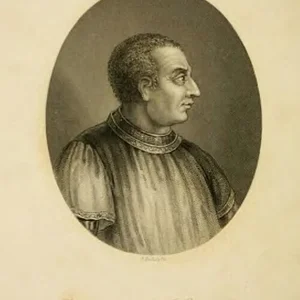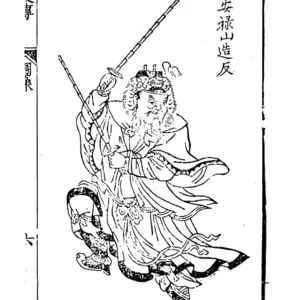

A general of Sogdian and Turkic origin in the service of the Tang dynasty, An Lushan rebelled in 755 against Emperor Xuanzong and proclaimed himself emperor of the short-lived Yan dynasty. His rebellion plunged China into a devastating civil war before his assassination in 757.
Frequently asked questions
Key Facts
- Military governor (jiedushi) of several frontier provinces in northeastern China under the Tang
- Launched the An Lushan Rebellion in December 755 against Emperor Xuanzong
- Proclaimed himself emperor of the Yan dynasty in 756 after capturing the capital Luoyang
- Assassinated by his own son An Qingxu in 757
- His rebellion (755-763) caused millions of deaths and lastingly weakened the Tang dynasty, upending the life of the poet Du Fu
Works & Achievements
An Lushan brought together in his own hands the posts of military commissioner of Fanyang, Pinglu, and Hedong, concentrating an unprecedented degree of military power for a subject.
He raised a body of loyal troops, including an elite guard recruited from the peoples of the steppes, the power base of his rebellion.
A major military uprising that marked the turning point in the decline of the Tang dynasty and reshaped the course of Chinese history for good.
A lightning conquest of the two imperial capitals, which forced Emperor Xuanzong to flee and exposed the fragility of the Tang heartland.
An Lushan proclaimed himself emperor of a new rival dynasty, the short-lived Yan, which scarcely outlasted his death.
His revolt strengthened the power of the regional military governors (jiedushi), a legacy that undermined the empire for a century and a half.
Anecdotes
An Lushan was famous for his spectacular obesity: the chronicles report that his belly hung down to his knees and that it took two servants to lift his paunch when he got dressed. Despite this weight, he is said to have danced the Sogdian “whirling dance” before the emperor with surprising lightness.
To win the court's favor, An Lushan had himself adopted by the imperial favorite Yang Guifei, who was nonetheless younger than him. During a burlesque ceremony, he was swaddled like a giant newborn and carried in a cradle by the palace ladies, which greatly amused Emperor Xuanzong.
Asked one day about the enormity of his belly, An Lushan is said to have replied to the emperor that it contained “nothing but a loyal heart.” Yet a few years later, he betrayed the dynasty he had sworn to serve.
An Lushan spoke six Central Asian languages, which first earned him a job as a broker in the frontier markets before his military career. This command of languages made him a valuable go-between linking the Tang Empire and the peoples of the steppes.
Having proclaimed himself emperor, An Lushan gradually lost his sight and was plagued by ulcers that made him irritable and violent. He was finally assassinated in 757 in his own tent by a eunuch, on the orders of his own son An Qingxu, who was impatient to seize power.
Primary Sources
An Lushan, of the Yingzhou commandery, was of mixed barbarian descent. He understood the languages of six peoples and first served as a broker in the markets.
In the winter of the fourteenth year of the Tianbao era, An Lushan raised his troops at Fanyang, on the pretext of a secret edict to punish the minister Yang Guozhong.
When news of the revolt reached the capital, the court was seized with shock, for peace had reigned for so long that few people still knew how to wage war.
The war drums of Yuyang shook the earth and shattered the melody of the “Rainbow Robes and Feather Garments.”
Key Places
A frontier commandery in the northeast where An Lushan was born, a zone of contact between Chinese, Sogdians, and steppe peoples. It was there that he learned languages and trade before joining the army.
A major military base in the north of which An Lushan was the commissioner; it was from here that he launched his revolt in 755. The city was the heart of his frontier power.
The imperial capital of the Tang and the largest city in the world at the time, where An Lushan was received at the court of Xuanzong. The rebels seized it in 756.
The eastern capital of the Tang, captured by An Lushan, who proclaimed himself emperor of the Yan dynasty there in 756. It became the center of his short-lived regime.
A strategic pass guarding access to Chang'an from the east. Its fall in 756, after a reckless sortie by the imperial troops, opened the road to the capital for the rebels.
A post station where, during Xuanzong's flight toward Sichuan, the army mutinied and forced the emperor to have his favorite, Yang Guifei, executed.
Typical Objects
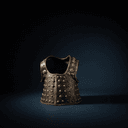
Protective gear made of small plates of iron or lacquered leather laced together, worn by the elite cavalry of the Tang frontier armies. It offered both flexibility and resistance during charges.
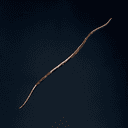
A short bow made of wood, horn, and sinew, designed to be shot from horseback by the mounted archers of the steppes. It was the decisive weapon in the frontier wars between the Tang and the nomadic peoples.
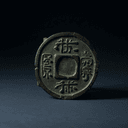
A seal of jade or bronze symbolizing the legitimacy of the newly self-proclaimed emperor An Lushan. Stamping this seal on edicts claimed to found a dynasty rivaling the Tang.
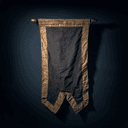
A command banner granted by the emperor to the military governors of the frontier marches. It gave An Lushan near-sovereign authority over the armies and territories of the northeast.
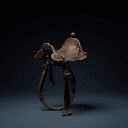
Equipment allowing the rider to stay firmly seated during a charge and to shoot a bow while moving. The spread of the rigid stirrup made An Lushan's mounted armies formidable.
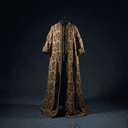
A silk garment whose colors and patterns were regulated according to rank, worn by the high dignitaries received at the palace of Chang'an. An Lushan wore one during his visits to Xuanzong's court.
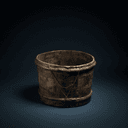
A large drum beaten to signal the advance of the troops and to keep the marching rhythm. The poet Bai Juyi evokes "the drums of Yuyang" as the sonic announcement of the rebellion.
School Curriculum
Vocabulary & Tags
Key Vocabulary
Daily Life
Morning
As a military commissioner, An Lushan began his day by inspecting his troops and reading the dispatches arriving from the frontier. Secretaries presented him with reports on the movements of the nomadic peoples and the state of the garrisons.
Afternoon
The afternoon was devoted to military training, cavalry and archery exercises, as well as the management of frontier markets and tributes. He also received emissaries from neighbouring tribes, putting to good use his knowledge of several languages.
Evening
In the evening, banquets and entertainments set the rhythm of life for a great warlord: Sogdian music, whirling dances and lavish feasts. During his stays at court, he took part in the refined festivities of the imperial palace.
Food
The table of a Tang dignitary blended Chinese and Central Asian influences: roasted mutton, flatbreads, rice and millet, accompanied by imported grape wine. An Lushan, renowned for his gluttony, did full justice to particularly abundant meals.
Clothing
Depending on the occasion, he wore the lamellar armour and boots of a steppe horseman or the embroidered silk robe of a court dignitary. The colours and insignia of his clothing signalled his high rank in the imperial hierarchy.
Housing
He resided in vast fortified headquarters at Fanyang, combining barracks, stables and audience halls. During his visits to Chang'an, the emperor gave him a sumptuous, richly furnished residence near the palace.
Historical Timeline
Period Vocabulary
Liens externes & ressources
Références
Œuvres
Commandement cumulé de trois provinces frontalières
742-751
Constitution d'une armée frontalière personnelle
vers 750-755
Déclenchement de la rébellion d'An Lushan
755
Prise de Luoyang et de Chang'an
756
Fondation de la dynastie Yan
756
Affaiblissement durable de l'autorité centrale Tang
à partir de 755