Sweet fermented rice with osmanthus (jiǔniàng)
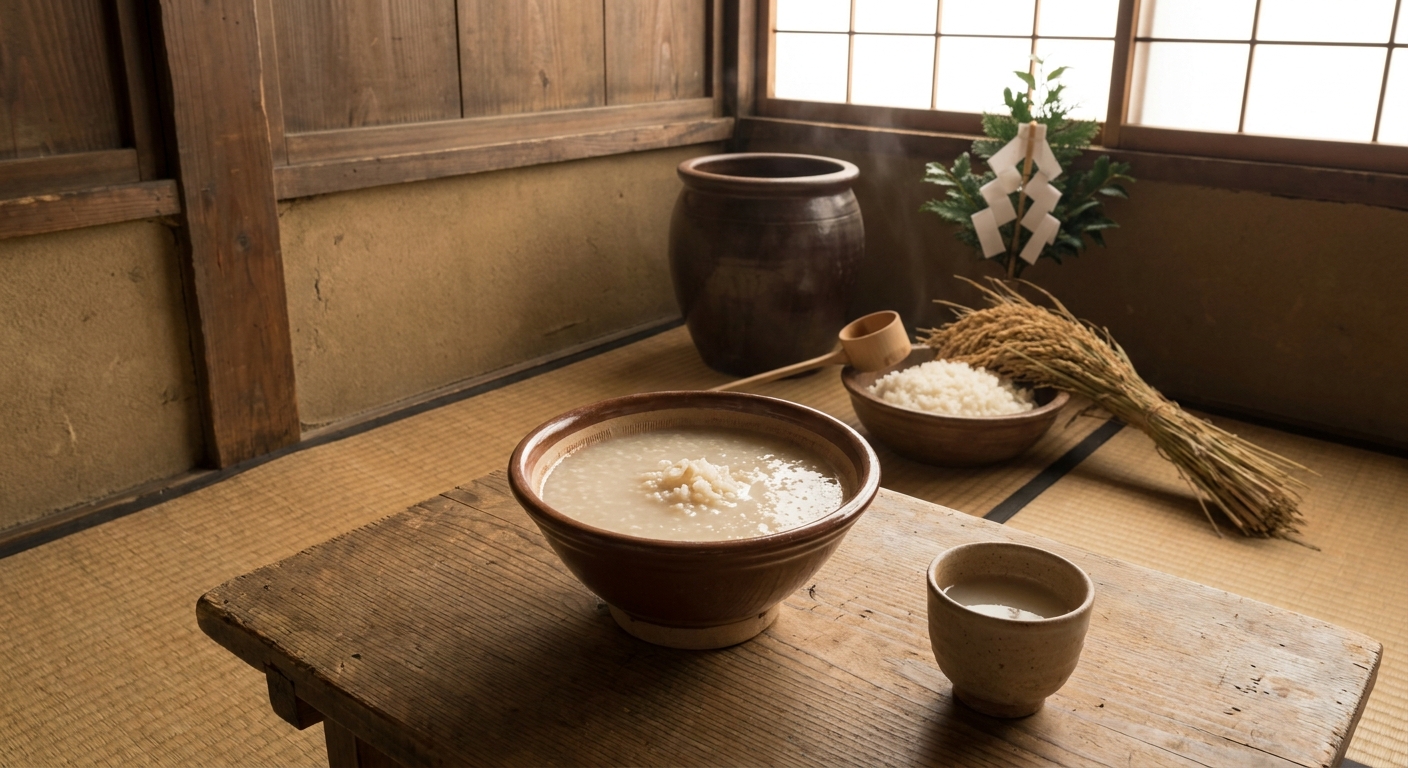
Glutinous rice left to soften for a few days with a ferment: it becomes tender, juicy and naturally sweet, slightly sparkling. Served warm and scented with osmanthus, it's a comforting dessert-drink.
Glutinous rice left to soften for a few days with a ferment: it becomes tender, juicy and naturally sweet, slightly sparkling. Served warm and scented with osmanthus, it's a comforting dessert-drink.
Ah, the wine of the Celestial Palace! I emptied the imperial jars before the Immortals even arrived at their banquet—that was a fine mess, I admit! But for you, mortal, I show the sweet version: cooked rice left to soften with a ferment, and it becomes sweet as morning dew, just a little tingle on the tongue. Scent it with osmanthus, serve it warm. Enough to laugh and sing without end—like me, once, before they crushed me under a mountain!
- •Glutinous rice — a measure (fermentable base)
- •Rice ferment (jiǔqū / qū) — as needed (triggers sweet fermentation)
- •Boiled and cooled spring water — a little (moisture)
- •Osmanthus flowers — a pinch (signature fragrance)
Sweet fermented rice with osmanthus (jiǔniàng)
Glutinous rice left to soften for a few days with a ferment: it becomes tender, juicy and naturally sweet, slightly sparkling. Served warm and scented with osmanthus, it's a comforting dessert-drink.
Why this dish? Before the Peach Banquet, Sun Wukong empties the jars of imperial wine reserved for the Immortals, drunk and triumphant—then swallows Laozi's golden pills. Here we evoke the sweet, home-style version of this celestial wine: a barely alcoholic fermented rice, sweet as dew.
Ah, the wine of the Celestial Palace! I emptied the imperial jars before the Immortals even arrived at their banquet—that was a fine mess, I admit! But for you, mortal, I show the sweet version: cooked rice left to soften with a ferment, and it becomes sweet as morning dew, just a little tingle on the tongue. Scent it with osmanthus, serve it warm. Enough to laugh and sing without end—like me, once, before they crushed me under a mountain!
Ingredients (period version)
- Glutinous rice — a measure (fermentable base)
- Rice ferment (jiǔqū / qū) — as needed (triggers sweet fermentation)
- Boiled and cooled spring water — a little (moisture)
- Osmanthus flowers — a pinch (signature fragrance)
Ingredients
- Glutinous rice (sushi rice if unavailable) — 200 g (base)
- Sweet rice ferment (jiǔqū, in ball, from Asian grocery) — 1 ball crushed (≈3 g) (fermentation)
- Boiled cooled water — 50 ml + for serving (hydration)
- Dried osmanthus — 1 tsp (fragrance)
- Honey or sugar — to taste (optional) (extra sweetness at serving)
Method
- Soak the glutinous rice for 4 hours, then steam for 25-30 minutes until tender.
- Spread the rice and let it cool to body temperature (warm, not hot, or the ferment will die).
- Crush the ferment into powder, mix it into the rice with a little boiled cooled water. Press into a clean jar, making a well in the center.
- Cover and let ferment for 36-48 hours in a warm place (about 28-30°C): sweet liquid appears in the well, the rice smells fragrant.
- Then refrigerate. To serve, warm a few spoonfuls in a little water, scent with osmanthus and, if desired, a drizzle of honey. Serve warm.
How it was made : Rice fermentation using qū ferments (molds and yeasts) is one of the oldest Chinese food techniques, the origin of all rice alcohols. Jiǔniàng (or láozāo), very low in alcohol, was—and still is—consumed as a family sweet, especially for women after childbirth, quite distinct from the strong wines of banquets.
The contemporary twist : Serve the jiǔniàng warm with small glutinous rice flour dumplings (tāngyuán) floating in it: a soft cloud for the master of the Magic Cloud.
Sources : Wu Cheng'en, Journey to the West (Xiyouji), 16th century — episode of drunkenness in the Celestial Palace
Sun Wukong · Charactorium