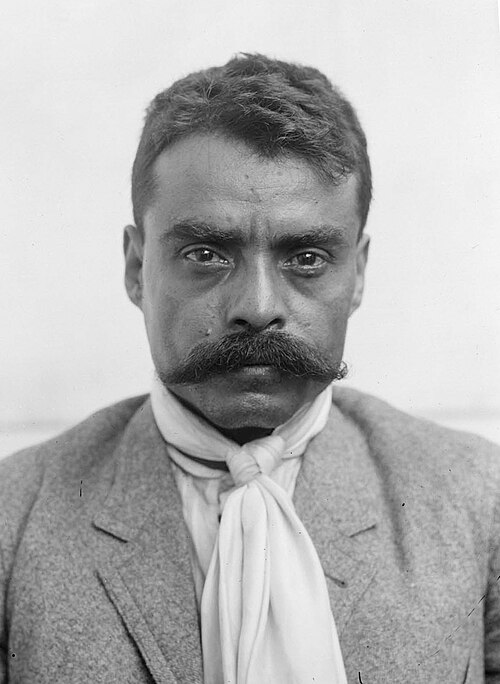
Thomas Sankara(1949 — 1987)
Thomas Sankara
Burkina Faso, République de Haute-Volta
6 min read
Burkinabè officer and revolutionary, president of Burkina Faso from 1983 to 1987. A figure of Pan-Africanism and anti-imperialism, he renamed Upper Volta “Burkina Faso” (“land of upright people”) and led radical reforms before being assassinated during a coup d'état.
Frequently asked questions
Famous Quotes
« The slave who is not capable of taking up his own revolt does not deserve our pity for his fate.»
« The debt cannot be repaid, because first of all, if we do not pay, our lenders will not die. We can be sure of that. On the other hand, if we do pay, it is we who will die.»
« Let us dare to invent the future.»
Key Facts
- 1983: comes to power in Burkina Faso (Upper Volta) following a coup d'état.
- 1984: renames Upper Volta “Burkina Faso” (“land of upright people”).
- 1985-1987: campaigns of vaccination, literacy, reforestation, and the emancipation of women.
- 1987: assassinated on 15 October during a coup d'état that brings Blaise Compaoré to power.
- Nicknamed the “African Che Guevara” for his revolutionary and anti-imperialist commitment.
Works & Achievements
Transformation of the colonial Upper Volta into the “land of upright people,” with a new flag and a new anthem, to assert national identity and dignity.
Vaccination of more than two million children against measles, yellow fever, and meningitis in just a few weeks, praised by the WHO.
Planting of millions of trees to slow the advance of the Sahara and protect the soils of the Sahel, an early example of political ecology.
Redistribution of land to peasants to increase agricultural production and aim for the country's food self-sufficiency.
Ban on female genital cutting and forced marriages, women's access to education and to positions of power, a pioneer in Africa.
Anthem composed by Sankara himself, celebrating the revolution and the unity of the Burkinabè people.
A vast program to teach rural populations to read and write in several national languages.
The “cités” operation and community work projects to house, treat, and educate residents at lower cost.
Anecdotes
When he came to power, Sankara sold off the ministers' fleet of Mercedes and made the Renault 5 — the cheapest car in the country at the time — the official government vehicle. He wanted to show that leaders should live simply, like the people.
An excellent guitarist, Sankara personally composed Burkina Faso's new national anthem, “One Single Night” (the Ditanyè). Before going into politics, he played in a band and remained passionate about the guitar and motorbikes.
In 1987, at the podium of the Organisation of African Unity in Addis Ababa, Sankara delivered a resounding speech calling on African countries to form a united front and refuse to pay their debt: “If we don't pay, our lenders won't die. If we do pay, it is we who will die.”
Sankara launched vast vaccination campaigns and had millions of trees planted to fight the advance of the desert (the Sahel). Within a few weeks, more than two million children were vaccinated against measles, yellow fever and meningitis.
A committed feminist, he introduced a “men's market day” on which husbands had to do the shopping and the cooking so they would understand women's daily work. He also appointed women to positions of responsibility, something rare in Africa at the time.
Primary Sources
The debt cannot be repaid, first because if we do not pay, our lenders will not die. Of that we can be sure. But if we do pay, it is we who will die. Of that we can be just as sure.
Our revolution in Burkina Faso is open to the suffering of all peoples. It also draws on the whole body of human experience, from the very first breath of humanity.
The revolution and the emancipation of women go hand in hand. We do not regard the emancipation of women as an act of charity or a surge of human compassion.
I have not come here to expound a doctrine. I speak in the name of the Burkinabè people, in the name of those people of integrity of whom my country counts millions.
Key Places
Town where Thomas Sankara was born in 1949, in the north-central part of present-day Burkina Faso.
Capital of Burkina Faso where Sankara led the country and carried out his reforms. It is also the site of his assassination in 1987.
Building where Sankara and his companions were gunned down on 15 October 1987 during the coup d'état. It has become a place of remembrance.
Town where Sankara underwent military training and discovered revolutionary ideas during the uprisings of 1972.
Headquarters of the Organisation of African Unity where Sankara delivered his famous speech on debt in 1987.
Memorial erected on the site of his assassination to honor his memory and that of his companions.