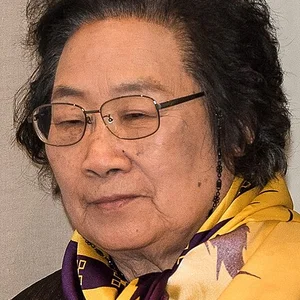

Chinese pharmaceutical researcher
Tu Youyou(1930 — )
Tu Youyou
République populaire de Chine
7 min read
Frequently asked questions
Key Facts
Works & Achievements
Isolation of the active compound artemisinin from Artemisia annua (sweet wormwood), a plant used in traditional Chinese medicine. This discovery revolutionized the treatment of malaria and saved millions of lives.
Development of a more effective derivative of artemisinin, offering improved bioavailability and faster action against the malaria parasite.
Creation of a semi-synthetic derivative of artemisinin that can be administered intramuscularly, enabling the treatment of severe malaria and neurological complications.
Leadership of 'Project 523', a Chinese government-funded initiative to develop new antimalarial drugs from traditional medicinal plants, establishing an innovative approach combining modern pharmacology with ancient knowledge.
Research into combining artemisinin with other compounds to increase effectiveness and reduce the risk of resistance developing in the malaria parasite.
Awarded the Nobel Prize for the discovery of artemisinin as a treatment for malaria, in international recognition of her groundbreaking contributions to medicine and global public health.
Anecdotes
Tu Youyou began her research on artemisinin in 1969, in the midst of the Chinese Cultural Revolution, at a time when science was held in low regard. She led a secret team of researchers who tested more than 380 different plant extracts in the search for a treatment against malaria. Her determination eventually paid off: she discovered that artemisinin, extracted from sweet wormwood, was remarkably effective against the malaria parasite.
Although recognized worldwide for her discoveries, Tu Youyou did not obtain a doctoral degree until very late in her career, as access to higher education was limited in China during her time. This never stopped her: she continued to conduct both fundamental and applied research, proving that scientific passion could overcome administrative obstacles.
In 2015, at the age of 84, Tu Youyou received the Nobel Prize in Physiology or Medicine for her discovery of artemisinin, becoming the first Chinese woman scientist to receive this prestigious award. She shared the prize with two other researchers, but her name remained inseparable from this major breakthrough that has saved millions of lives.
Tu Youyou brilliantly combined knowledge from traditional Chinese medicine with modern scientific methods, exploring ancient texts to identify potentially therapeutic plants. This innovative approach demonstrated that ancient wisdom and contemporary science could reinforce each other to solve global public health problems.
During her research, Tu Youyou personally tested artemisinin on herself before using it on patients — a courageous act of scientific dedication that reflects her confidence in her own work. This personal experience allowed her to better document the drug's effects and refine dosages for maximum effectiveness.
Primary Sources
The discovery of artemisinin is the result of the integration of modern science and traditional Chinese medicine. Through systematic screening of traditional Chinese medicinal plants, we identified artemisinin from Artemisia annua L. as a highly effective antimalarial agent.
I am honored to have the opportunity to present the discovery of artemisinin and its derivatives for the treatment of malaria. This discovery originated from the study of traditional Chinese medicine and came from over 200 herbal medicines that were screened.
Tu Youyou's systematic investigation of traditional Chinese pharmacology led to the isolation of artemisinin from sweet wormwood, which demonstrated extraordinary efficacy against malaria parasites and represented a breakthrough in antimalarial therapy.
Clinical trials conducted under Tu Youyou's direction showed that artemisinin derivatives, particularly artesunate, achieved cure rates exceeding 90% in patients with severe malaria and cerebral malaria complications.
Key Places
Tu Youyou's birthplace in 1930. It is in this coastal region of Zhejiang province that she was born and raised before going on to pursue her scientific studies.
The institution where Tu Youyou studied pharmacology and medicine in the 1950s. There she received her foundational scientific training in pharmaceutical chemistry.
The main site of her research in Beijing, where Tu Youyou conducted her work on artemisinin and developed the groundbreaking antimalarial treatment between the 1960s and 1980s.
The province where Tu Youyou took part in clinical research missions to test and validate the effectiveness of artemisinin against malaria during the 1970s.
The city where Tu Youyou received the Nobel Prize in Physiology or Medicine in 2015 for her discovery of artemisinin and its applications in the treatment of malaria.
The Chinese capital where Tu Youyou spent the majority of her scientific career at prestigious research institutions focused on traditional medicine and modern pharmacology.
Typical Objects
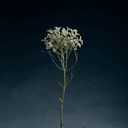
The herbaceous plant from which Tu Youyou isolated artemisinin, the revolutionary active compound against malaria. This plant is at the heart of her landmark scientific discovery.

An essential laboratory instrument used for observing and analyzing substances extracted from medicinal plants during the 1970s and 1980s.

The crystalline compound isolated by Tu Youyou, representing her major discovery that revolutionized the treatment of malaria and earned her the Nobel Prize in Medicine in 2015.

A collection of medicinal plants used for centuries in China, which served as a source of inspiration for Tu Youyou's research into ancestral knowledge.

The award received in 2015 for her discovery of artemisinin, recognizing her major contribution to medicine and global health.

Laboratory instruments used for the extraction, analysis, and purification of active compounds from medicinal plants.

Ancient texts such as the Bencao Gangmu documenting the therapeutic uses of plants, which formed the documentary foundation of Tu Youyou's research.

Pharmaceutical formulations of artemisinin developed for the treatment of malaria, embodying the real-world medical application of her discovery.
School Curriculum
Daily Life
Morning
Tu Youyou rises early to get ready before heading to the Institute of Chinese Materia Medica in Beijing where she works. She has a light breakfast of congee and pickled vegetables, a traditional staple of northern China. She arrives at the laboratory in the early hours to review the previous day's experimental results and plan the day's tests.
Afternoon
Her afternoons are devoted to experimental research on medicinal plant extracts, particularly Artemisia annua. She works closely with her team in the laboratory, meticulously documenting every result according to rigorous scientific protocols. She regularly consults ancient texts from the Chinese pharmacopoeia to guide her research hypotheses.
Evening
At the end of the day, she returns to her home in Beijing, often still turning over unsolved scientific problems in her mind. She has a simple dinner with her family, then spends time reading scientific publications and writing up research notes. She goes to bed relatively early to keep up the energy her intensive work demands.
Food
Her diet reflects northern Chinese cuisine: rice, noodles, seasonal vegetables, tofu, and occasionally fish or meat. She favors simple, nutritious foods, with tea as her main drink, consumed regularly throughout the day in keeping with Chinese tradition.
Clothing
Tu Youyou wears simple, practical clothing suited to laboratory work: white researcher's lab coats and functional dark trousers. Outside the laboratory, she dresses in the understated, unassuming style typical of Chinese intellectuals of the twentieth century, with no taste for ostentation.
Housing
She lives in modest housing provided by the research institute in Beijing, in an academic district close to her workplace. Her home is simple but functional, organized to make room for scientific books and research notes — a reflection of a life entirely devoted to science.
Historical Timeline
Period Vocabulary
Visual Style
Un style qui fusionne l'art botanique traditionnel chinois avec l'esthétique scientifique moderniste : illustrations en aquarelle douce mêlant plantes médicinales, schémas chimiques et diagrammes techniques, pour célébrer le double héritage de la recherche en pharmacie chinoise et de la science contemporaine.
Sound Ambience
Une ambiance intimiste et studieuse évoquant le laboratoire où Tu Youyou a mené ses recherches révolutionnaires, mêlant les sons authentiques de la médecine traditionnelle chinoise avec l'atmosphère concentrée d'un centre de recherche scientifique des années 1970.
Liens externes & ressources
Références
Œuvres
Découverte de l'artémisinine
1971-1972
Dihydroartémisinine (DHA)
1973-1975
Artemether
1976-1980
Programme de recherche sur la médecine traditionnelle chinoise
1967-1975
Combinaisons thérapeutiques artémisinine-parthénolide
1980s-1990s
Prix Nobel de Physiologie ou Médecine
2015