 flip
flipItrion with Sesame and Honey, the Traveler's Sweet
Itrion with Sesame and Honey, the Traveler's Sweet
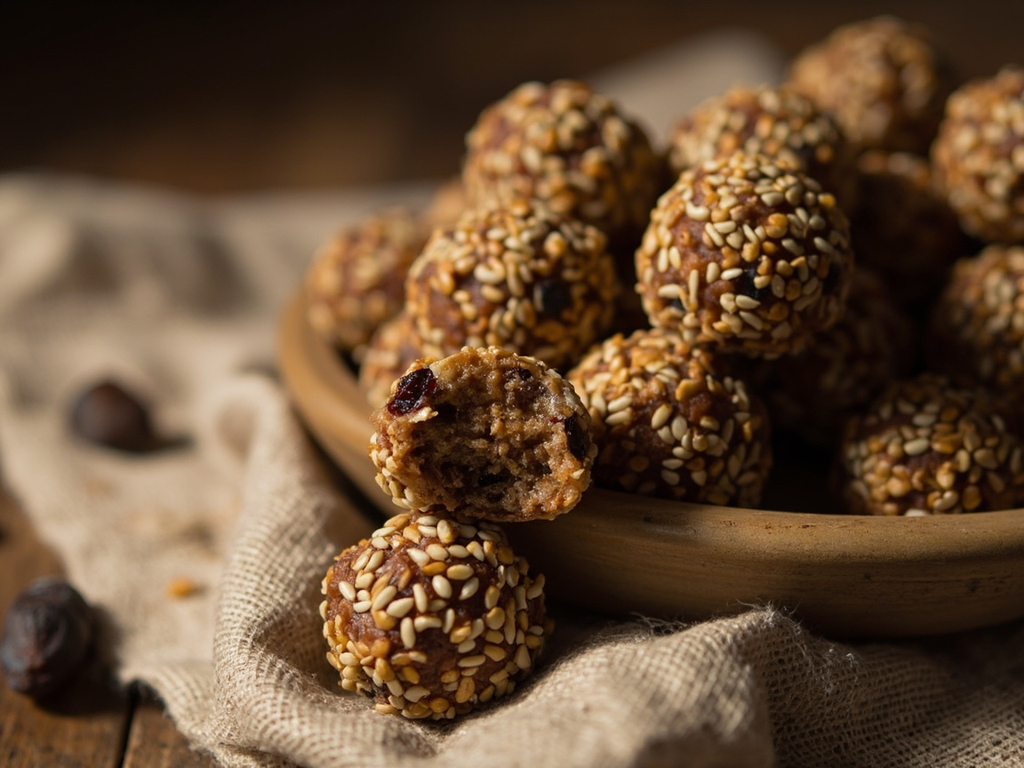
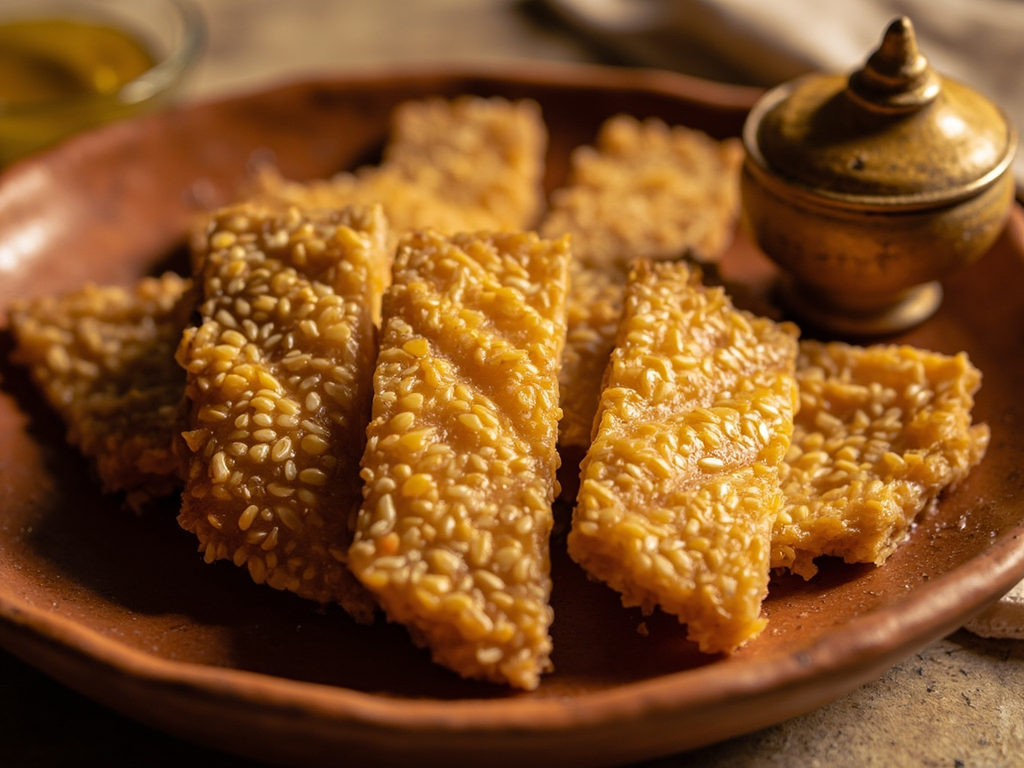
Why this dish? Ten years of wandering require provisions that keep and give strength. Small sesame cakes bound with honey are the ancestor of Greek pasteli: sweet, dense, they fit in a sailor's pouch and withstand the long voyages between Troy and Ithaca.
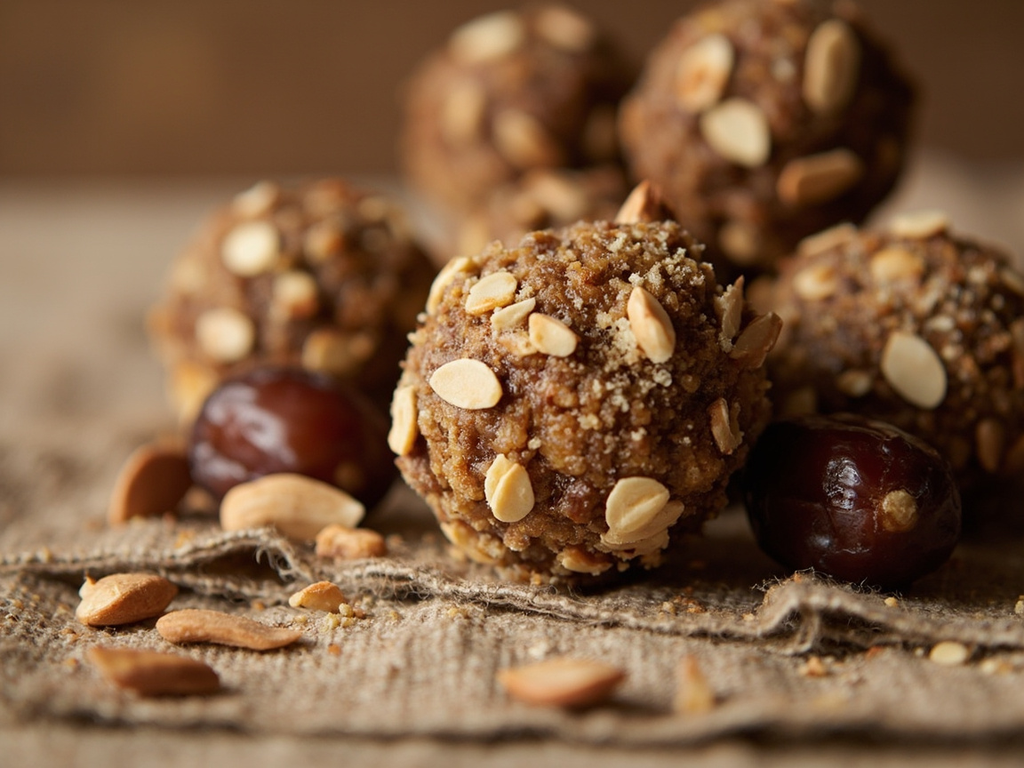
A rustic confection of toasted sesame seeds set in honey, sometimes enriched with dried figs or walnuts. Concentrated energy, it keeps for a long time: the ideal traveler's provision for a Greek.
Honey and sesame, stranger, that's what saves a man far from home. On the ship's deck, when the contrary wind held us for days, I would reach into my pouch and break off one of these golden cakes: bee's sweetness and toasted seeds, packed tight like a fist. They do not mold, they weigh nothing, and they remind the heart of the taste of home. A prudent king always carries enough to withstand a siege — or an angry sea.
- •Sesame seeds — a good measure (base)
- •Honey — enough to coat everything (binder and sweetener)
- •Dried figs (optional) — a few (fruitiness and binder)
Itrion with Sesame and Honey, the Traveler's Sweet
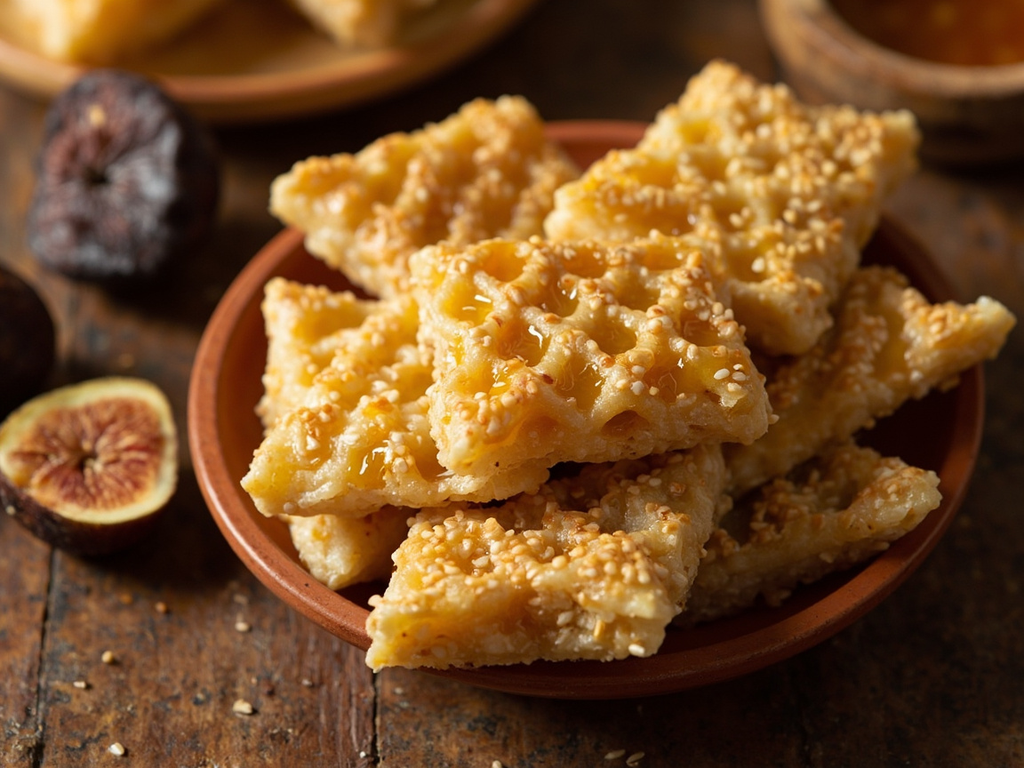
A rustic confection of toasted sesame seeds set in honey, sometimes enriched with dried figs or walnuts. Concentrated energy, it keeps for a long time: the ideal traveler's provision for a Greek.
Why this dish? Ten years of wandering require provisions that keep and give strength. Small sesame cakes bound with honey are the ancestor of Greek pasteli: sweet, dense, they fit in a sailor's pouch and withstand the long voyages between Troy and Ithaca.
Honey and sesame, stranger, that's what saves a man far from home. On the ship's deck, when the contrary wind held us for days, I would reach into my pouch and break off one of these golden cakes: bee's sweetness and toasted seeds, packed tight like a fist. They do not mold, they weigh nothing, and they remind the heart of the taste of home. A prudent king always carries enough to withstand a siege — or an angry sea.
Ingredients (period version)
- Sesame seeds — a good measure (base)
- Honey — enough to coat everything (binder and sweetener)
- Dried figs (optional) — a few (fruitiness and binder)
Ingredients
- Sesame seeds — 200 g (base)
- Honey — 150 g (binder and sweetener)
- Chopped dried figs (optional) — 50 g (fruitiness)
- A pinch of black sesame seeds (decoration, optional) — 1 pinch (aesthetic)
Method
- Toast the sesame seeds in a dry pan, stirring, until golden and fragrant.
- In a saucepan, heat the honey over low heat until it simmers and thickens slightly (2 to 3 minutes).
- Remove from heat, stir in the sesame (and chopped figs), and mix quickly.
- Spread the mixture on an oiled baking sheet, about 1 cm thick, and smooth.
- Let cool slightly, pre-cut into diamonds, then let harden before separating the pieces.
How it was made : Ancient Greeks knew sesame and honey cakes (sêsamê, itria) served at festivals and weddings, symbols of fertility. Without refined sugar, honey was the only sweetener, and sesame was a precious seed imported from the East. These dry preparations kept well — hence their use as provisions.
The contemporary twist : It is the grandfather of pasteli: present it as bite-sized pieces cut with a hot knife, a kind of "Odysseus energy bar" for hikers.
Sources : Athenaeus of Naucratis, The Deipnosophists (mentions of sesame and honey cakes) · Andrew Dalby, Food in the Ancient World from A to Z (2003)
Odysseus · Charactorium