 flip
flipRoasted Locusts with Wild Honey and Cumin
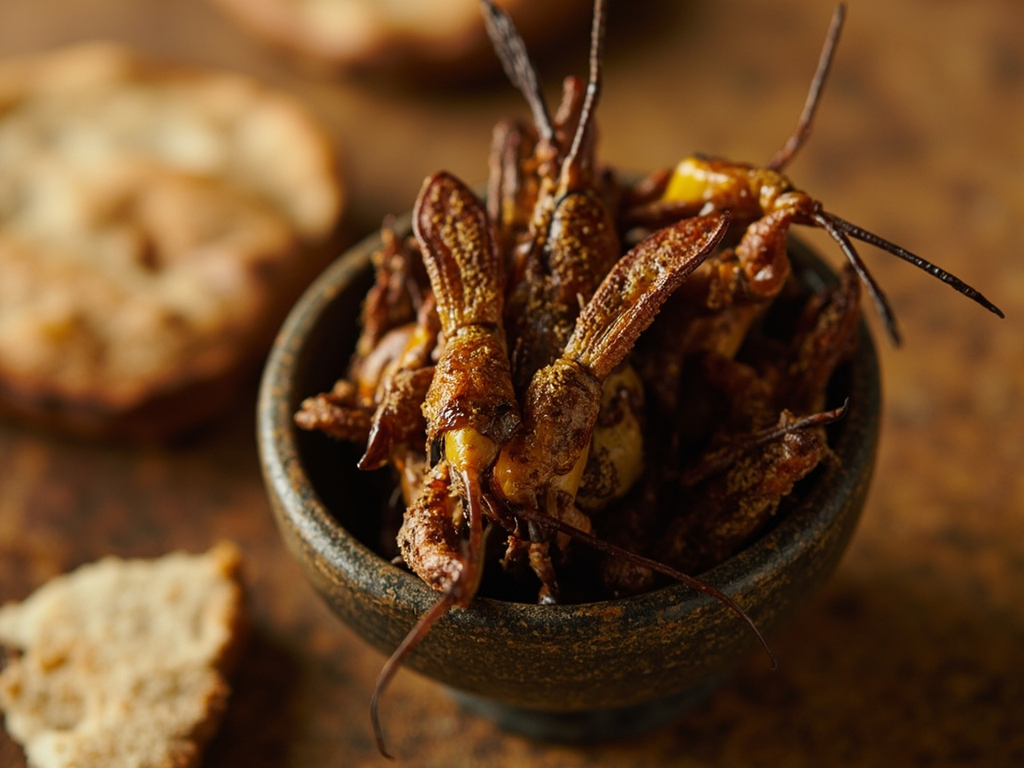
Roasted Locusts with Wild Honey and Cumin
Why this dish? In the vision, Abaddon commands the devastating locusts that come out of the Abyss (Rev 9:3-11). But the locust is also food: the Law (Leviticus 11:22) permits eating certain locusts, and desert ascetics like John the Baptist lived on 'locusts and wild honey'. Abaddon's plague here becomes the walker's provision.
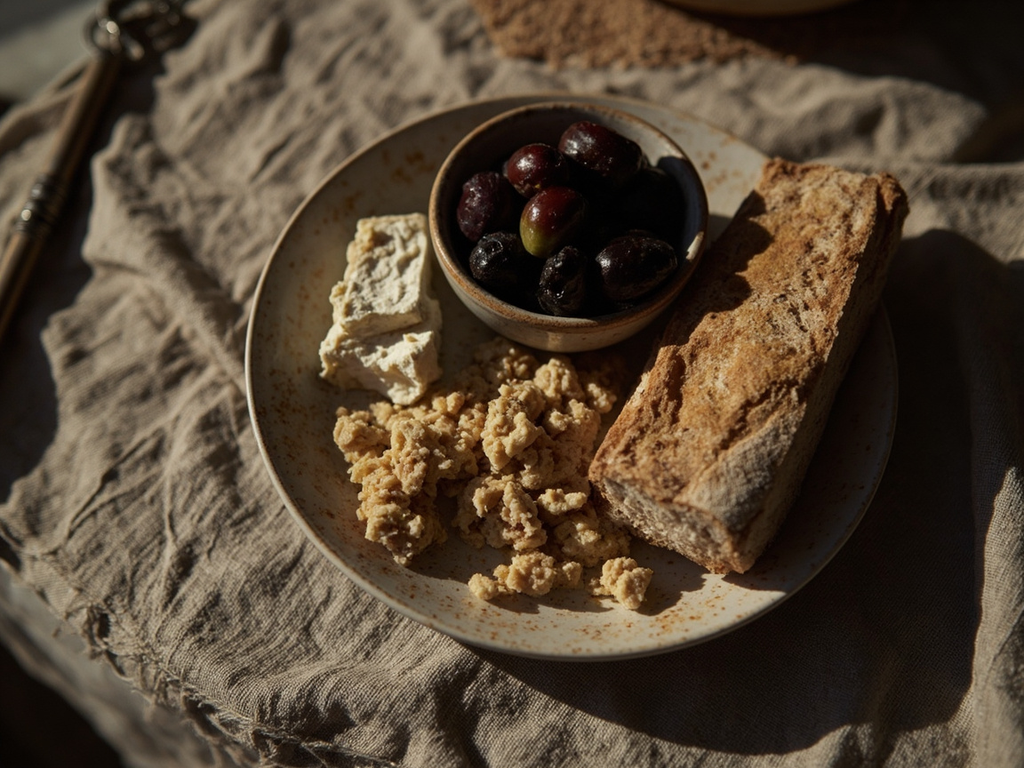
Dried then roasted crispy locusts, glazed with honey and seasoned with cumin and salt — the protein snack of shepherds and hermits of the Judean desert, which keeps and is nibbled on the road, joined with a piece of bread.
You shudder? Yet the men of the desert knew my legions well. When my locusts descend, they devour — but the wise man gathers them in the morning numb, removes wings and legs, and passes them over the fire until they crackle. A little honey, a pinch of that bitter powder you call cumin, and the plague becomes the poor man's feast. The shepherd filled his pouch with them for the long march. What I destroy, see: the hungry make it their bread.
- •Locusts (permitted grasshoppers) — a good handful (protein)
- •Wild honey — a drizzle (glaze, signature)
- •Cumin — a pinch (base spice)
- •Salt — a pinch (seasoning)
Roasted Locusts with Wild Honey and Cumin
Dried then roasted crispy locusts, glazed with honey and seasoned with cumin and salt — the protein snack of shepherds and hermits of the Judean desert, which keeps and is nibbled on the road, joined with a piece of bread.
Why this dish? In the vision, Abaddon commands the devastating locusts that come out of the Abyss (Rev 9:3-11). But the locust is also food: the Law (Leviticus 11:22) permits eating certain locusts, and desert ascetics like John the Baptist lived on 'locusts and wild honey'. Abaddon's plague here becomes the walker's provision.
You shudder? Yet the men of the desert knew my legions well. When my locusts descend, they devour — but the wise man gathers them in the morning numb, removes wings and legs, and passes them over the fire until they crackle. A little honey, a pinch of that bitter powder you call cumin, and the plague becomes the poor man's feast. The shepherd filled his pouch with them for the long march. What I destroy, see: the hungry make it their bread.
Ingredients (period version)
- Locusts (permitted grasshoppers) — a good handful (protein)
- Wild honey — a drizzle (glaze, signature)
- Cumin — a pinch (base spice)
- Salt — a pinch (seasoning)
Ingredients
- Dried edible locusts (sold in insect food stores) — 60 g (crispy protein)
- Honey — 2 tsp (glaze, signature)
- Ground cumin — 1/2 tsp (spice)
- Salt — 1 pinch (seasoning)
- Olive oil — 1 tsp (roasting)
- Barley bread or pita, as accompaniment — separate (support)
Method
- If the locusts are not already cleaned, remove wings and large legs.
- Sauté them in olive oil in a pan for 3-4 minutes until crispy.
- Off the heat, add cumin and salt, mix.
- Add honey and stir quickly to glaze over very low heat for 30 seconds.
- Let cool: they harden and crunch. Eat as is or with a piece of bread.
How it was made : Eating locusts is attested long ago in the Near East: Leviticus distinguishes them as clean, and Greco-Roman sources like Pliny report them roasted or dried. Ascetic desert communities (Essenes near Qumran, preachers like John the Baptist) made them a subsistence resource with honey. They were dried in the sun for preservation.
The contemporary twist : Serve as an appetizer in a small black bowl under the name 'Legion of the Abyss', with a note explaining the Leviticus permission — always a hit with curious kids 12 and up.
Sources : Leviticus 11:22 · Gospel of Mark 1:6 (John the Baptist: locusts and wild honey) · Pliny the Elder, Natural History, Book XI
Abaddon · Charactorium