 flip
flipBarley Maza of the Camps, with Honey and Sesame
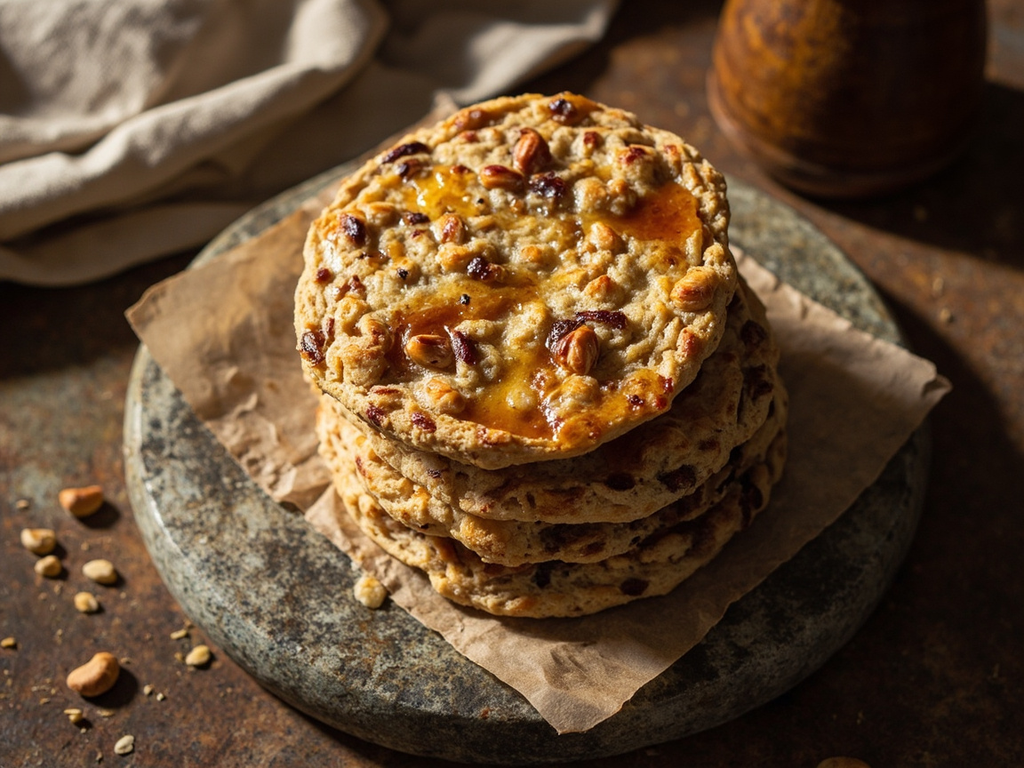
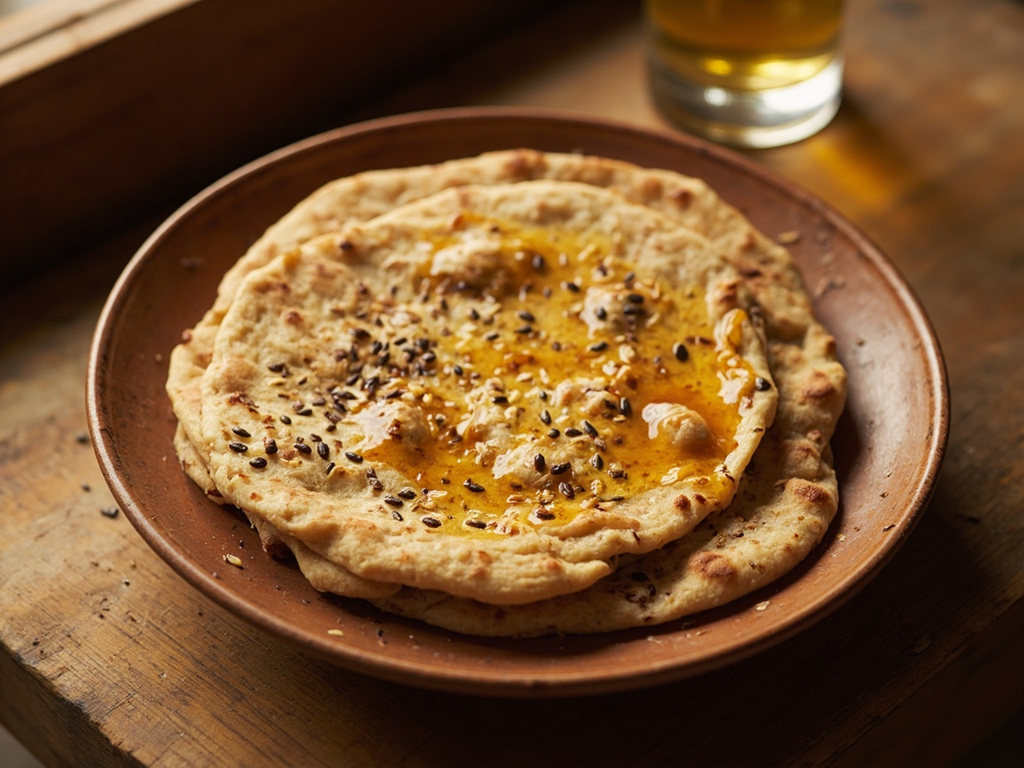
Barley Maza of the Camps, with Honey and Sesame
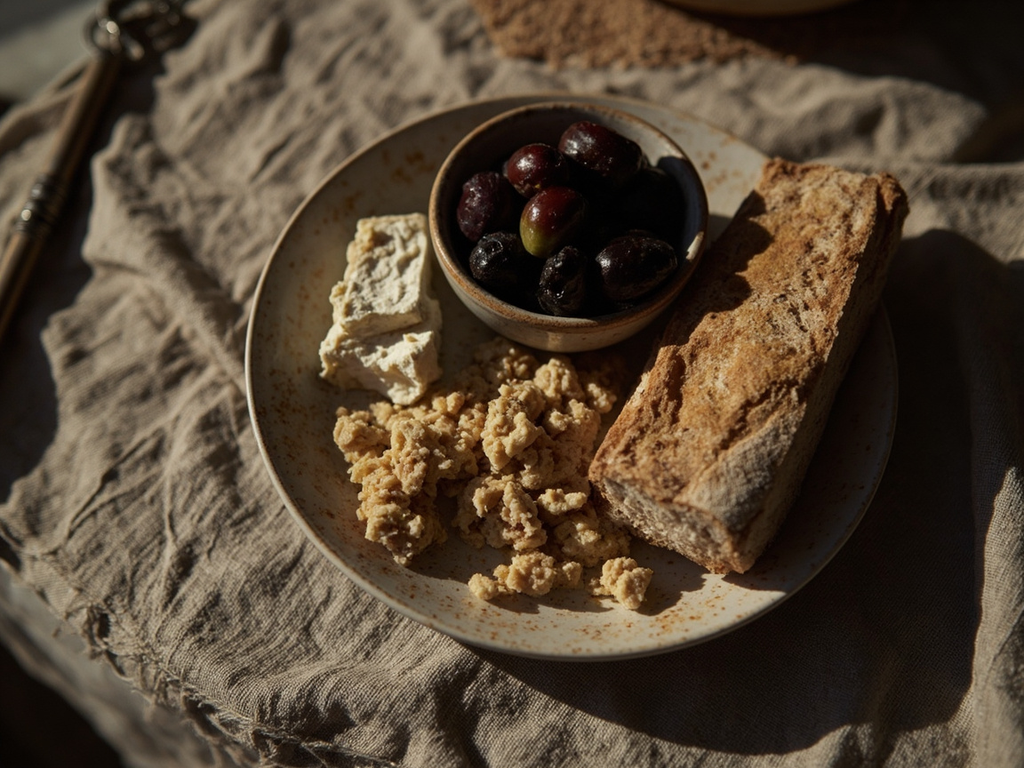
Why this dish? Antiochus spent most of his reign on campaign, from Bactria to Thermopylae. The maza, a cold-kneaded barley cake, was the bread of Hellenistic armies: carried dry and moistened at the bivouac. The king shared this cereal staple with his cataphracts during the anabasis to the East.
A dense and nourishing barley cake, barely cooked, flavored with honey and toasted sesame seeds. The quintessential marching food: compact, keeps well, restores strength.
Do you think a king eats only peacocks on golden plates? I led my phalanxes to the snows of Bactria, and up there it was barley maza that kept us on our feet. My stewards kneaded it without fire, we dried it in the sun, and each man carried his share in his leather satchel. In the evening, I dipped it in watered wine like the last of my peltasts — a king who fasts with his soldiers leads them farther than a sated king. A lick of honey and a few sesame grains, and you forget the road was hard.
- •Toasted barley flour (alphita) — a good measure (cereal base)
- •Spring water — enough to bind (binder)
- •Honey — a drizzle (sweetness and energy)
- •Sesame seeds — a handful (toasted garnish)
- •Salt — a pinch (seasoning)
- •Olive oil — a dash (softness)
Barley Maza of the Camps, with Honey and Sesame
A dense and nourishing barley cake, barely cooked, flavored with honey and toasted sesame seeds. The quintessential marching food: compact, keeps well, restores strength.
Why this dish? Antiochus spent most of his reign on campaign, from Bactria to Thermopylae. The maza, a cold-kneaded barley cake, was the bread of Hellenistic armies: carried dry and moistened at the bivouac. The king shared this cereal staple with his cataphracts during the anabasis to the East.
Do you think a king eats only peacocks on golden plates? I led my phalanxes to the snows of Bactria, and up there it was barley maza that kept us on our feet. My stewards kneaded it without fire, we dried it in the sun, and each man carried his share in his leather satchel. In the evening, I dipped it in watered wine like the last of my peltasts — a king who fasts with his soldiers leads them farther than a sated king. A lick of honey and a few sesame grains, and you forget the road was hard.
Ingredients (period version)
- Toasted barley flour (alphita) — a good measure (cereal base)
- Spring water — enough to bind (binder)
- Honey — a drizzle (sweetness and energy)
- Sesame seeds — a handful (toasted garnish)
- Salt — a pinch (seasoning)
- Olive oil — a dash (softness)
Ingredients
- Barley flour (or blended barley flakes) — 200 g (cereal base)
- Warm water — 120 ml (binder)
- Honey — 2 tbsp (sweetness)
- Sesame seeds — 3 tbsp (toasted garnish)
- Salt — 1/2 tsp (seasoning)
- Olive oil — 1 tbsp (softness)
Method
- Dry-toast the sesame seeds in a pan until golden and fragrant, then set aside.
- In a bowl, mix the barley flour and salt. Add the warm water, oil and half the honey.
- Knead briefly to obtain a firm but supple dough; let rest 15 minutes.
- Shape into flat cakes the size of a palm, about 1 cm thick.
- Cook dry in a hot pan (or on a stone) 3-4 minutes per side, until colored.
- On removal, brush with the remaining honey and sprinkle generously with toasted sesame.
How it was made : The Greek maza was often not baked in an oven but simply kneaded and eaten raw or barely seared; it was the food of the common people and armies, as opposed to artos, leavened bread. Barley, more rustic than wheat, better withstood the arid terrain of the Eastern anabasis.
The contemporary twist : Served as mini-galettes stacked like tetradrachm discs, with a drizzle of amber honey reminiscent of the king's minted silver.
Antiochus III · Charactorium