
Russian cosmonaut and politician, first woman in space
Valentina Tereshkova(1937 — )
Valentina Tereshkova
Russie, Union soviétique
7 min read
Frequently asked questions
Key Facts
Works & Achievements
The first spaceflight by a woman, on June 16, 1963, during which Valentina Tereshkova orbited Earth 48 times over 70 hours. This mission marked a turning point in the history of space exploration and demonstrated that women were equally capable of participating in space programs.
Participation in the selection and training program for the first Soviet women cosmonauts. Tereshkova was among five women chosen, reflecting the USSR's commitment to integrating women into space exploration.
Use of her fame to promote Soviet prestige and space achievements during numerous international tours. She became a symbol of communist progress and gender equality in the USSR.
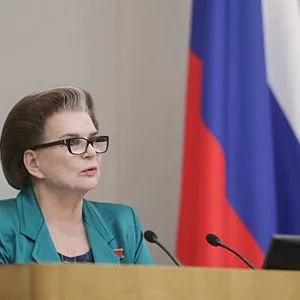
Election to various Soviet and Russian legislative bodies, championing women's rights and the legacy of space exploration. She remains an influential political figure representing Russia's space history.
Publication of accounts and testimonies about her experience as a cosmonaut, contributing to the history of space exploration and inspiring future generations, particularly young women interested in science and space.
Anecdotes
Valentina Tereshkova was selected from more than 400 candidates to train as a cosmonaut in 1962. Before her training, she worked as a textile factory worker and pursued parachuting as a hobby. Her parachuting experience proved decisive in her selection, since early cosmonauts had to eject from their capsules and parachute to the ground upon landing. This ordinary young woman was about to become an international hero.
On June 16, 1963, aboard Vostok 6, Valentina Tereshkova completed 48 orbits around the Earth in 71 hours, surpassing the flight duration record set by Yuri Gagarin. At 26, she was not only the first woman in space, but also the cosmonaut who had spent the most time in orbit up to that date. Her achievement marked a symbolic turning point in the Space Race.
During her mission, Valentina regularly communicated with ground controllers using the radio call sign "Chaika" (Seagull). She transmitted scientific observations and demonstrated that women could perform complex tasks in microgravity with no notable difference from their male counterparts. Her data greatly helped prove that the female body could withstand the extreme conditions of spaceflight.
After returning to Earth, Valentina Tereshkova met fellow cosmonaut Andriyan Nikolayev at an official ceremony, and the two married the following year. Their 1963 wedding was celebrated as a union of two heroes of the Soviet Union. Their daughter Yelena, born in 1964, became the first child to have two parents who were both cosmonauts.
No other woman flew to space for 19 years after Valentina Tereshkova. This long gap reveals that her success had not immediately opened the doors of space programs to women, despite the inspiring example she had set as a pioneer of space exploration. Her relative isolation underscores the historical and symbolic importance of her mission.
Primary Sources
On June 16, 1963, at 9:29 AM Moscow time, the Vostok 6 spacecraft piloted by cosmonaut Valentina Tereshkova successfully lifted off from the Baikonur Cosmodrome. This historic mission marks a milestone in the Soviet space program and demonstrates women's capacity to participate in spaceflight.
I saw the Earth from space and it is beautiful. No borders are visible from up there. I am proud to have paved the way for women cosmonauts and to have represented the Soviet Union in this great adventure.
The USSR has achieved a new success in space exploration. For the first time in human history, a woman — cosmonaut Valentina Tereshkova — has conquered space. She completed 48 orbits around the Earth in 70 hours and 41 minutes.
When I heard the roar of the engines at liftoff, I thought of all the women in the world. I wanted to show that women could achieve the same feats as men in the field of space exploration.
Key Places
Birthplace of Valentina Tereshkova on March 6, 1937. This village in the Tambov region is marked by a commemorative monument celebrating the first woman cosmonaut.
Center located in Kazakhstan where Valentina Tereshkova trained for her space mission. She completed the rigorous Soviet cosmonaut training program there.
Launch site from which Valentina Tereshkova lifted off aboard Vostok 6 on June 16, 1963, completing her historic three-day spaceflight.
The Soviet capital where Valentina Tereshkova was welcomed as a hero upon her return. She went on to pursue a political career there as a deputy and prominent public figure.
Tereshkova's home city and the region where she was politically active. She represented her constituents there as a politician and remains an important figure for the city.
Typical Objects

Protective equipment worn by Valentina Tereshkova during her flight aboard Vostok 6 in 1963. This white and orange suit was essential for survival in the hostile environment of space.

The historic capsule that allowed Valentina Tereshkova to become the first woman in space in June 1963. This Soviet vessel symbolizes the success of the Soviet space program during the Cold War.

Individual protective equipment fitted with a visor, characteristic of Soviet cosmonauts. Tereshkova's helmet became an iconic symbol of her space exploration.

The red Soviet flag bearing the hammer and sickle, symbol of the communist regime that supported the Soviet space program and Tereshkova's historic mission.

Distinctive medal and badge awarded to Soviet cosmonauts who completed a spaceflight. Valentina Tereshkova received this honor for her 1963 achievement.

The armored return capsule of the Vostok spacecraft, designed to withstand extreme temperatures during reentry into Earth's atmosphere after 48 orbits.

Two-way communication equipment allowing cosmonauts to stay in contact with the ground control center during their orbital mission.
School Curriculum
Daily Life
Morning
Valentina wakes up early to follow an intensive training program at the Baikonur Cosmonaut Training Center. She begins with rigorous physical exercises, including running and strength training, essential for the physiological preparation required for spaceflight. After a high-protein breakfast, she gets ready for centrifuge simulation sessions and technical studies.
Afternoon
The afternoon is dedicated to theoretical classes on navigation systems, communications, and spacecraft safety procedures. Valentina also takes part in underwater training to simulate weightlessness and attends psychological preparation sessions. She carefully studies technical manuals and receives feedback from specialized instructors.
Evening
In the evening, after a demanding day of training, Valentina rests and focuses on additional studying or exam preparation. She has dinner with the other cosmonauts in her program, sharing conversations and camaraderie. She goes to bed early to ensure proper physical recovery, following the strict schedules imposed by the Soviet space program.
Food
Her diet is strictly controlled and optimized for physical performance: lean proteins, fresh vegetables, fruit, and dairy products are prioritized. Meals at the Center include black bread, eggs, fish, and energy-rich foods suited to the high caloric demands of training. Alcohol and fatty foods are prohibited to maintain peak physical condition.
Clothing
Valentina typically wears the Soviet cosmonaut uniform during training: a technical jumpsuit and specialized athletic shoes. Outside of training activities, she dresses simply according to 1960s Soviet norms — clean, functional dresses or suits. Her appearance, neat but understated, reflects Soviet values that prize discipline and efficiency over personal style.
Housing
Valentina lives at the Baikonur Training Center in shared quarters reserved for cosmonauts, where she uses communal facilities alongside her colleagues. The accommodations are functional and austere, organized according to Soviet military standards. She also has a small apartment in Moscow, but spends most of her time at the Center, cut off from the outside world due to military secrecy.
Historical Timeline
Period Vocabulary
Visual Style
Un style fusionnant l'esthétique soviétique des années 1960, le constructivisme russe et le rétro-futurisme. Compositions géométriques épurées associant affiches de propagande, éléments techniques et imagerie spatiale, avec un éclairage dramatique valorisant l'humanité de la pionnière.
Sound Ambience
Une ambiance immersive du centre de contrôle spatial soviétique en 1963, mêlant bourdonnements électroniques, voix russes professionnelles et bruits de technologies spatiales, incarnant la tension et la précision de ce moment historique de la conquête spatiale.
Liens externes & ressources
Références
Œuvres
Vol Vostok 6
1963
Programme de cosmonautes soviétiques féminins
1962-1963
Ambassadrice internationale de l'URSS
1963-1990s
Carrière politique et parlementaire
1966-présent
Autobiographie et témoignages
1963 et après