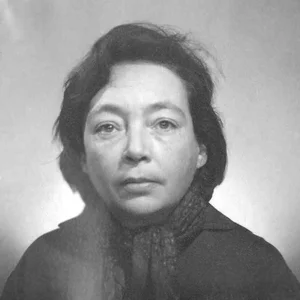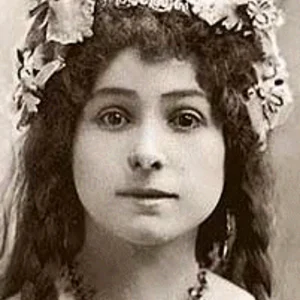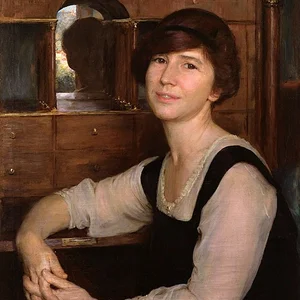

Freya Stark was a British explorer and writer who travelled through the most remote regions of the Middle East in the twentieth century. The first Western woman to reach certain valleys of Arabia and Iran, she published numerous travel narratives combining scholarship and adventure. Her work helped introduce the Arab world to European readers.
Freya Stark(1893 — 1993)
Freya Stark
Royaume-Uni
8 min read
Frequently asked questions
Famous Quotes
« The greatest cure for all ills is to have a friend to whom one can confide one's troubles.»
« True freedom lies in taming one's fears, not in fleeing from them.»
Key Facts
- Born in 1893 in Paris to artist parents, she grew up in England and Italy
- During the 1930s, she explored remote regions of Iran and Iraq, mapping areas unknown to Westerners
- In 1935, she became the first Western woman to reach the Hadhramaut valley in Yemen
- During the Second World War, she worked for the British Ministry of Information in the Middle East
- Made Dame Commander of the Order of the British Empire (DBE) in 1972, she published more than 30 books
Works & Achievements
Stark's first major book, an account of her explorations in Iran and particularly in the region of the Nizari fortresses. Critically acclaimed, it launched her career as a writer-explorer.
An account of her exploration of the Hadhramaut in Yemen, a region almost unknown to Westerners. Considered one of her masterworks, blending geography, ethnography, and literary prose.
A continuation of her Yemeni explorations, describing the customs, landscapes, and peoples of Southern Arabia. Stark develops her reflections on the encounter between civilizations.
First volume of her four-part autobiography, covering her childhood and early years as a traveller. A valuable source on the intellectual formation of a twentieth-century explorer.
Second autobiographical volume covering her years of travel in Syria, Iraq, and Arabia. Stark recounts her encounters with the major political and intellectual figures of her era.
An account of a journey through Turkey and Asia Minor in the footsteps of Alexander the Great. One of her most scholarly works, combining archaeology, ancient history, and contemporary observations.
A historical essay on the eastern frontier of the Roman Empire, combining classical erudition with intimate knowledge of the terrain. A testament to Stark's intellectual depth beyond mere travel writing.
Anecdotes
In 1927, Freya Stark set off alone to Lebanon to learn Arabic from Maronite monks. With barely enough resources, she lived with the utmost frugality, sleeping in rudimentary conditions, but within a few months acquired a mastery of the language that would open every door in the Middle East to her.
In 1934, Freya Stark explored the Hadhramaut region of Yemen, a valley virtually unknown to Westerners. She contracted severe dysentery and had to be urgently evacuated, but her notes and photographs constituted the first Western scientific account of this ancient civilisation.
During the Second World War, Freya Stark worked for the British government in Cairo and Baghdad. She founded the 'Brotherhood of Freedom', a pro-Allied propaganda network designed to counter Nazi influence in the Arab world, bringing together thousands of local members.
At over 70 years old, Freya Stark undertook a journey through Afghanistan on donkey-back, then at 80 she travelled through the interior of Turkey. Her longevity as an explorer — active well into very old age — earned her universal admiration and a reputation for indestructibility.
In 1972, Queen Elizabeth II awarded her the title of Dame Commander of the Order of the British Empire (DBE). Freya Stark thus became 'Dame Freya Stark', official recognition of a lifetime devoted to bringing knowledge of the Middle East to Westerners through her writings and diplomatic engagement.
Primary Sources
I have been travelling for three days through a country where no European woman has gone before me. The villages are friendly and the mountains magnificent, though I confess the mules are less so.
The Hadhramaout is a world apart, locked in by desert and accessible only to those willing to endure its solitude. Here the ancient caravan routes still dictate the rhythms of life.
We cannot hope to hold the friendship of the Arab world if we continue to disregard the promises made to its peoples. Honesty in diplomacy is not weakness — it is the only lasting foundation.
I was born with an incurable passion for distant places. My mother called it a disease; I have always thought of it as the only proper response to a world so large and so full of wonder.
Key Places
Town where Freya Stark spent most of her adult life and where she died in 1993 at the age of 100. Her home, Casa Freia, has become a place of remembrance.
Mountainous region of Iran explored by Stark in 1930, former fortress of the Nizaris. Subject of her first major travel book, The Valleys of the Assassins (1934).
Remote valley in Yemen explored by Stark in 1934–1935, the first Western woman to bring back detailed ethnographic and geographical documentation of the region.
City where Freya Stark stayed on several occasions and from which she conducted pro-Allied propaganda activities during the Second World War on behalf of the British government.
British colonial port used by Stark as a base for her explorations of Southern Arabia. A mandatory stopover for British explorers and diplomats in the 20th century.
Typical Objects

Freya Stark recorded geographical observations, ethnographic notes and personal impressions in her notebooks every day. These journals formed the raw material for her many books.

An accomplished photographer, Freya Stark documented her travels with great rigour. Her photographs of the landscapes and peoples of the Middle East constitute valuable ethnographic and geographical archives.

In regions that were often uncharted, Stark corrected and supplemented existing maps as she explored. Her surveys contributed to British cartography of the Middle East.

To blend in with local populations and be accepted, Freya Stark often adopted local dress, including the veil and long robes. This cultural adaptation allowed her to access places forbidden to foreigners.

Arabic, which she began learning in 1927, was a fundamental tool for Stark: it earned her the trust of local inhabitants, allowed her to gather first-hand accounts and to build genuine human relationships.

Travelling frequently alone in remote regions without medical assistance, Freya Stark always carried a first-aid kit. She nonetheless contracted several serious illnesses, including malaria and dysentery.
School Curriculum
Vocabulary & Tags
Key Vocabulary
Tags
Daily Life
Morning
Freya Stark rises at dawn to take advantage of the cool air before the heat of the day. She records the previous day's events in her notebook and plans the next leg of the journey on her maps. She drinks a strong black tea, often shared with her guides or local hosts according to Arab hospitality customs.
Afternoon
The day is devoted to travel — on foot, by mule or camel depending on the terrain. Stark observes, photographs and questions the locals in Arabic or Persian. She tends to her minor injuries and meticulously keeps up her ethnographic and geographical notes.
Evening
In the evening, settled in a caravanserai or at a local's home, Stark writes long, detailed letters to her family, especially to her mother. She reads classical Arabic and Persian texts, reflects on the civilizations she has passed through and plans the next stage. Dinner is simple — bread, dates, rice — shared with her hosts.
Food
Stark adapts her diet to local resources: flatbread, rice, pulses, dates and cardamom coffee in Arab regions. She eats little, out of necessity as much as habit, and stoically endures periods of scarcity during desert crossings. She nonetheless contracts serious digestive illnesses on several occasions.
Clothing
While travelling, Stark alternates between practical European explorer attire (trousers, blouse, wide-brimmed hat) and local Arab dress to blend in with the population. She often wears a veil in conservative villages and sturdy sandals suited to rocky terrain.
Housing
While travelling, Stark stays in caravanserais, with local hosts (following Bedouin hospitality customs), or under tent. Her permanent residence is Casa Freia in Asolo, Italy, which she furnishes with objects brought back from the Middle East — Persian rugs, copper lanterns and Yemeni pottery.
Historical Timeline
Period Vocabulary
Visual Style
Esthétique de l'exploration orientaliste britannique des années 1920–1960 : tons sépia et ocre chaud, paysages désertiques monumentaux, architecture islamique et documents cartographiques d'époque.
Sound Ambience
Ambiance sonore des déserts et villes caravanières du Moyen-Orient au début du XXe siècle, mêlant vie nomade, prière islamique et exploration solitaire.
Liens externes & ressources
Références
Œuvres
The Valleys of the Assassins and Other Persian Travels
1934
The Southern Gates of Arabia
1936
A Winter in Arabia
1940
Traveller's Prelude (autobiographie, vol. 1)
1950
The Coast of Incense (autobiographie, vol. 2)
1953
Alexander's Path
1958
Rome on the Euphrates
1966