Imaginary interview with Abu Nuwas
by Charactorium · Abu Nuwas (756 — 814) · Literature · 5 min read
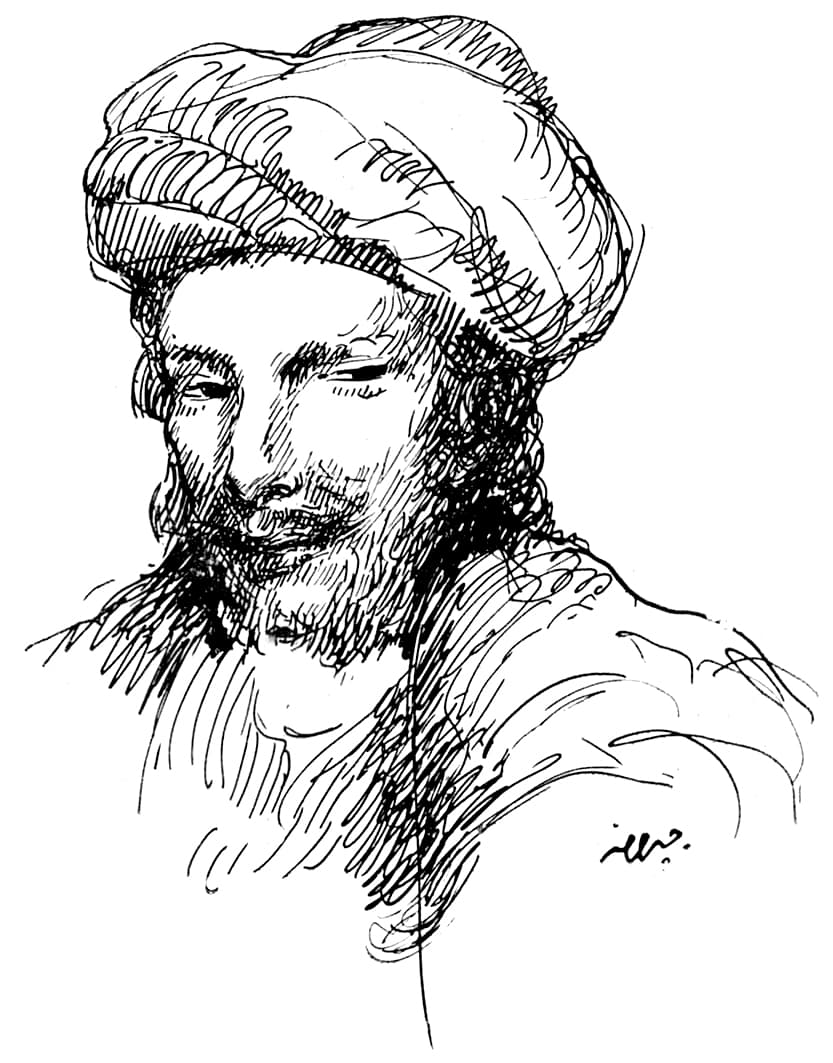
Baghdad, a warm night on the banks of the Tigris. The tavern lamps tremble on the water, and in a garden where the smell of spilled wine still lingers, an aging man sets down a cup to receive us. Abu Nuwas smiles, his eye bright despite the weariness of late nights, ready to speak of wine, caliphs, and his soul.
—How would you define the heart of your art, what made you enter the memory of men?
Wine, without detour or veil. I was reproached all my life for singing the cup, the kâs, as others sing virtue, but I only wrote what I drank. My Khamriyyât, those bacchic poems I turned out by the hundreds, made the tavern a place worthy of verse, where the Ancients only sang of desert ruins and the lost she-camel. I like to say to my cupbearer: “Pour me wine and tell me it is wine, do not hide it under veils of allegory.” That is all my craft — to name the thing. Baghdad gave me new material, and I had the insolence to prefer it to the sands of our ancestors.
I made the tavern a place worthy of verse, where the Ancients only sang of desert ruins.
—Why insist so much on real wine, when the poets of your time preferred allusion and modesty?
Because modesty lies, and wine does not lie. In my verses I distinguish the wine of the cup from that of the beloved's cheeks — two intoxications, but I hold that of the cup to be the nobler, for it betrays no one. The guardians of morality wanted us to speak of nabîdh, that date-drink whose legality theologians debated, to ease their consciences. I named khamr, pure wine, the kind hidden in large jars from Persia and Syria, amber like a summer evening. To sing the thing as it is, under the caliph's very gaze, that is the insolence that cost me dearly — and that made me endure.
Modesty lies, and wine does not lie.
—It is said that Harun al-Rashid threw you in prison more than once. What happened between this caliph and you?
Harun al-Rashid loved me as one loves a wild beast kept in the palace: with mistrust and delight. He had me locked up several times — a verse too daring recited at the wrong moment, and the dungeons opened. Then, the next day or the week after, he would have me freed, for his court seemed bland without my jousts and mockeries. They say in the Book of Songs that he once ordered my imprisonment for an overly audacious poem, before summoning me back, unable to deprive himself of my talent. It was a dangerous game: I walked the line between favor and dungeon, knowing that a caliph who laughs at you may, the next moment, have your tongue cut out.
He loved me as one loves a wild beast kept in the palace: with mistrust and delight.
—Yet you composed panegyrics for these same caliphs. How do you reconcile praise and provocation?
A court poet must know how to bend the back, or he starves. I composed madîh, praise poems, for Harun al-Rashid and then for his son al-Amin, whose favorite I became when he assumed the caliphate. But I was never a pure flatterer: under the praise, I would slip an irony that only connoisseurs caught. To praise a prince in a majlis, before the assembly of dignitaries, is a tightrope art — you gild the master while keeping a smile to yourself. Al-Amin, for his part, loved the feast too much to take offense at my barbs; we were made for each other, and his nights resembled my poems.
—You were born far from Baghdad, of mixed blood. What do you owe to this dual origin?
I was born in Ahvaz, in the land of Persia, of an Arab father and a Persian mother, and this fracture was my wealth. From the Arabs I received the language, its rigor, its science of meters; from the Persians, the taste for sung wine, roses, and loves that do not blush. I fused the two and forged a poetry that the purists of the desert found scandalous. My training I received in Basra and Kufa, from masters of grammar and philology, for to break the rules you must first possess them to your fingertips. A man of a single culture would never have dared what I dared.
A man of a single culture would never have dared what I dared.
—How did your poetry break with the tradition inherited from the ancient Arabs?
Our ancestors opened every poem weeping over an abandoned campsite, the ashes of a dead fire, the trace of a beloved who left with her tribe. Beautiful melancholy, but I lived in Baghdad, a city of nearly a million souls, the largest in the world, with its taverns, markets, and gardens along the Tigris. Why weep for a desert I no longer inhabited? I turned my verses toward the city, toward what was called urban poetry, and I openly mocked those who insisted on singing the she-camel and the sand. They called me impious and a destroyer; I considered myself a man of my century, the century of the lute and the lamps, not that of the tent.
Why weep for a desert I no longer inhabited?
—Tell us about one of those Baghdad nights that your poems preserve.
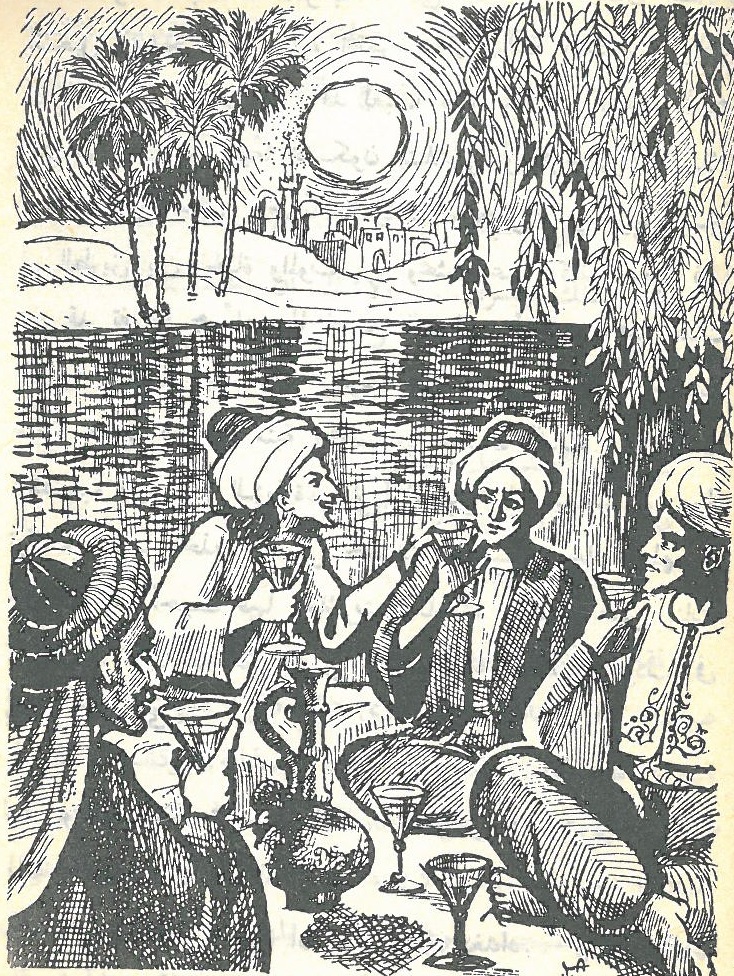
When evening fell, I would shed the scholar's garb for more discreet attire and go down to the taverns along the Tigris. They were often run by Christians or Jews, for the law forbade us wine, but in Baghdad people gladly shared the same cup without regard for the neighbor's faith. A 'ûd would strum its notes, a bright-faced cupbearer would pour amber wine into the kâs, and the verses came to me of their own accord, dictated by drunkenness and the lamp. I even sang of a Christian wine merchant who offered me his best amphorae — a gesture that says everything about this city where taverns asked no profession of faith. Those nights were my true majlis.
In Baghdad people gladly shared the same cup without regard for the neighbor's faith.
—Didn't this freedom you describe draw the wrath of the devout?
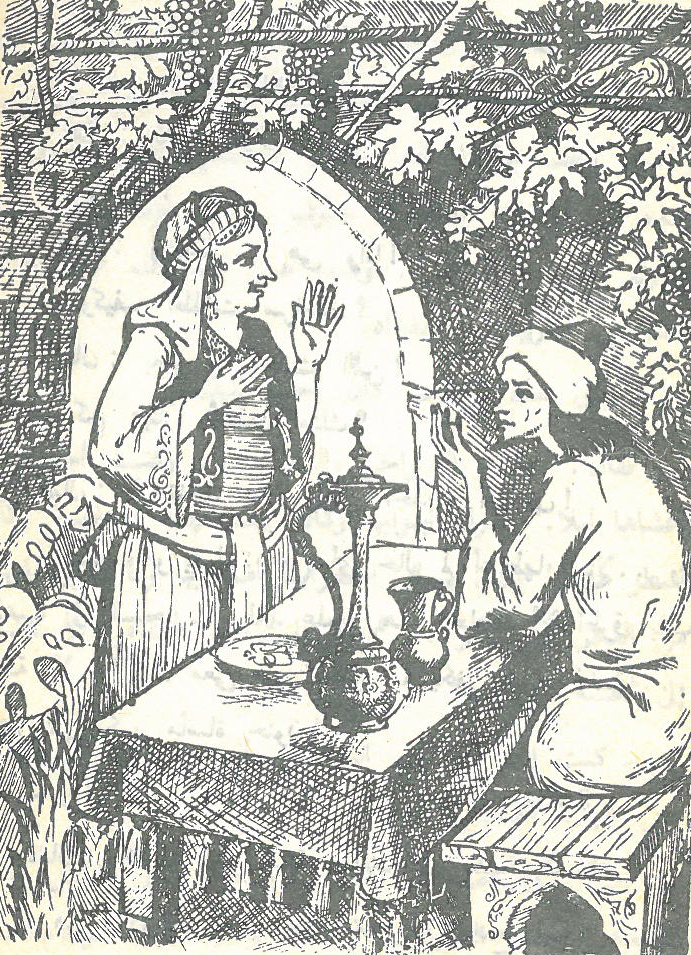
Of course, and I played it like an instrument. The religious men looked very unfavorably on this poet who drank the forbidden khamr and proclaimed it to the world, without even the excuse of allegory. But I had the protection of the great and the love of the people, who repeated my verses in the streets before the ink was even dry. They called me libertine; I replied that I was describing Baghdad as it truly lived, at night, when respectable facades opened onto courtyards where wine flowed. The disgrace of the Barmakids, those vizier-patrons who fell in 803, had taught me that no one was safe — so better to live each cup to the full before the wheel turns.
—It is said that at the end of your life you turned from wine to devotion. What is the truth?
Ah, that is the question that scholars will argue over long after I am gone. It is true that late in life I composed Zuhdiyyât, poems of repentance and piety, where I lament my excesses and implore forgiveness. Were they sincere? I leave you to judge — a man who has sung drunkenness all his life may, at evening, feel the chill of the end and tremble before his Creator. Or perhaps it is only the poet's last trick, who knows how to weep with as much talent as he knew how to drink. These devotion verses make a strange echo to my Khamriyyât: the two faces of the same man, or the ultimate pirouette of an old comedian. I myself will not decide.
A man who has sung drunkenness all his life may, at evening, tremble before his Creator.
—If you could imagine being read in centuries to come, how would you like to be remembered?
Let them keep from me the laughter as much as the wine. They have already begun to slip me into the tales told at night, where I pass for the mischievous jester of Caliph Harun al-Rashid, the one who gets out of any tight spot with an improvised verse. That is not false: quick wit was my weapon, surer than the sword. But I would like them not to forget the poet behind the jester — the one who dared name wine without a veil and gave the Arabic language a tavern for a temple. If my dîwân survives in some scroll copied after my death, then I will have outlasted the caliphs who imprisoned me. Laughter and the cup, that is my legacy.
Quick wit was my weapon, surer than the sword.

This imaginary interview was generated by artificial intelligence from sources documented in Abu Nuwas's profile. It dramatises what the figure might have said based on what we know about them, but does not constitute attested historical testimony. For primary sources and factual documentation, refer to the full profile.