Kids interview Abu Nuwas
by Charactorium · Abu Nuwas (756 — 814) · Literature · 5 min read
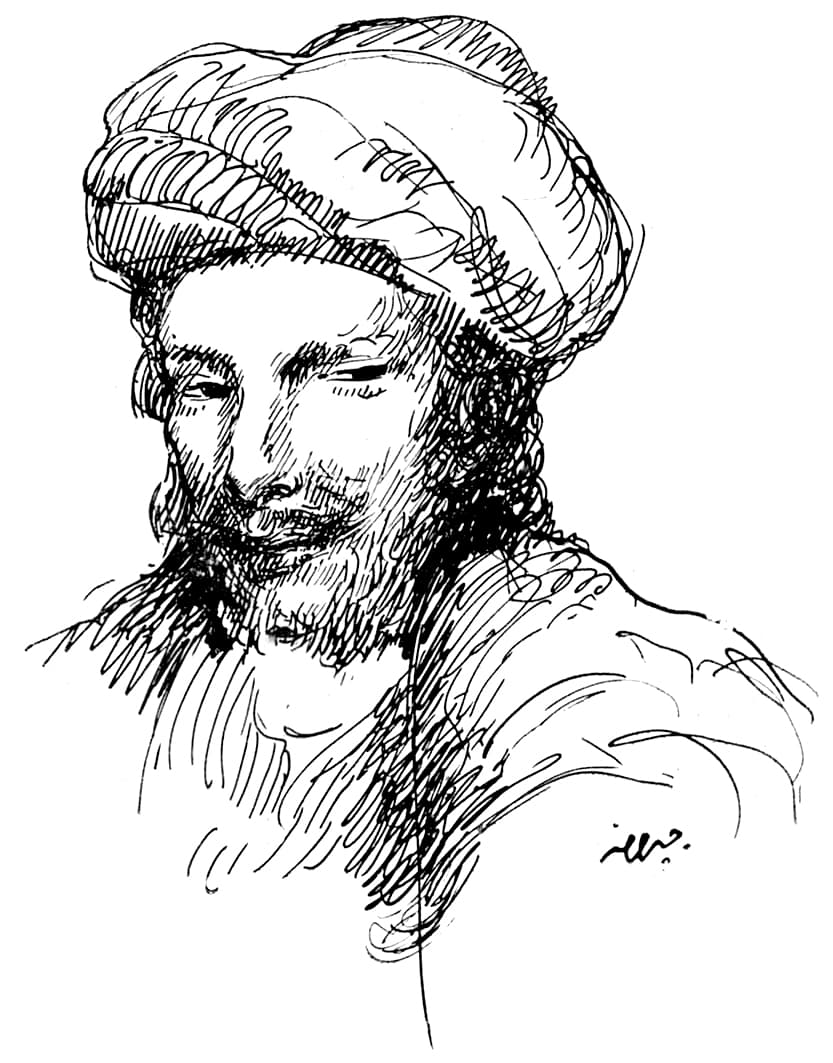
Two twelve-year-old visitors arrive in a garden by the Tigris, one spring morning. An old poet waits for them near a fountain, a mischievous smile on his lips. He beckons them to sit close beside him.
—Where were you born, and what language did your parents speak at home?
You know, my child, I was born around 756 in Ahvaz, a Persian city full of sun and date palms. My father was Arab, my mother Persian. So imagine two musics in one house, two ways of telling the world. I grew up between them. The Persians knew how to sing of wine, love, gardens. The Arabs had a magnificent language, precise as a blade. As a little one, I listened to both. And one day I understood that I could marry them in a single poem. That's my luck: I didn't have to choose. I took the best of both my families.
I didn't have to choose: I took the best of both my families.
—And how did you learn to make poems when you were young?
Ah, that was a long labor! I left my city to study in Basra, then Kufa, two great cities of Iraq. Imagine very strict masters who made you memorize thousands of desert verses. I was taught grammar, rhythm, every word weighed like gold. It was hard, but without those rules, you can't break anything! Because afterward, I wanted something else. The ancients sang of tents and camels of the desert. I wanted to sing of the city, the streets, the taverns. They called it Mudûn poetry, urban poetry. To disobey well, you must first know everything.
To disobey well, you must first know everything.
—What was Baghdad like at night in your time?
Oh, Baghdad at night was a marvel! Imagine an immense city, almost a million inhabitants, the largest in the known world. Not a single engine noise, of course: just the hoofbeats of horses, the water of the Tigris flowing, and in the distance a lute melody. The lute, my child, is the 'ûd, a pear-shaped string instrument. In the evening, I would go out into the gardens by the river. Verses were recited by moonlight. We laughed, we sang. In that city lived together Muslims, Christians, and Jews. Each had his faith, and in the evening, we shared the same joy.
—And what did you eat and drink during those evenings?
We ate well, you know! Warm wheat bread, spiced lamb stews, figs, pomegranates, sweet dates. It was the golden age of Baghdad cuisine. And yes, I drank wine, even though my religion forbade it. There was also nabîdh, a drink made from fermented dates. One day, I even wrote a poem to thank a Christian wine merchant who kept his best amphorae for me! An amphora is a large clay jar. That merchant and I didn't pray to the same God. But we loved the same thing: sharing a good time among friends.
—Why did you always write poems about wine?
Because no one dared to do it for real! Before me, they sang of the desert, battles, heroes. I wrote over four hundred poems about wine, the cup, intoxication. They are called the Khamriyyât, the bacchic poems, that is, poems of wine. Imagine taking a subject everyone is a little ashamed of and making it the most beautiful thing in the world. That's what I did. I put the tavern into great poetry! Some were scandalized, of course. But I thought a poet should speak of people's real lives, not just kings and battles.
I put the tavern into great poetry.
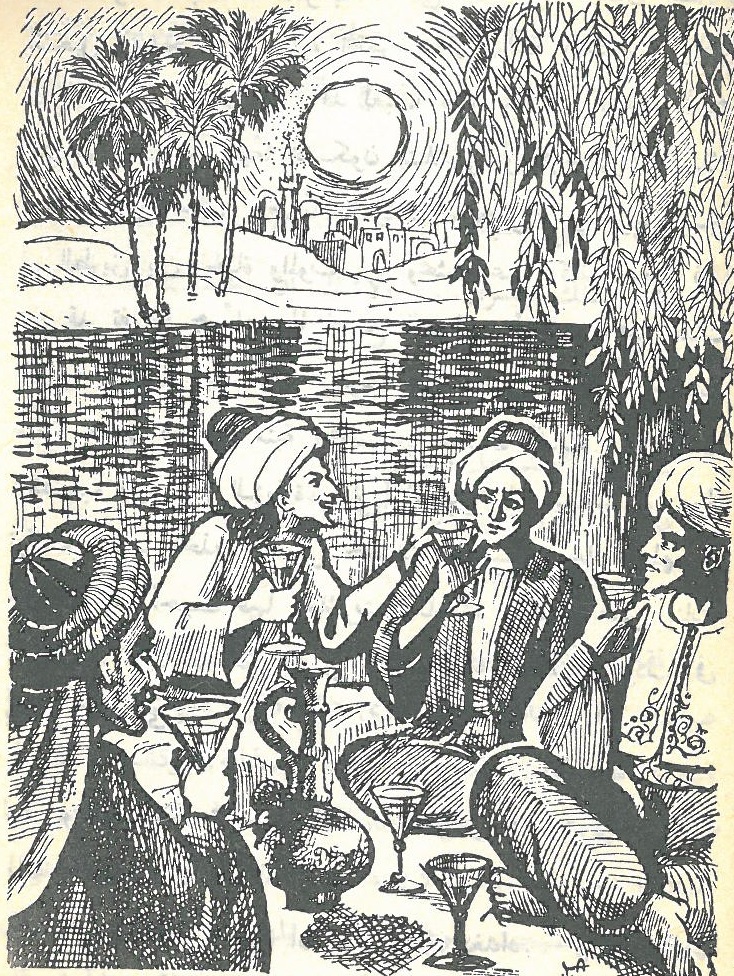
—Is it true that you refused to hide wine behind pretty images?
Exactly, you've understood everything! At the time, many poets spoke of wine without naming it, with hidden words, symbols. That annoyed me. In one of my most famous poems, I wrote: “Pour me wine and tell me it is wine, do not hide it from me under allegorical veils.” An allegory, my child, is when you say one thing to mean another. I wanted to call each thing by its name. That was my way of being honest. A poem is not meant to disguise itself. It is meant to say aloud what others dare not.
A poem is meant to say aloud what others dare not.
—Is it true that a king sent you to prison because of your poems?
Yes! And several times, even! The caliph was the leader of all believers, both king and religious guide. Mine was named Harun al-Rashid. My poems about wine sometimes made him very angry, so he would have me thrown in prison. But you know what? A few days later, he would set me free! Why? Because he got bored without me. He loved my verses and my jokes too much. Imagine a powerful king who punishes you on Monday and summons you on Friday. That was my life! Dangerous, but never boring. I learned one thing: when you make a king laugh, he forgives much.
When you make a king laugh, he forgives much.
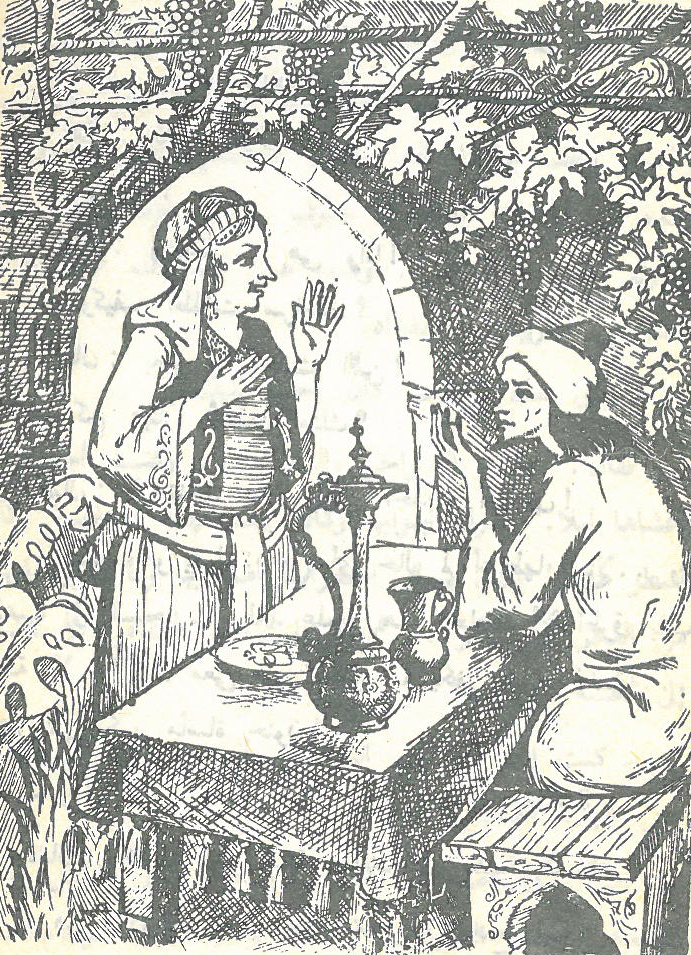
—Were you afraid when you recited a daring poem before the caliph?
My heart beat fast, I admit! In an old book, Al-Aghânî, the Book of Songs, it is said that one day I recited before the caliph a poem so audacious that he ordered me locked up on the spot. And the next day, he freed me, unable to resist my talent. It's delicate, you know, being a king's favorite. I also had to write to flatter him, poems of praise called madîh. But often, I slipped a little hidden mockery inside, very gently. The secret is knowing how far to go. Too little, you're forgotten. Too far, you're punished. I danced my whole life on that tightrope.
—At the end of your life, did you really change, or is that just a story?
Ah, that, my child, even scholars still argue about it! Toward the end, I wrote very different poems: Zuhdiyyât, poems of repentance and prayer. One senses a man who regrets his excesses and turns to God. After a life of singing wine, what a contrast! So, was it sincere? Or just a beautiful staging by an old poet? Honestly, I leave you to judge. A human being is never all of one piece. One can love celebration at twenty and seek calm at fifty. Both men were me. We have the right to change without betraying ourselves.
We have the right to change without betraying ourselves.
—How does it feel to know that people still talk about you, so long after?
It touches me deeply, more than you can imagine. You see, I even became a character in the Thousand and One Nights, those famous tales. I appear there as the caliph's mischievous jester, the one who gets out of every tight spot thanks to his quick wit. It's not quite me, but I like that portrait! I lived in a troubled time, between wars and changes of caliph, and I died in Baghdad around 814. And yet, my verses have crossed the centuries to reach you. That's the magic of a poem: the body goes, but the words remain alive.
The body goes, but the words remain alive.

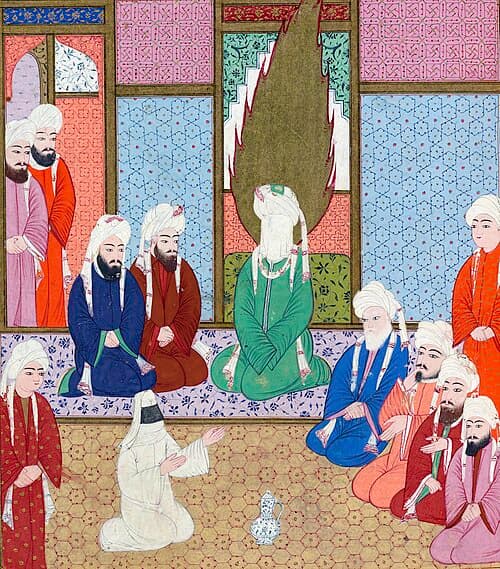
This imaginary interview was generated by artificial intelligence from sources documented in Abu Nuwas's profile. It dramatises what the figure might have said based on what we know about them, but does not constitute attested historical testimony. For primary sources and factual documentation, refer to the full profile.