Imaginary interview with Agatha Christie
by Charactorium · Agatha Christie (1890 — 1976) · Literature · 6 min read
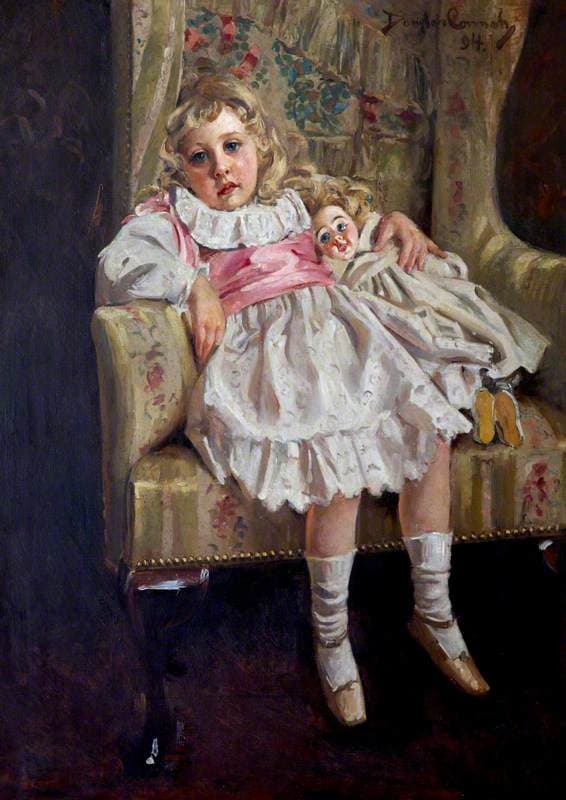
Autumn 1954. The queen of crime receives us at Greenway House, her home in Devon, in a sitting room that smells of tea and old paper, while the River Dart sparkles below. A porcelain cup steams near a marbled-cover notebook she closes with a modest gesture. She speaks softly, with the quiet irony of a woman who has invented more than a hundred ways to die.
—How did a novelist come to know poisons better than a medical examiner?
Through the war, quite simply. In 1914, I volunteered as a nurse with the Red Cross in Torquay, and then I was sent to the hospital pharmacy. Spending one's days weighing grains of arsenic, copying formulas, and arranging bottles labeled with a skull and crossbones shapes the mind in a strange way. I kept my toxicology textbooks as others keep love letters. Poison, you see, is a drawing-room murderer: discreet, patient, feminine some would say, and it gives the mind time for deduction. In my novels, it is by far my favorite weapon — not out of cruelty, but because a well-chosen bottle is worth a thousand revolver shots.
Poison is a drawing-room murderer: discreet, patient, and it gives the mind time for deduction.
—Why do you insist so much on scientific accuracy in stories that are, after all, imaginary?
Because a reader will forgive an unlikely culprit, but never bad chemistry. When I write that a victim succumbs to strychnine, I want the pharmacist who reads me to nod. In The Mysterious Affair at Styles, my very first novel from 1920, everything hinges on a pharmaceutical detail I had seen happen behind my counter. That rigor is my way of honoring the reader: I play fair, I lay all the clues before their eyes. The crime must be a loyal puzzle, not a sleight of hand. That is the whole difference between deceiving and lying: I deceive, but I never lie.
I play fair: I deceive the reader, but I never lie to them.
—Many still ask you about those eleven days in December 1926. What happened that week?
You will understand that this is the only mystery I refuse to solve. That year was the worst of my life — my mother had just died, my marriage was falling apart. One evening, I left, and my car was found abandoned near a quarry. What I know from the newspapers is that they launched a thousand police officers and fifteen thousand volunteers after me, as if I myself were one of my corpses. I was found in a hotel in Yorkshire, registered under another name. What went on in my head during those days, I have never told anyone, and I do not intend to start with you. Some mysteries have no final chapter.
It is the only mystery I refuse to solve: some mysteries have no final chapter.
—Did that disappearance change your view of your own plots?
Perhaps it taught me that the human mind is more unfathomable than any locked room. Before 1926, I believed everything could be explained by logic; afterward, I knew that a perfectly reasonable person can erase themselves, like chalk wiped from a blackboard. My detectives seek the how and the who — but the why, the true why, often eludes them. I began to write more human, less mechanical culprits. People found me cold, cerebral; in truth, I think it is secret wounds that drive my murderers. I know something about that.
A perfectly reasonable person can erase themselves, like chalk wiped from a blackboard.
—You confessed to your publisher that you don't much like Hercule Poirot. How do you explain this strange rift with your own creation?
Oh, I wrote it in black and white to Collins: 'A.C. does not love Poirot. He is an egocentric, and she finds him tiresome.' That dapper little Belgian, with his waxed mustaches and his famous little grey cells that he invokes at every turn — he became a tyrant. The public adored him, so I was condemned to resurrect him novel after novel. One does not get rid of success so easily. I ended up tolerating him as one tolerates an intrusive old husband: with irritation and, I admit, a touch of tenderness. But what a relief the day I decided on his end.
I tolerated him like an intrusive old husband: with irritation and a touch of tenderness.
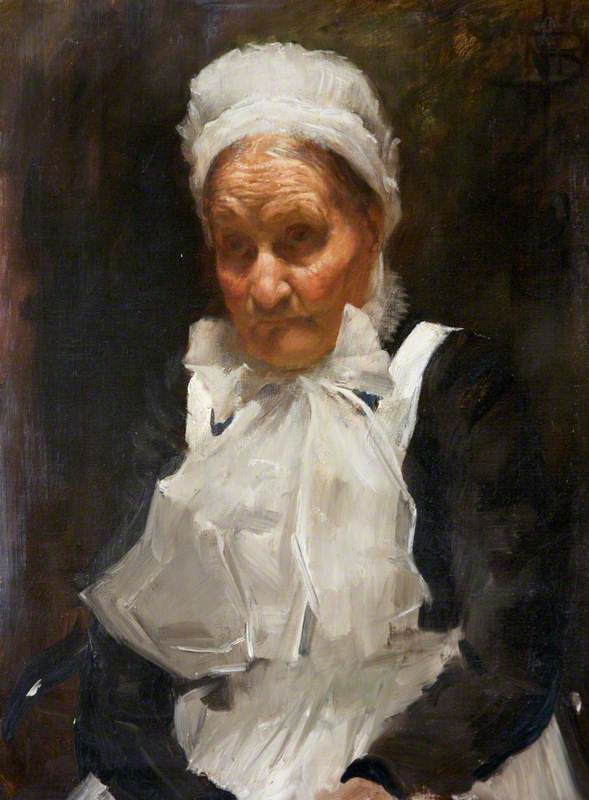
—You speak of his end. They say you wrote his final case many years before it was published?
Indeed. During the Second World War, under the bombs, I secretly wrote Curtain, Poirot's last case. I feared dying before him, you see, and I didn't want anyone else to take over my detective and have him talk nonsense. I locked the manuscript in a safe for over thirty years. When it was finally published in 1975, Poirot's death made the front page of the New York Times — an honor, it seems, that no fictional character had ever received. I found that wildly amusing: they gave an obituary to a man who never existed, except in my own little grey cells.
They gave an obituary to a man who never existed, except in my own little grey cells.
—In 1926, precisely, The Murder of Roger Ackroyd was published, causing a scandal. Do you take responsibility for breaking the rules of the genre?
What a delightful scandal, yes. Some purists of the whodunit cried foul; they thought I had broken a sacred contract with the reader. I absolutely deny it: every clue was there, before their eyes, honestly laid out. I had simply understood that the best place to hide a truth is where no one thinks to look. We were at the heart of what was called the Golden Age of Detective Fiction, that great intellectual game where Sayers, Carr, and I vied in cleverness. A good red herring is worth more than a pistol; the art is not to surprise by force, but by the evidence one had overlooked.
The best place to hide a truth is where no one thinks to look.
—What, in your opinion, makes the English country house so perfect for crime?
The country house, my dear, is a theater delivered turnkey. Consider: an isolated mansion, a rainy weekend, a handful of guests smiling politely at each other while hating one another, a staff that sees everything and says nothing. You close the doors, you cut off the roads with snow — as in Murder on the Orient Express, where my train is trapped in snowdrifts — and you get a locked box, a microcosm of British society where everyone has a motive. The drawing room becomes an arena. Nothing like English respectability to conceal the deadliest passions; it is the varnish that makes the stain so spectacular.
Nothing like English respectability to conceal the deadliest passions.
—People often forget your other life, the one on archaeological digs in the Middle East. How did you come to that?
Through love, and curiosity — the two go well together. After my marriage to the archaeologist Max Mallowan, I followed him to the great sites of Iraq and Syria. At Nimrud, I was not a idle wife: I photographed the objects, I cleaned and restored the Assyrian ivories with my face cream, for lack of anything better! I carried my Remington typewriter into a mud-brick house, and I wrote between two trenches, desert dust on the keys. Murder in Mesopotamia was born there. They thought I was a society lady; I spent months on my knees in the dirt, trowel in hand, happier than ever.
I restored Assyrian ivories with my face cream, for lack of anything better!
—Did those journeys on the Orient Express nourish more than just settings?
Travel is my true workshop. In the carriage of the Orient Express, between Paris and Istanbul, one is suspended out of time, locked in with strangers of all nationalities — a crime novelist's dream. I watched faces, mannerisms, silences, and filled my marbled notebooks with ideas for crimes. Movement frees the imagination: many plots came to me in a compartment or in a hot bath, my two favorite places for meditation. My large leather trunk, stamped with my initials, accompanied me on all the roads of the Near East. For me, traveling was not about fleeing crime: it was about going to meet it.
For me, traveling was not about fleeing crime: it was about going to meet it.
—After so many novels, do you really believe that evil can be uncovered by logic alone?
I believe it and I don't, and perhaps that is all my mischief. My detectives — Poirot with his logic, my old Miss Marple with her spinster's eye that has seen everything from the village of St Mary Mead — always end up unmasking the culprit. The reader wants that order: for reason to triumph, for the truth to burst forth in the drawing room, for the world to regain its balance for the duration of a final chapter. But between you and me, I know well that life does not always offer a culprit or a neat solution. My novels are consolations: little paper justices in a century that has lacked so many, between two world wars.
My novels are little paper justices in a century that has lacked so many.
This imaginary interview was generated by artificial intelligence from sources documented in Agatha Christie's profile. It dramatises what the figure might have said based on what we know about them, but does not constitute attested historical testimony. For primary sources and factual documentation, refer to the full profile.