Kids interview Agatha Christie
by Charactorium · Agatha Christie (1890 — 1976) · Literature · 5 min read
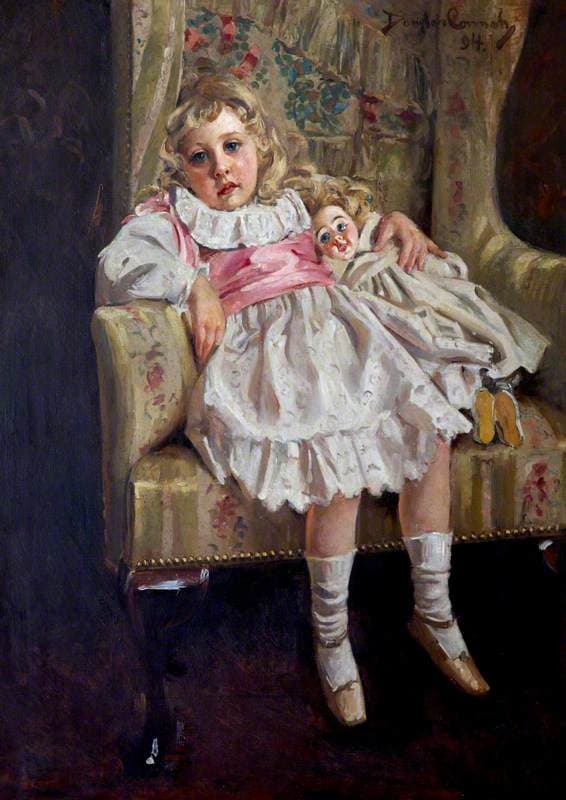
Two twelve-year-old students, on a school trip, pushed open the door of a grand English drawing-room. In an armchair, an elderly lady with mischievous eyes was waiting for them, a steaming cup of tea in her hand. She motioned for them to sit down: the questions could begin.
—Is it true that one day you disappeared for eleven days?
Yes, my child, it happened in 1926. My heart was broken, my life was falling apart. One morning, I left, and for eleven days, no one found me. Imagine over a thousand policemen and fifteen thousand people scouring the countryside looking for you! I was finally found in a hotel in Yorkshire, where I was living under a false name. You ask me why? I won't answer you... because I myself never really explained it. There are some sorrows you keep to yourself. That same year, I published The Murder of Roger Ackroyd: my life was a novel, you see.
There are some sorrows you keep to yourself, like a well-guarded secret.
—Were you afraid they would never find you?
You know, I think I didn't think that way. When you are very unhappy, you stop calculating. I was 36 years old, and I felt as if I had become someone else. At the hotel, I answered to another name without even flinching. It was as if Agatha had faded away for a time. Many people believed it was a publicity stunt to sell my books. What an idea! No, my dear, it was just a lost woman. And the strangest part? I, who invented mysteries all day long, had become the greatest mystery in all of England.
—Is it true that you really knew about poisons?
Oh yes, and not just from books! During the First World War, I was a nurse, then a pharmacy dispenser. Imagine a young girl surrounded by vials, bottles, white powders, and thick manuals. I had to weigh each dose to the nearest milligram: too little, it doesn't heal; too much, it kills. That's where I learned what each poison does to the human body. So in my novels, when a character dies by poisoning, it's never by chance. In my 66 novels, poison is my favorite weapon. A poison, you see, is silent, polite, almost elegant. Quite to my taste.
A poison is silent, polite, almost elegant.
—Didn't it feel weird to know things that could kill people?
That's a good question, my child. No, because in real life, that knowledge was used to heal. At the pharmacy, in 1916, I prepared remedies for wounded soldiers. The same bottle can save or destroy: it all depends on the hand that holds it. That's what fascinated me. In my stories, I simply turned the knowledge around: instead of healing, my murderers poison. But rest assured, I kept my old pharmacology manuals close by, so I would never make a mistake. A novelist who invents a fake poison is like a cook who ruins the salt: everyone notices.
The same bottle can save or destroy: it all depends on the hand that holds it.
—How did you make sure no one ever guessed the culprit?
Ah, that's my little secret! I used what is called a red herring: in English, it means a false trail. I deliberately put it there to mislead you. I show you a suspicious character, with a mean look... and it's never them! The real culprit was smiling gently in a corner. In The Murder of Roger Ackroyd, I dared an ending that no one saw coming — it caused a scandal! I'll tell you another thing: I never wrote with a plan. I started, and I discovered the truth at the same time as my readers.
The real culprit, often, is the one who was smiling gently in a corner.
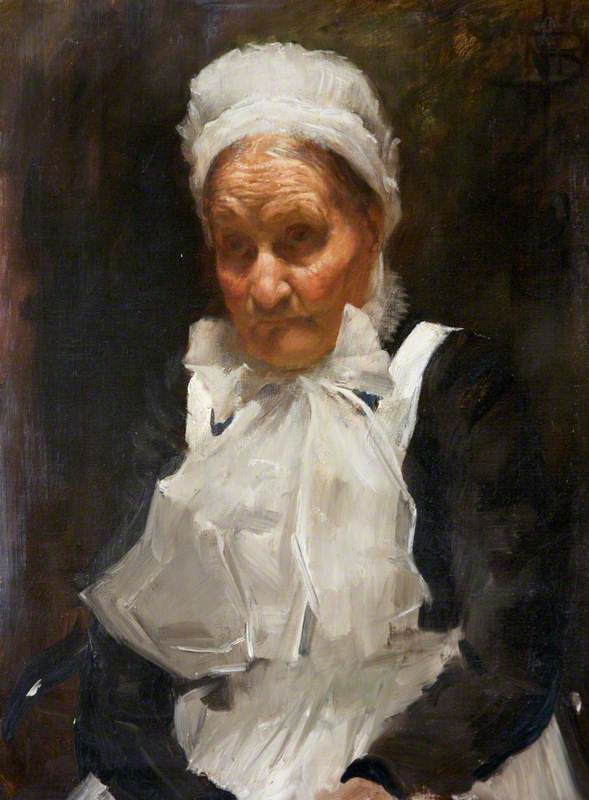
—Where did you write down your crime ideas? In a secret notebook?
Exactly! I had marbled-cover notebooks, which I showed to no one. Inside, I jotted down bits of plots, names, ideas for impossible murders. A real mess! Do you know where my best ideas came to me? In my hot bath, in the morning. I would lie there imagining ways to kill my characters, all peaceful. Then, in the afternoon, I typed everything on the typewriter. I like the English word for my craft: the whodunit, 'who did it'. My entire work lies in that question. And believe me, making the reader wait for the answer until the last page is quite an art.
My best murder ideas came to me in my nice warm bath.
—Is it true that you went digging for treasures in the desert?
Almost, my child! My second husband, Max Mallowan, was an archaeologist. I followed him on his excavations in the Middle East, in Iraq and Syria. Imagine: no city noise, just sand, burning sun, and houses made of dried mud bricks. There, at Nimrud, I was not the 'queen of crime': I photographed the discoveries and cleaned tiny ivories thousands of years old. A work of infinite patience! And in the evening, by lamplight, I wrote my novels, like Murder in Mesopotamia. Two lives in one, you see: the novelist and the woman covered in ancient dust.
I had two lives: the queen of crime, and the woman covered in ancient dust.
—Did you prefer writing at home or in the desert?
What a lovely question! I liked both, differently. At home, at Greenway House, in Devon, I had sloping gardens that led down to the river: perfect calm for dreaming up my plots. But in the desert, everything was harsher and more alive. I stayed in mud houses, without comfort, with a leather trunk marked with my initials as my only wardrobe. I carried my typewriter everywhere, even to the excavation sites. You know, a writer doesn't really need a nice desk. They need silence, a little tea, and a story that itches to be told. The rest is just walls.
A writer doesn't need a nice desk: silence, tea, and a story that itches.
—Your detective Hercule Poirot, did you at least like him?
Ah... between us, not always! Hercule Poirot, that immaculate little Belgian, with his mustache and his 'little grey cells' — that's what he called his brain. He was so sure of himself, so vain! After a while, he tired me. One day, I even wrote to my publisher that I found him annoying. Yet, I owe him everything: he was born in my very first novel, The Mysterious Affair at Styles, in 1920. He's like an old companion you love while grumbling. You argue, but you can't do without him. He followed me for over fifty years, that little man.
Poirot is like an old companion you love while grumbling.
—So why did you have him die at the end?
Because I had to say goodbye to him, my child. I wrote his very last case, Curtain, in secret, during the Second World War. You see, bombs were falling on London, and I didn't know if I would survive. So I wanted to give Poirot a real ending, rather than leave him orphaned. I locked the manuscript in a safe for over thirty years. It only came out in 1975. And do you know what happened? When Poirot died in the book, a major newspaper, the New York Times, put him on its front page. They had never done that for a fictional character before. That annoying little man... he got me in the end.
I kept Poirot's death locked in a safe for thirty years.
—If we met you today, what would we notice first?
Oh, probably a very ordinary lady! Not at all like someone who invents crimes. People found me shy, discreet, like a grandmother who loves her garden. You would see me with my porcelain teacup — I always thought better at tea time, around four o'clock. And maybe a piece of chocolate nearby, because I was a glutton, I admit it! The secret, my child, is never to trust appearances. Look at my Miss Marple: an old knitting spinster that no one notices, and she sees through every murderer. Quiet people observe everything. Remember that in life.
Never trust appearances: quiet people observe everything.
This imaginary interview was generated by artificial intelligence from sources documented in Agatha Christie's profile. It dramatises what the figure might have said based on what we know about them, but does not constitute attested historical testimony. For primary sources and factual documentation, refer to the full profile.