Imaginary dialogue between Toutankhamon and Akhenaten
by Charactorium · Akhenaten (1400 av. J.-C. — 1335 av. J.-C.) · Politics · Spirituality · Visual Arts · 5 min read
It is in the still-warm ruins of the Great Temple of the Aten, at Akhetaten, that the young Tutankhamun returns to find the memory of his father Akhenaten, one last time, before the court departs again for Thebes. The open-air altars are covered with sand, and the light of the solar disk still falls, stubbornly, on the empty slabs. The child-king already bears the weight of what he must undo: reopen the temples of Amun, leave this city born of nothing. He comes with his heir's questions, mingled with love and doubt.
—Father, I have been told that one day you stopped bearing the name Amenhotep. Why renounce 'Amun is satisfied', the name given to you?
That name, my son, was a golden chain. It bound me to the priesthood of Amun, to those priests of Thebes who, for generations, counted the harvests and spoke louder than the king. In the fifth year of my reign, I understood that a true god is not satisfied with the satisfaction of men. I took the name Akhenaten, 'He who is useful to the Aten'. It was no whim: on my two cartouches, that of my birth and that of my coronation, I wanted the solar disk to replace the ram of Thebes. You who today bear a name that others wish to change, you know better than anyone that a name is never a mere ornament. It is an allegiance carved in stone.
A name is never a mere ornament. It is an allegiance carved in stone.
—You brought me as a child to this city you raised from the desert. Why build Akhetaten here, on a land where no one had ever prayed?
Precisely because no one had ever prayed there, my child. All other places in Egypt already belonged to a god, a goddess, a priest who claimed their share. I wanted virgin soil, which no deity had claimed, a land the Aten had created for itself. I had my stelae erected in the cliffs to mark the sacred territory, and I swore before them never to cross these boundaries. In less than five years, palaces, temples, and houses sprang up along the Nile. I was called mad to found a capital on sand. But a new thought requires new land. You do not pour pure water into a vessel already defiled.
A new thought requires new land. You do not pour pure water into a vessel already defiled.
—The Aten has neither a human face nor the body of an animal, unlike all our gods. How could you pray to what the eye cannot grasp?
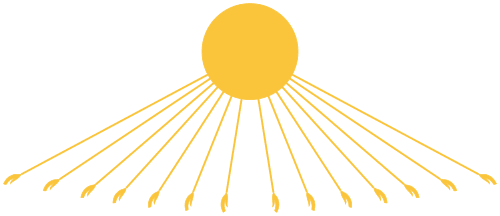
Look above us, my son: that is where he dwells. Aten needs no falcon mask or bull's muzzle, for he is what gives life to every living thing. In my Great Hymn, I sang how his rays embrace the lands to the limits of all he has created. See how, in our images, his rays end in hands that offer the ankh to my nostrils — life itself, offered each morning. The other gods hid in the shadow of sanctuaries, visible only to priests. The Aten, by contrast, shines for the farmer as for the king. A god that everyone can see no longer needs an intermediary. That is what Thebes never forgave me.
A god that everyone can see no longer needs an intermediary.
—But if the Aten suffices for all, what need is there for a king between him and his people? Did you not keep for yourself alone the role of high priest?
You touch a delicate point there, you who will one day have to hold that position in turn. It is true: only the pharaoh knows the Aten, and the people know me. I am the window through which his light descends to men. I closed the temples of other gods, not out of cruelty, but because a single light cannot suffer being divided into a thousand cults. Some have whispered that I replaced one priesthood with another, with myself at the top. Perhaps. But I believe I made the divine closer, not more distant. The reproach you whisper to me, my son, I have also made to myself, in the nights of Akhetaten, under this sky that never quite answers.
A single light cannot suffer being divided into a thousand cults.
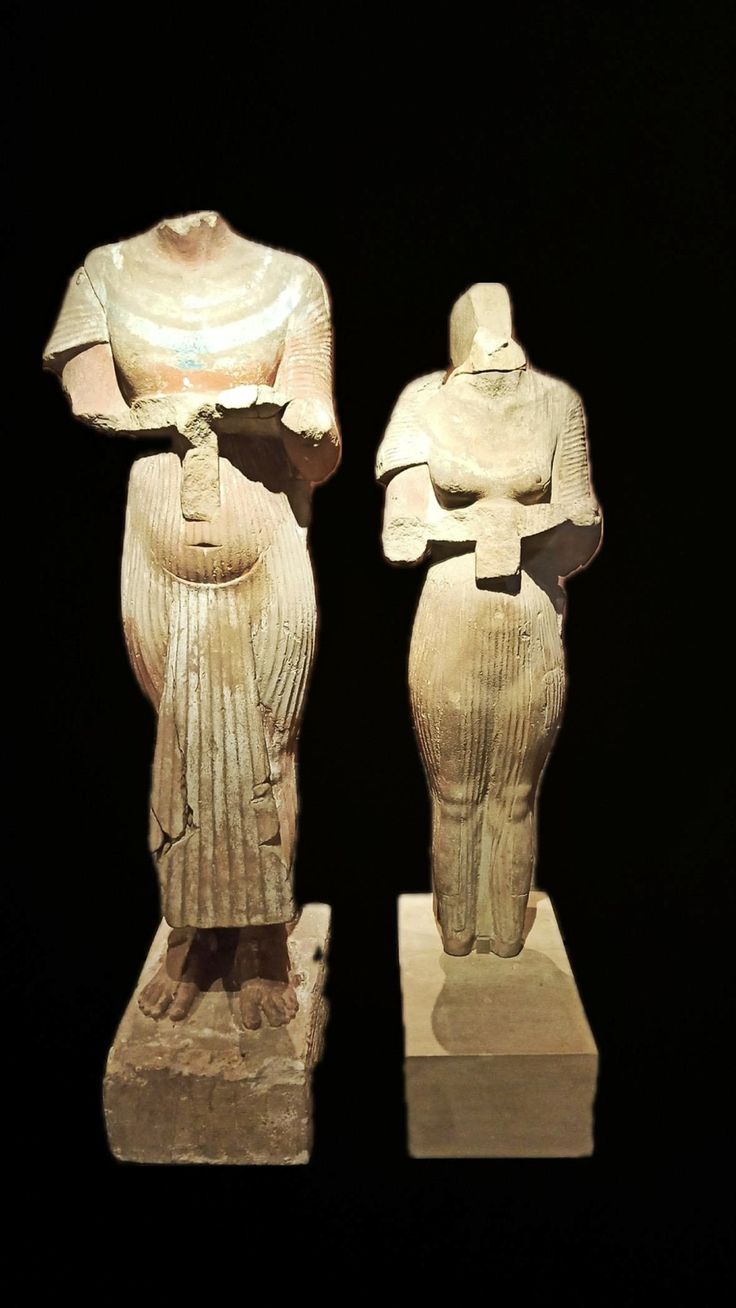
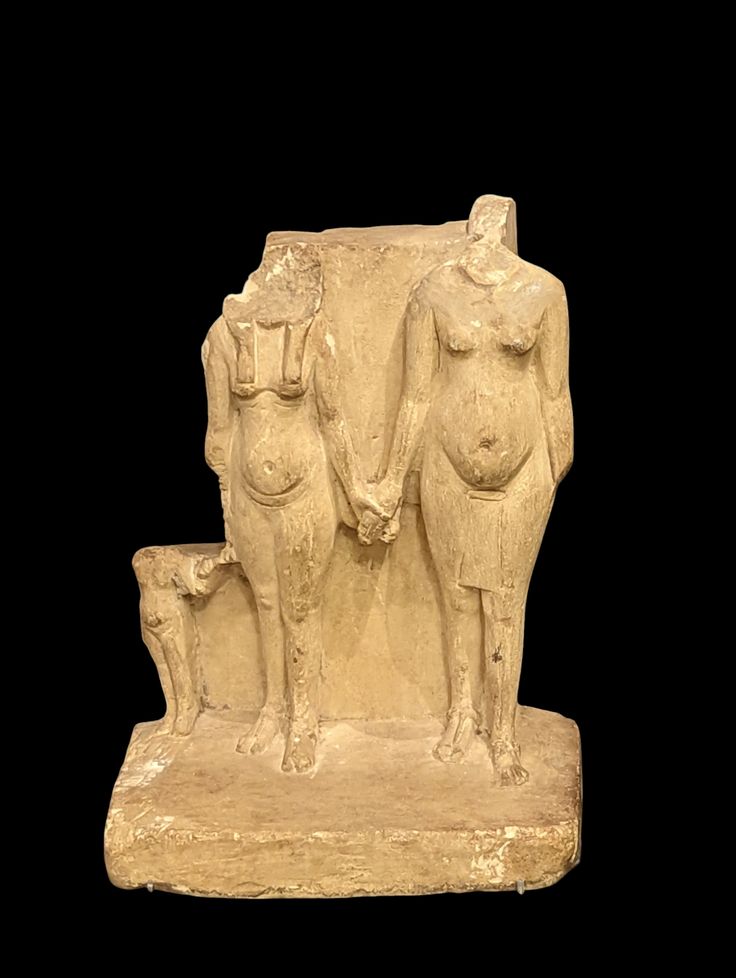
—Father, the sculptors gave you an elongated face, a heavy belly, wide hips. Is that how you really were, or did you want it?
That is a question even my stonecutters dared not ask. The truth, my son, is that I wanted it as much as I was it. For a thousand years, kings were carved in the same cold perfection, all alike, all perfect. I ordered that I be shown differently: the singular body, neither quite man nor quite woman, like the Aten who is father and mother of all creation. On the small stelae in the houses of Amarna, we are seen, Nefertiti, your sisters, and I, playing under the rays, living flesh and not frozen idol. Was it my real body? A convention? The sign of my exceptional nature? I leave you to judge. A king who looks like all others has nothing to found.
A king who looks like all others has nothing to found.
—Those colossi you had erected at Karnak, even before this city, may one day be broken. Why risk such a break with our ancestors?
Because the break was the message, my child. From the early years, at Karnak, in the very heart of Amun's domain, I erected my colossi in that style no one had seen: elongated forms, features that disorient the accustomed eye. It was planting my standard in the stronghold of my adversaries. They said I was profaning a thousand years of canons. But art is not made to flatter the dead; it serves the living god. If one day these stones are broken — and I know the priests' hatred is patient — the very shards will cry out that a king dared. One can destroy a statue. It is harder to erase the memory that it existed.
One can destroy a statue. It is harder to erase the memory that it existed.
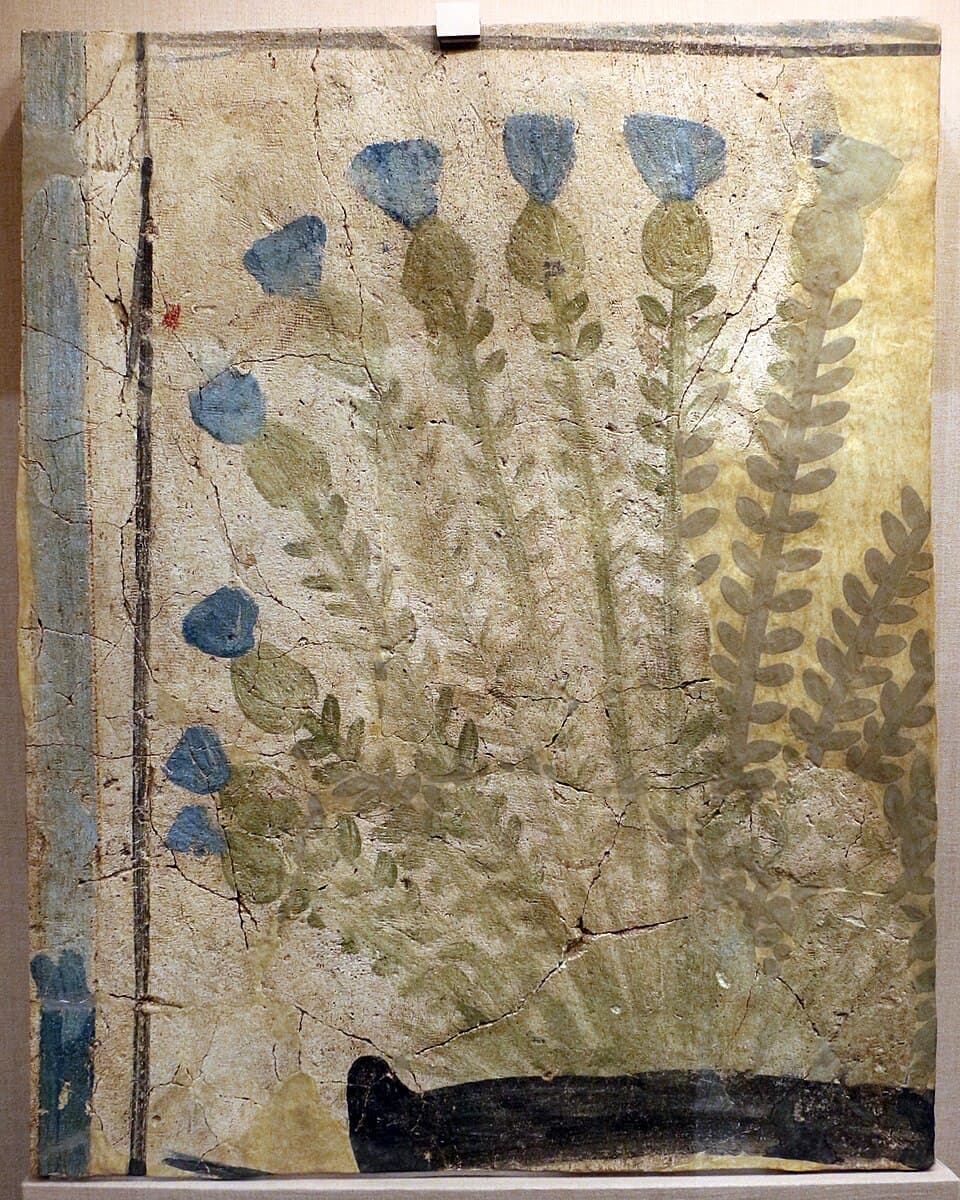
—You received me as a child in the Great Palace, among the pools and walls painted with birds. What did you hope to pass on to me by showing me this city?
I wanted you to breathe that air before others, my son. These walls covered with fish, marsh plants, these irrigated gardens under the disk — all that was not luxury, but lesson. I was showing you that a king can remake the world in the image of his faith. In the morning, you saw me celebrate the rising of the Aten on the open-air altars, with Nefertiti and your sisters; in the evening, greet his setting so that he might return. I wanted this rhythm to enter your blood. I also knew, without saying it, that the burden would fall on you. A father always passes on more questions than answers. May you carry Akhetaten in your heart, even if your steps one day lead you back to Thebes.
A father always passes on more questions than answers.
—Already, around me, they whisper that your name will be chiseled out, your city demolished. Did you ever think that after you, all this might disappear?
I think of it every time the wind covers an altar with sand. The priests of Amun await only my death to reclaim their property: they will reopen the temples, scrape my name from the cartouches, let Akhetaten return to the desert. Perhaps they will call me 'the enemy', the man whose name is no longer spoken. That is the price of one who overturns the ancient order. But listen to me, you who will likely have to undo part of my work: one can tear down walls, chisel stones, burn archives. One does not extinguish the light that gave them birth. The Aten will rise tomorrow, indifferent to the hatreds of men. My city will fall; the sun that inspired it, never.
One can chisel the stone. One does not extinguish the light that gave it birth.
—Father, if your very name is erased from the monuments, what will remain of you? What must I keep, I who carry your blood?
Keep what no chiseling can reach, my son. The Amarna Letters, those clay tablets on which I corresponded with the kings of Babylon and Mitanni, will one day tell those who can read them that a pharaoh reigned here, listened to by the great powers. But that is not what I entrust to you. What I bequeath to you is the memory of a man who dared to think of a single, faceless god, when all Egypt worshipped idols. If my name is erased, what does it matter: an idea, once born, walks alone. You, you may return to Amun, and I will not blame you — a king must hold his kingdom. But in the secret of your heart, remember those mornings when we saw, together, the disk rise over a city that nothing foretold.
An idea, once born, walks alone.
This imaginary interview was generated by artificial intelligence from sources documented in Akhenaten's profile. It dramatises what the figure might have said based on what we know about them, but does not constitute attested historical testimony. For primary sources and factual documentation, refer to the full profile.