

Eldest daughter of Pharaoh Akhenaten and Queen Nefertiti, Meritaten lived during the Amarna religious revolution in the 14th century BCE. She became Great Royal Wife of Pharaoh Smenkhkare and was abundantly depicted in the art of the Amarna period.
Meritaten
Meritaten (Méritaten)
9 min read
Frequently asked questions
Key Facts
- Born c. 1346 BCE, eldest daughter of Akhenaten and Nefertiti
- Grew up in Akhetaten (present-day Tell el-Amarna), the new capital dedicated to the god Aten
- Became Great Royal Wife of Pharaoh Smenkhkare after her mother's death
- Depicted in numerous reliefs and frescoes characteristic of the naturalistic Amarna style
- Some historians identify her as the mysterious pharaoh Neferneferuaten who briefly reigned after Smenkhkare
Works & Achievements
Meritaten appears in several tombs of court officials (Meryre I, Meryre II, Panehesy), taking part in royal ceremonies. These scenes are the main visual sources we have on her life and status.
Painted fragments from the palace depict scenes of family life unprecedented in Egyptian art: Meritaten and her sisters playing or receiving gifts from their parents. These revolutionary frescoes break with traditional hieratic convention.
Numerous domestic stelae found in private homes at Amarna show the royal family — including Meritaten — as objects of household devotion, bearing witness to the royal cult propagated throughout the city.
Several busts of princesses with the characteristic elongated skull have been found at Amarna, some of which may represent Meritaten. These works illustrate the innovative artistic style that would leave a lasting mark on the history of art.
Anecdotes
Meritaten is the eldest of six daughters born to Akhenaten and Nefertiti, the most depicted royal couple in all of Egyptian history. Her name means “Beloved of Aten,” the divine solar disk at the heart of her father’s religious revolution. From birth, she was incorporated into Atenist royal propaganda, appearing alongside her parents in countless scenes of family life on the walls of temples and tombs.
At Akhetaten, the new capital built in the middle of the desert, Meritaten played an exceptional ritual role for a princess. She is depicted on reliefs shaking a sistrum — a sacred percussion instrument — during ceremonies in honor of Aten, alongside her mother Nefertiti. From childhood, she thus took part in the official religious rites of the royal cult, which was highly unusual within the Egyptian tradition.
Toward the end of her father’s reign, Meritaten became the Great Royal Wife of pharaoh Smenkhkare, co-regent or successor to Akhenaten. This marriage was intended to maintain dynastic legitimacy during a very turbulent period. Wine-jar seal impressions found at Amarna bear her name alongside the official title of “Great Royal Wife, Mistress of the Two Lands,” attesting to her real standing at court.
The tomb of the dignitary Meryra II at Amarna depicts a court scene in which Meritaten and Smenkhkare receive tribute from all the lands of the known world with great ceremony. It is one of the rare official scenes where Meritaten appears clearly as a ruler in her own right, rather than simply as her father’s companion. This depiction testifies to the real power she held.
Some Egyptologists believe that after the death of Smenkhkare, Meritaten may have briefly served as regent or even reigned under a male name, which would make her one of the very few female pharaohs in Egyptian history. This hypothesis rests on the existence of a mysterious pharaoh named Neferneferuaten, whose identity continues to divide specialists the world over.
Primary Sources
These large rock-cut stelae mark the boundaries of the new capital Akhetaten. They mention Meritaten among the royal family members present at the city's consecration, alongside Akhenaten and Nefertiti, attesting to her official status from the very beginning of the Amarna period.
The walls of the Great Temple of Aten depict the royal family making offerings to the solar disk. Meritaten holds sistrums and participates in rituals alongside her parents, in a revolutionary artistic style that breaks with the hieratic conventions of traditional Egyptian art.
The tomb of the dignitary Meryra II depicts a court scene in which Meritaten and Smenkhkare receive tributes in a grand ceremony. This official representation confirms the princess's title of Great Royal Wife and her active role in the political life of the kingdom.
Seal impressions and wine jar labels found during excavations at Amarna bear Meritaten's cartouche with the title of Great Royal Wife, attesting to her official status and her oversight of the royal estates under her charge.
These clay tablets written in Akkadian cuneiform constitute the diplomatic archives of the Amarna court. Certain letters reference Egyptian royal princesses in the context of gift exchanges and marriage negotiations with Near Eastern courts.
Key Places
The capital founded by Akhenaten in honor of Aten, this was Meritaten's primary place of life. She grew up here, performed her ritual duties, and lived here until the city was abandoned after her father's death.
The largest temple in the new capital, where Meritaten officiated alongside her parents during the daily offering ceremonies. She is depicted in reliefs showing her playing the sistrum beneath the solar disk.
The main residence of the royal family at Amarna, connected to the Great Temple by a processional road. Meritaten lived here, received foreign dignitaries in her role as Great Royal Wife, and conducted her daily life as a princess.
Tombs cut into the cliffs east of Akhetaten, intended for the royal family. A tomb was prepared there for Meritaten, although her final resting place remains unknown to archaeologists.
The ancient religious capital of Egypt and seat of the great temple of Amun, which her father had closed. Meritaten was most likely born here before the move to Amarna, and her dynastic origins were rooted in this city.
Typical Objects

Sacred percussion instrument consisting of a metal frame shaken to produce a ritual jingling sound. It is the object most often depicted in Meritaten's hands during ceremonies honoring Aten.

A broad pectoral collar of gold and semi-precious stones (lapis lazuli, carnelian, turquoise), the pre-eminent insignia of royal rank. Meritaten wore it during audiences and official ceremonies, as attested by numerous sculpted representations.

A heavy votive counterpoise necklace used in religious rituals, a symbol of fertility and divine protection. Meritaten is depicted holding the menat during offerings to Aten, testifying to her priestly role.

The central symbol of Amarna religion: the solar disk with rays ending in small human hands making offerings. Meritaten lived and officiated under this divine sign, which quite literally gave her her name.

A royal scepter symbolizing power and delegated divine authority. As Great Royal Wife, Meritaten carried this sign of power during official ceremonies and receptions for foreign dignitaries.

Wine jar labels bearing Meritaten's cartouche have been found at Amarna, confirming that she administered royal vineyards. These jars sealed in her name testify to her concrete administrative authority.
School Curriculum
Vocabulary & Tags
Key Vocabulary
Tags
Daily Life
Morning
Méritaton's day began before dawn with purifying ritual ablutions and the meticulous application of makeup — black kohl around the eyes, green eyeshadow on the lids — assisted by her handmaidens. She then donned her royal regalia to attend the morning offerings at the temple of Aten, a ceremony in which the royal family participated daily from the palace's Window of Appearances.
Afternoon
The afternoon was devoted to ceremonial duties: official audiences, reception of foreign dignitaries bearing tributes and diplomatic gifts, or inspection of the royal workshops where sculptors and craftsmen worked under royal direction. She also practiced ritual music, particularly playing the sistrum and reciting hymns to Aten.
Evening
In the evening, the royal family gathered for banquets in the palace reception halls, enlivened by court musicians, singers, and dancers. Méritaton also took part in sunset prayers and libations, a theologically crucial moment when Aten disappeared below the horizon only to be reborn the following morning.
Food
The princess's diet was highly refined: white leavened bread, roasted meats (beef, goose, Nile duck), fresh river fish, vegetables from the royal gardens (onions, lettuce, cucumbers, leeks), abundant fruits (figs, grapes, dates, pomegranates), and cakes made with honey and spices. She drank filtered beer and fine wine — jars stamped with her name have been found at Amarna.
Clothing
Méritaton wore finely woven linen robes, often pleated and nearly translucent, their immaculate whiteness achieved through sun-bleaching. Over these she wore broad pectoral collars of gold and semi-precious stones. She wore golden leather sandals, bracelets on her wrists and ankles, and a long-braided wig topped with a royal diadem.
Housing
Méritaton lived in the Great Royal Palace of Akhetaten, a vast complex overlooking the Nile, with gardens, pools, and pavilions open to the river breezes. Her private apartments were decorated with colorful frescoes depicting birds in flight, aquatic plants, and scenes of living nature — a unique and revolutionary decorative style in Egyptian art. The furnishings included gilded wooden beds, treasure chests of ebony and ivory, and inlaid ceremonial chairs.
Historical Timeline
Period Vocabulary
Visual Style
Style artistique de la période amarnienne : formes naturalisées et expressives, crâne allongé caractéristique, palette dorée et chaude, bijoux en lapis-lazuli et or, scènes rituelles sous le disque rayonnant d'Aton.
Sound Ambience
Ambiance sonore du palais et des temples d'Akhetaton : musique rituelle au sistre, chants sacrés à Aton, vent du désert sur les cours en calcaire, arômes d'encens et sons du Nil en arrière-plan.
Liens externes & ressources
Références
Œuvres
Représentations dans les tombes de nobles d'Amarna
vers 1346-1336 av. J.-C.
Stèles de maison à l'effigie de la famille royale
vers 1346-1336 av. J.-C.
Statues et bustes de princesses amarniennes
vers 1346-1336 av. J.-C.
Rechercher
See also
Related Characters
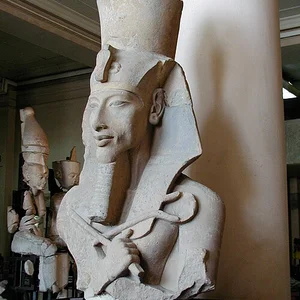
Akhenaten
1400 av. J.-C. — 1335 av. J.-C.
Amenhotep III
1399 av. J.-C. — 1350 av. J.-C.

Aten
Ay
1400 av. J.-C. — 1400 av. J.-C.
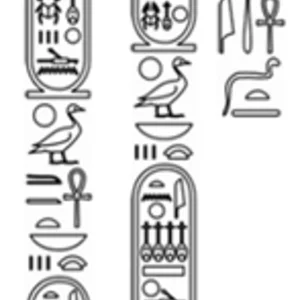
Neferneferuaten
1400 av. J.-C. — 1400 av. J.-C.
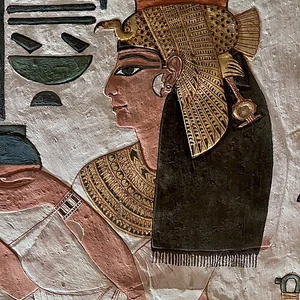
Nefertari
1289 av. J.-C. — 1254 av. J.-C.