Kids interview Akhenaten
by Charactorium · Akhenaten (1400 av. J.-C. — 1335 av. J.-C.) · Politics · Spirituality · Visual Arts · 5 min read
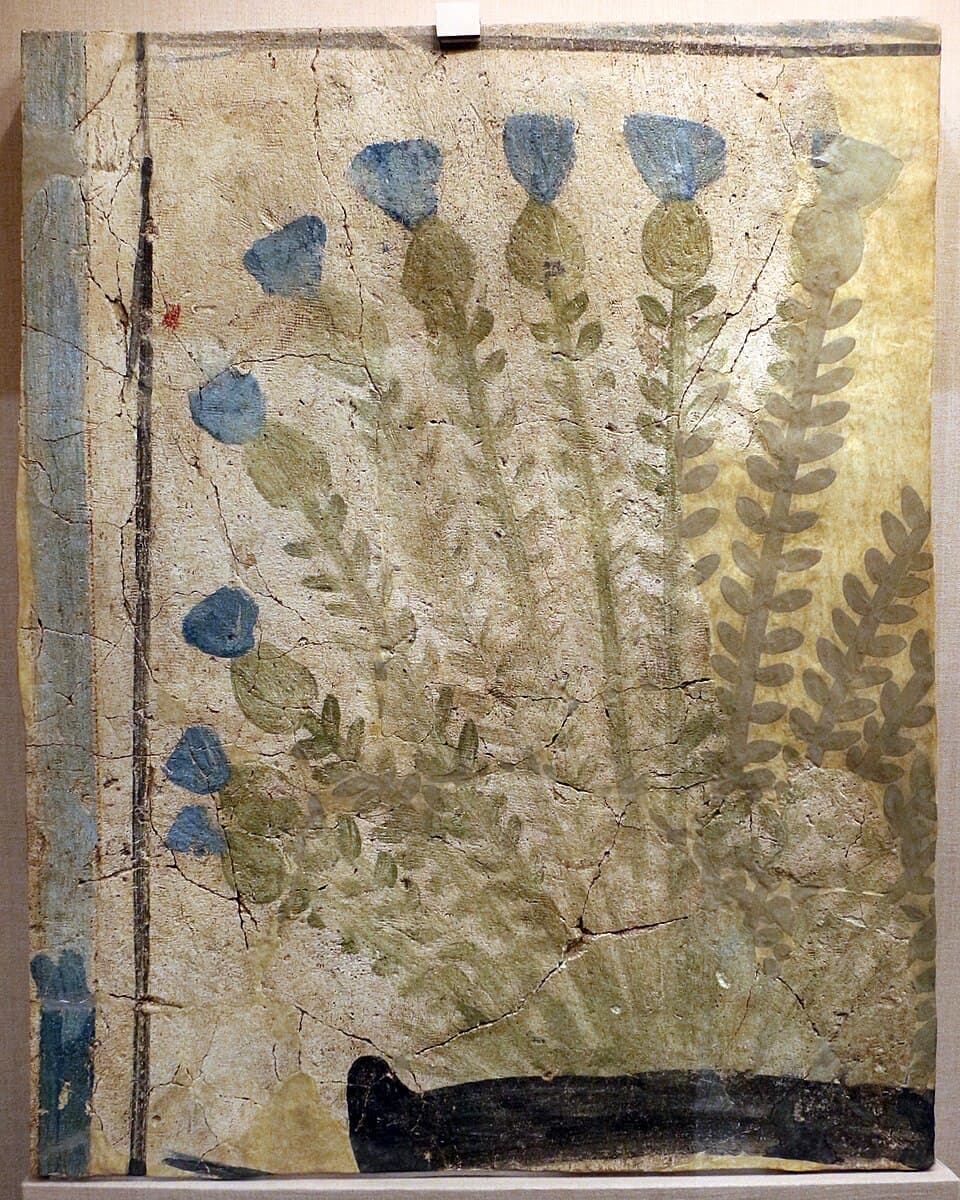
That morning, a school group passed through the gates of an open-air temple. Two young visitors stepped forward, a bit intimidated, toward a pharaoh with an unusual face and a gentle smile. Akhenaten invited them to sit in the shade, under the rays of his god.
—Is it true that you changed your name while you were already king?
Yes, my child, and it was the most important day of my life. At birth, I was called Amenhotep, which means 'Amon is content.' Amon was the great god everyone worshipped. His priests were rich, powerful; they commanded almost as much as I did. Around my fifth year of reign, I said: no. I took the name Akhenaten, 'He who is useful to Aton.' Imagine tearing up your own first name to write a new one. That's what I did. And believe me, that day, all the priests of Amon trembled.
I tore up my own name to write a new one.
—So the priests of Amon hated you?
Yes, and I understand if that seems frightening to you. Those priests had ruled Egypt for centuries before me. Their temples overflowed with gold and grain. I had the name of Amon erased from the walls of the entire country. Workers climbed the monuments to hammer away his name, stone by stone. Imagine thousands of walls where a word is scratched out until it disappears. It was a declaration of war, my child. I knew that after my death, they would try to pay me back. And they did.
They hammered a name on a thousand walls until it disappeared.
—Did you really build a brand new city, just like that, from nothing?
Yes, and in less than five years! I called it Akhetaten, 'the horizon of Aton.' I chose a virgin spot on the banks of the Nile, where no temple, no god had ever left its mark. On the cliffs around, I had large stones—stelae—carved to mark the sacred boundaries of my city. On one of them, I swore an oath: never to leave this city. Imagine promising, carved in rock for eternity, to stay in the same place forever. I kept my word. Today it is called Tell el-Amarna.
I swore, carved in stone, never to leave my city.
—Why did you want a place where no god had ever been?
Good question, my child. You see, every city in Egypt already belonged to an ancient god. Thebes to Amon, Memphis to another. I wanted a clean, new place, only for Aton. On my foundation stele, I had it written that no god or goddess had ever claimed it. It was a blank land, like a page with nothing written on it. I built the Great Temple there, open to the sky, without a roof, so that the sun's rays could touch the offerings directly. Imagine praying without a ceiling, just you and the light.
A blank land, like a page with nothing written on it.
—What did your god Aton look like? Did he have a face?
No, and that's what made him unique! The other gods had heads of a man, a falcon, a jackal. Aton had no face. He was the solar disk, the sun itself. He was drawn as a circle from which long rays descended. And do you know how those rays ended? With little hands! Those hands reached out to me and my family a sign called the ankh, a looped cross that means 'life.' Imagine the sun caressing your cheek and breathing life into your nostrils. That was my god.
My god had no face: he was the light itself.
—How did you pray to a god you couldn't really see?
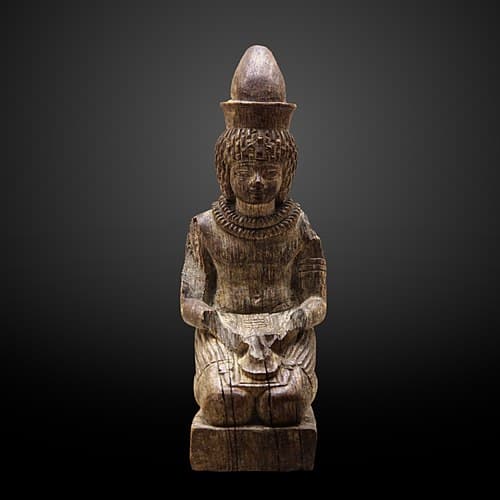
I prayed to him by singing, my child. I composed a great poem for him, the Great Hymn to the Aten. It says: 'Your rays embrace the lands to the limits of all you have created.' Every morning, I rose before dawn to greet his return. On the roofless altars, we placed flowers, bread, incense. No statue to worship, just the sky brightening. Imagine waking up every day just to say thank you to the rising sun. That was my prayer.
My prayer was to get up every day to greet the sun.
—In your statues, you have a round belly and a long face. Was that real?
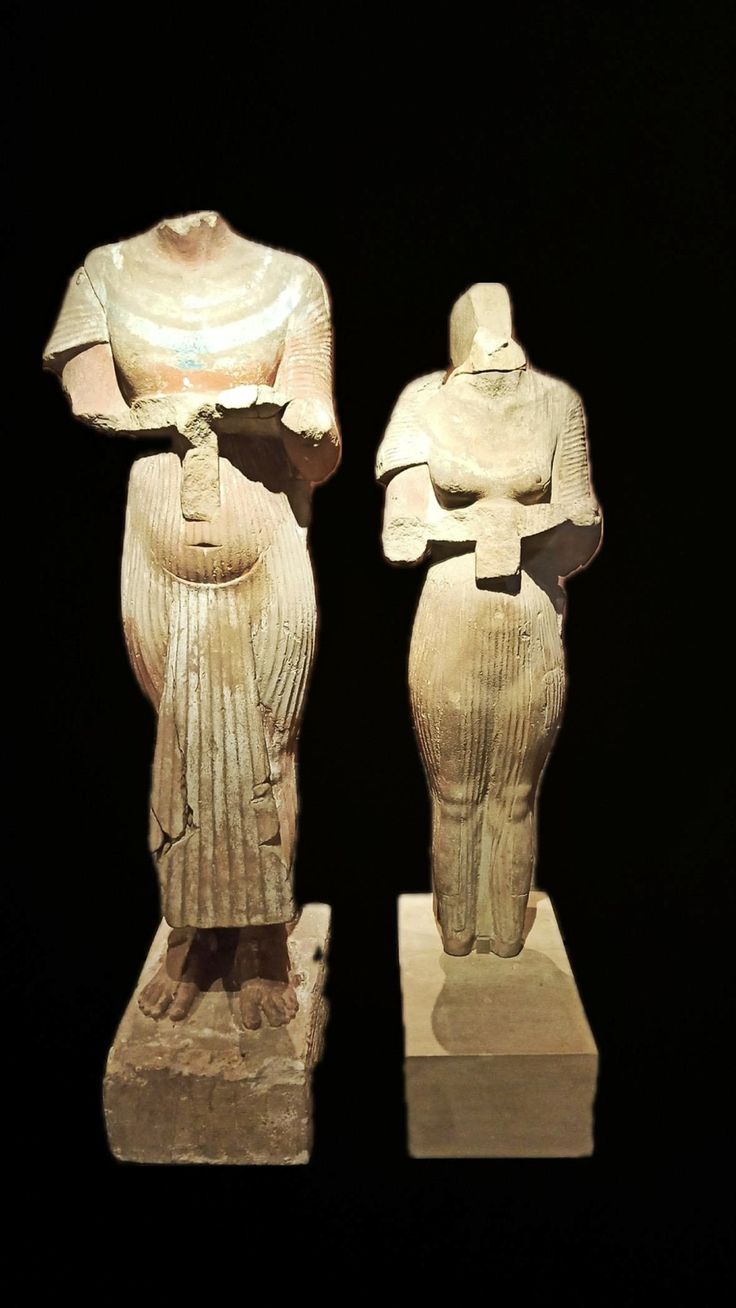
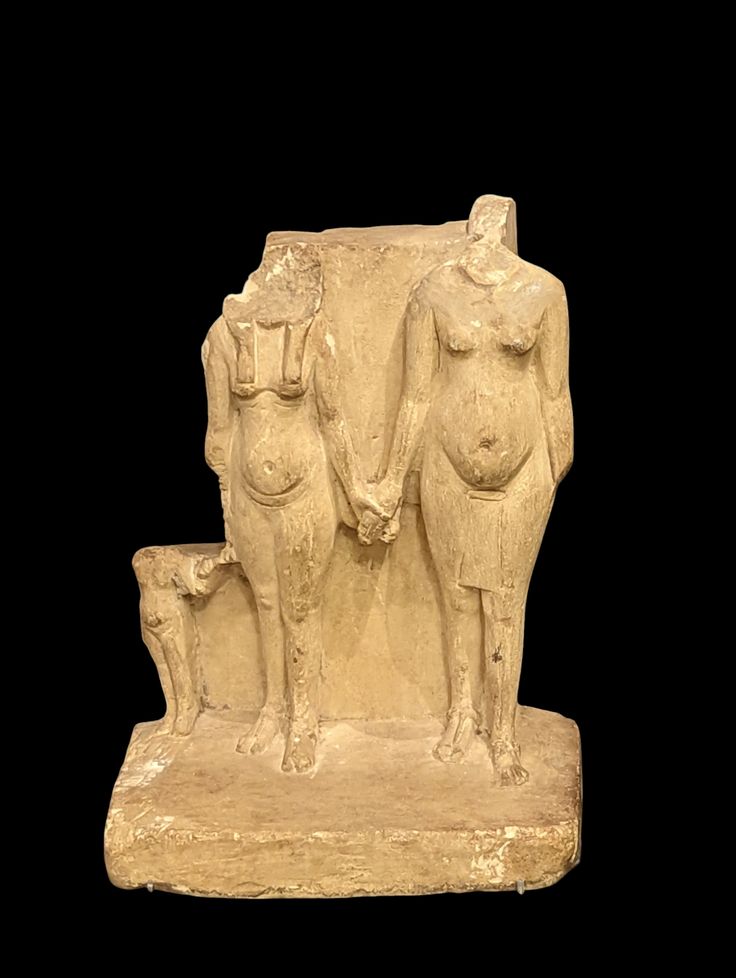
Ah, you have a sharp eye! Many ask this question. I ordered the sculptors to show me differently from the kings before. For a thousand years, pharaohs were depicted straight, muscular, perfect. I am shown with a long face, wide hips, a protruding belly. Scholars today still argue: was it my real body, or an intentional symbol? I won't give you the answer. Imagine a king who decides to be shown different from all others, on purpose. Sometimes, being different is what it means to be divine.
Sometimes, daring to be different is already touching the divine.
—How did you dress to look so beautiful in the pictures?
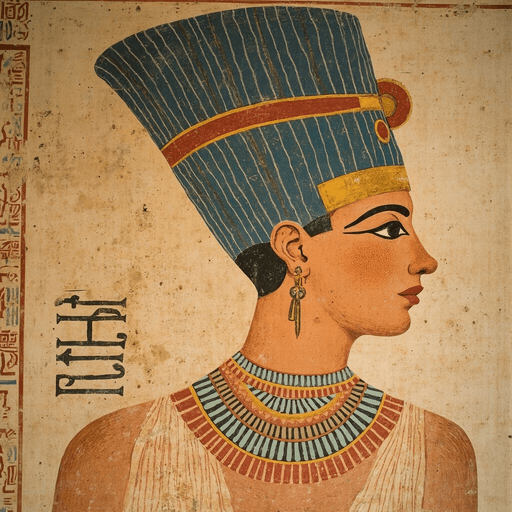
With care, my child, but without heaviness. I wore the shendyt, a pleated white linen loincloth, light as a breath. Sometimes a fabric so fine it was almost transparent, a new fashion of my city. For ceremonies, I wore the blue crown, the khepresh, a leather headdress, and a broad gold collar around my neck. Imagine the heat of Egypt: you didn't want to weigh yourself down with furs. White linen breathed, it shone in the sun of Aton. I liked that the body my god had created could be seen.
—Were you friends with other kings far from Egypt?
Yes, and very far! Kings of Babylon, of Mitanni, of Cyprus wrote to me. Their messages have been found: over three hundred clay tablets, inscribed not in Egyptian but in Akkadian, the language all kings used then to speak to each other. A kind of common language among the powerful. Some asked me for gold, others for a princess to marry. Imagine receiving letters every week from countries so distant it took months to get there by donkey and boat. This treasure is called the Amarna Letters.
—Did those kings write nice things to you?
Sometimes too nice, my child, and you had to be wary! A vassal named Aziru wrote to me: 'I prostrate myself at the feet of the king, my lord, seven times and seven times.' Seven times and seven times! He threw himself on the ground, in words, to flatter me. But while he showered me with praise, he played a double game back on his lands. You see, a king must learn to read behind fine words. Imagine someone smiling at you very hard while hiding his hands behind his back. That is diplomacy: politeness over cunning.
Diplomacy is politeness over cunning.
—Does it make you sad that people destroyed everything after you?
A little, yes, I won't lie to you. After my death, my successors demolished Akhetaten, my beloved city. They hammered out my name, overturned my temples, brought the court back to Thebes to Amon. They even called me 'the enemy.' They thought they could erase me forever. But look, my child: you are here today, asking me questions. My hymn to the sun is still sung, my broken statues have been found and reassembled. You can erase a stone, but you cannot erase an idea. The sun rises every morning. And I with it.
You can erase a stone, but you cannot erase an idea.

This imaginary interview was generated by artificial intelligence from sources documented in Akhenaten's profile. It dramatises what the figure might have said based on what we know about them, but does not constitute attested historical testimony. For primary sources and factual documentation, refer to the full profile.