Imaginary dialogue between Toshirō Mifune and Akira Kurosawa
by Charactorium · Akira Kurosawa (1910 — 1998) · Performing Arts · 5 min read
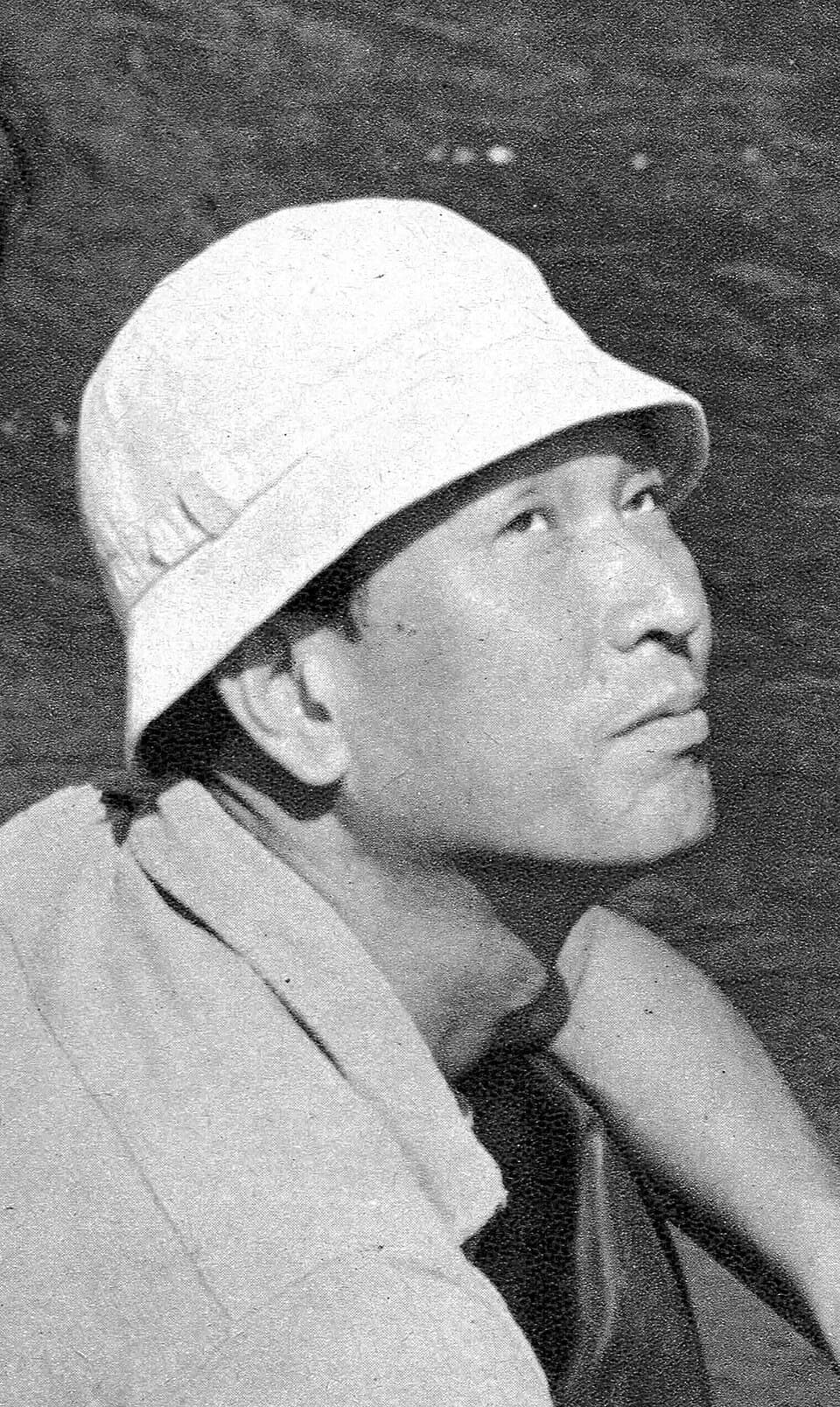
It is in the traditional house in Tokyo where Kurosawa lives surrounded by his garden that an old accomplice pushes open the door, one spring morning in the early 1990s. On the master's desk lie watercolor notebooks and annotated scripts; tea steams next to the viewfinder he never put away. The two men haven't talked about cinema in a long time — sixteen films bound them, from Drunken Angel to Red Beard, then silence. Mifune has come, not for the actor he was, but to understand the man behind the Sensei he served and feared.
—Sensei, even before I knew you, Rashomon revealed you to the world. They say it almost never came out. Is that true?
It's true, and I keep an almost painful gratitude for it. The executives at Daiei found the film incomprehensible — they saw it as a whim, not a film. Without an Italian employee of the distributor who begged her boss to send it to Venice in 1951, no one would have seen those four testimonies that contradict each other. When the Golden Lion fell, we were stunned, the studio first. I was constantly asked what the film meant. I couldn't explain it: if I could have said it with words, I wouldn't have needed to film it. The film means exactly what it shows — the truth of men never fits in a single gaze.
If I could have explained it with words, I wouldn't have needed to film it.
—You started under military propaganda, then under the American occupier. How does a filmmaker breathe when two censorships follow one another?
You learn to be cunning, or you die. Under the army, in 1943, I made Sanshiro Sugata knowing that every shot could be cut for lack of patriotism. Then the Americans arrived, and what they forbade was the opposite: no more samurai, no more feudalism, nothing of that old Japan they deemed dangerous. So I filmed the Japan of today — Drunken Angel, where I found you, Ikiru later. It wasn't a prison: gendaigeki forced me to face the wounds of the postwar period. It was only after 1952, when the occupation ended, that I could return to samurai. A constrained artist is not a gagged artist; sometimes constraint teaches him where to look.
A constrained artist is not a gagged artist: sometimes constraint teaches him where to look.
—Do you remember our Seven Samurai, in 1954? You made us wear those costumes for weeks before. I thought I was going crazy. Why?
I remember it as if it were yesterday, and I know you resented me for it. But look at yourself in that film: you weren't wearing a costume, you were wearing your skin. A new garment lies; it says 'disguise' in every shot. I had them aged, worn, dirtied, so they would stop being clothes and become a life. And the rain — do you remember the rain of the final battle? I mixed black ink into it, otherwise it would have remained invisible on the film. All of that seemed tyrannical, I know. But authenticity is not played, it is embodied. You had it in your body better than anyone — that's why the camera believed you.
A new garment lies; I wore them out so they would stop being clothes and become a life.
—You demanded Edo-era katanas, real martial arts masters. That accuracy cost you dearly. Was it worth it?
Always. A cheap sword shows in the way a hand holds it — weight lies less than the face. I collected real armor and blades, and I brought in real masters to teach you how to draw, how to stand, how to die just right. The audience might not be able to name what they feel, but they would sense the fake immediately, like a wrong note. Cinema is a lie that you make credible detail by detail. If the detail is true, the viewer consents to the rest. That's why I harassed each of you: not for cruelty, but because a single false gesture would ruin an hour of truth.
Cinema is a lie that you make credible detail by detail.
—On your desk, there are those watercolors. I'm told, Sensei, that you have trouble distinguishing colors. How then do you paint such sumptuous shots?
It's one of the ironies of my life: my eyes betray colors, and yet I made color my final language. For Ran, I painted hundreds of watercolors before shooting a single shot — not sketches, but paintings, each scene, each framing. I first wanted to be a painter, before resigning myself to cinema for lack of a living. Painting never left me. When my eye hesitates, I choose color by will, by the meaning it carries, not by what it shows me. A red is not a red: it is blood, or madness, or the autumn of an old king. I do not paint what I see, I paint what the film must feel.
I do not paint what I see, I paint what the film must feel.
—That viewfinder around your neck, you never took it off. Even at table, sometimes. What did you see through it that we didn't?
I frame. Always, everywhere, despite myself. This viewfinder served me to see the shot even before setting up the camera, like a painter sees his canvas before touching it. A film, you see, is born three times: when it is written, when it is shot, when it is edited — and at each birth you have to reinvent everything. The viewfinder is my way of holding the first birth in my hand, of fixing it before it escapes. The actors thought I was looking at the light or the set; in truth I was looking for the only place from which the image becomes true. A poorly placed image, and all your actor's truth is lost. I owed you that right frame — it was my part of the work.
A film is born three times: when it is written, when it is shot, when it is edited.
—Your epic films require armies of extras, entire battles. That commander's authority, did you like it, or did it weigh on you?
They called me Sensei, and on a set that word is almost a military rank. Directing hundreds of extras with a megaphone, in the dust, under the ink rain, is leading a troop — and a troop is not led with doubt. So I made decisions, I did ten takes, twenty takes, until I exhausted everyone, you first. It wasn't vanity. A director's hesitation spreads like fear in the ranks, and then the battle on screen looks like nothing. I was harsh, sometimes unfair. But the beauty of a filmed battlefield is paid for by a discipline that only the leader can impose. The price, I bore alone.
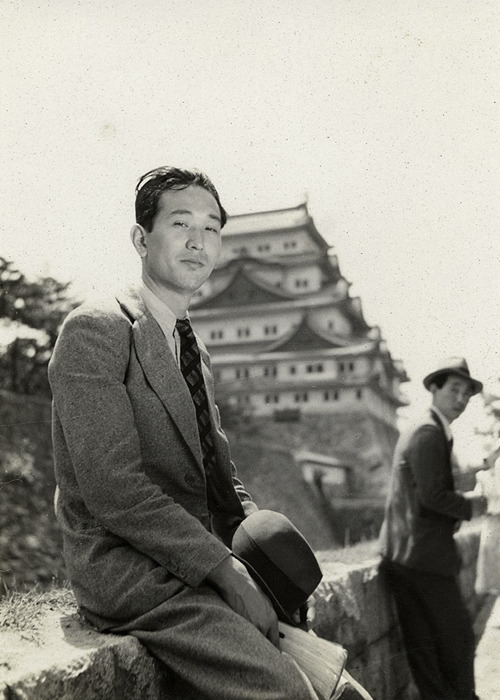
—After our last film together, they thought you were finished. I knew about 1971. How did you come back from so far, Sensei?
You knew, and you are not alone — I would have preferred no one knew. I was at the end: no more projects, no more money, the feeling of having been discarded by my own country. I don't have the strength to say more about that night. What saved me came from the other side of the world: two young Americans, Coppola and Lucas, who admired me enough to produce Kagemusha in 1980. Without them, I think I would never have filmed again. An old Japanese man set back on his feet by two Hollywood boys — what a strange lesson in humility. I understood that day that the work knows no borders that men invent for it.
An old Japanese man set back on his feet by two Hollywood boys — what a strange lesson in humility.
—Kagemusha received the Palme d'Or at Cannes. After such a crossing of the desert, what did that triumph taste like?
A mixed taste, both sweet and bitter. The Palme came to honor a man whom his own country thought finished — and that irony was not lost on me. I felt joy, of course, but above all immense relief: I could still work, still film the great plains at the foot of Fuji, still send horsemen into the dust. Kagemusha is a thief who takes the place of a dead lord and ends up assuming his soul. Perhaps I was telling a bit of my own story: a man who was buried and who returns to play a role no one thought he could. Cinema gave me back to myself when I had given up. You don't thank enough what keeps you alive.
—One last thing, Sensei. All these awards, these tributes from around the world — do you finally feel you have understood cinema?
No, and I answer without coyness. I was given an honorary award in America, and I said what I really thought: I am not yet sure I understand cinema. I will continue to work, and perhaps one day I will understand. My whole life is in my films, and to understand me you must understand them, just as to understand them you must understand me — it's a circle I cannot escape. At my age, admitting that you are still learning is not a weakness: it is the only thing that keeps me standing. The day I believe I have understood everything, I will already be dead as an artist. As long as I seek, I live.
The day I believe I have understood everything, I will already be dead as an artist.

This imaginary interview was generated by artificial intelligence from sources documented in Akira Kurosawa's profile. It dramatises what the figure might have said based on what we know about them, but does not constitute attested historical testimony. For primary sources and factual documentation, refer to the full profile.