Kids interview Akira Kurosawa
by Charactorium · Akira Kurosawa (1910 — 1998) · Performing Arts · 5 min read
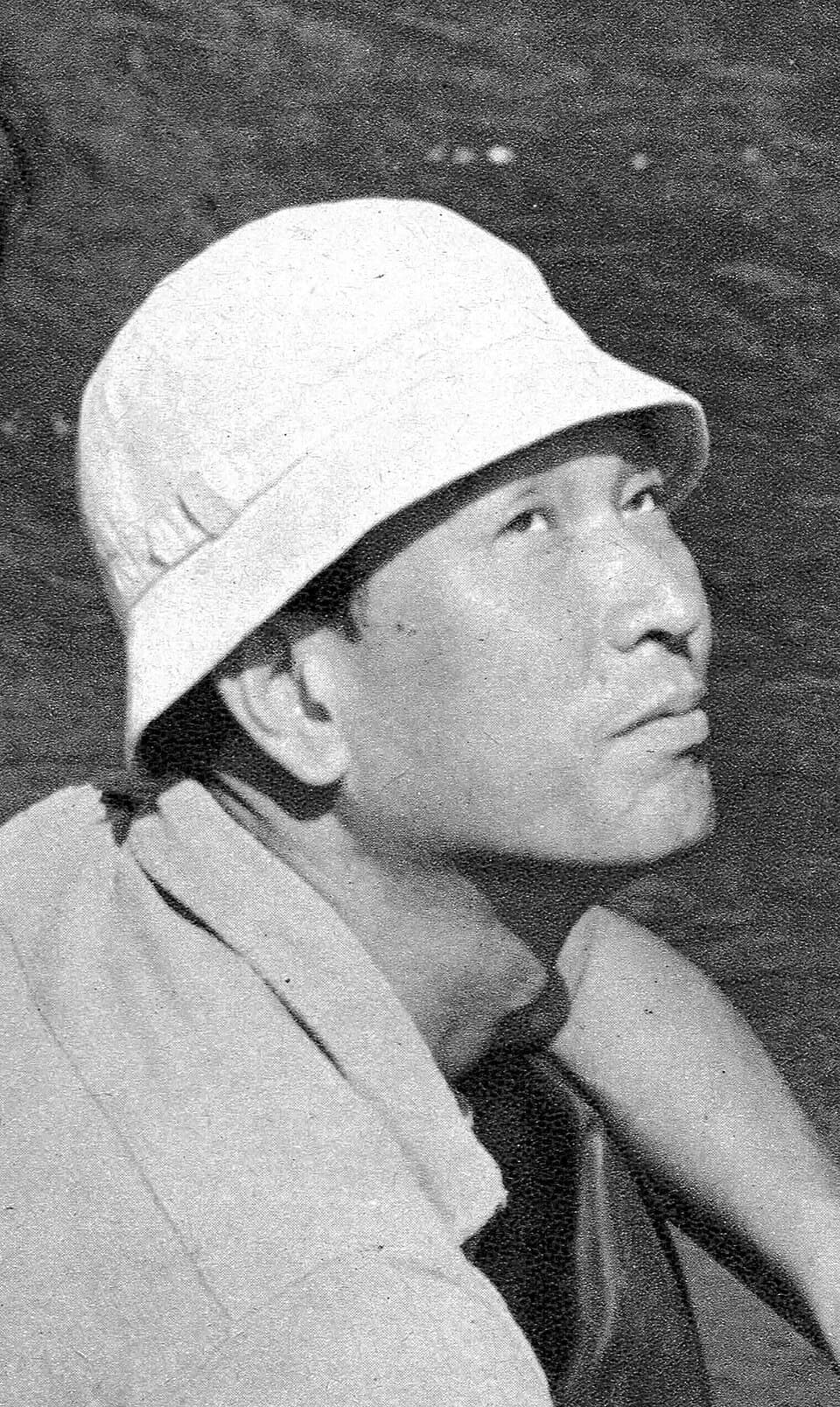
Two young visitors, on a school field trip, push open the door of a film studio. Before them, an old gentleman in a wide-brimmed cap waits with a moved smile. It is Akira Kurosawa, the great Japanese director, and he has agreed to answer all their questions.
—Is it true I heard you can't see colors well?
It's true, my child. I was color-blind: my eyes confused certain colors, like green and red. You might say: but then how do you make such beautiful color films? Well, I cheated a little. Before each shoot, I painted hundreds of watercolors, one for every shot. Imagine a big notebook full of little paintings. For Ran, my film from 1985, every battle was first a painting. That way, I decided the color on paper, calmly, before putting it on screen. I thought of my films the way a painter thinks of his painting.
I thought of my films the way a painter thinks of his painting.
—You always had a weird thing around your neck in photos, what was it?
Ah, you have a sharp eye! It was my viewfinder. A little tube I kept hanging around my neck, all the time. I held it to my eye and looked through it, like a telescope. It showed me exactly what the camera would see. Imagine framing with your two hands to choose the prettiest part of a landscape. My viewfinder was that frame. Even before setting up the heavy camera, I already knew where it would go. A shot is like a watercolor: every edge counts, every detail must be in its place.
A shot is like a watercolor: every edge counts.
—What was a day of shooting with you like?
Hard, but joyful! I got up before the sun to catch the beautiful morning light. In the afternoon, we shot, often outdoors, in all weather. And I would do it again, again, until it was perfect. My crew called me Sensei — that means 'master' in Japanese. For Seven Samurai, in 1954, I had the actors wear their costumes for weeks before filming. I even had them aged, dirtied a little. You know why? A brand-new garment shows, it smells of costume. I wanted people to truly believe in my peasants and my warriors.
A brand-new garment smells of costume.
—How did you make rain in the battles? Was it real?
Good question! The problem is, in my time we often shot in black and white. And normal rain, on screen, you could barely see it! It disappeared. So, on Seven Samurai, I had an idea: I mixed black ink into the water from the sprinklers. That way, each drop became dark, clearly visible on the film. Imagine a storm rain falling on muddy warriors, in a terrible battle: that's what I wanted. Many other directors copied my trick afterwards. To tell a true story, you sometimes have to invent fake clouds.
To tell a true story, you sometimes have to invent fake clouds.
—What was your most famous film?
Many will tell you Rashomon, released in 1950. It's the story of a murder in a forest, told four times by four different people. And each time, the story changes! Everyone lies a little, or believes something different. Imagine that in your schoolyard, four classmates recount the same fight: you'd get four stories that don't match. Today, when people can't figure out who is telling the truth, they call it the 'Rashomon effect.' A word born from my film! That touches me deeply, you know.
Truth changes according to who tells it.
—Were you happy when you won a big prize?
Happy? I was mostly astounded! Listen to this story. When Rashomon came out, the heads of my studio found it incomprehensible. They almost didn't want to show it. Then an Italian employee of a distribution company loved it and convinced her boss to send it to a big festival, in Venice. And there, in 1951, it won the Golden Lion, the top prize! For the first time, the whole world discovered Japanese cinema. All thanks to a single person who believed in a film that everyone else rejected. One voice can change everything.
One voice that believes can change everything.
—Did you live through the war? How was it making films then?
Yes, my child, and it was very difficult. After 1945, when the war was lost, foreign soldiers occupied Japan. They watched everything, even cinema. It was called censorship: we weren't allowed to show certain things, especially old stories of samurai and lords. Forbidden! So I had to tell the Japan of today, the one with streets damaged by bombs. In 1948, I made Drunken Angel, about a doctor and a sick little thug. That's where I met Toshirō Mifune, my favorite actor, with whom I made sixteen films.
When they forbid you the past, you learn to film the present.
—You mentioned a doctor... did you have a favorite film of yours?
You ask a big question! I really like Ikiru, which means 'To Live' in Japanese, released in 1952. It's the story of an old man, a very gray, very boring office worker. One day, he learns he is very ill and will soon die. So he asks himself: what have I done beautiful in my life? Nothing... So he decides to build a park for the neighborhood children. Imagine a sad man who, at the end, offers a playground to the little ones. This film asks one simple thing: what is a life for?
What is a life for, if you have given nothing to others?
—Was there a time when you were very sad in your life?
Yes... and I will tell you gently, because it is serious. Around 1971, I was so unhappy that I wanted to end my life. I thought no one wanted my films anymore. But you know what? Two young directors, far away, in America, admired me: they were called Coppola and Lucas. They reached out to me. Thanks to them, I was able to make Kagemusha in 1980. Imagine: you are in the dark, and two strangers light a lamp for you. If you ever feel alone, remember: help can come from where you least expect it.
Help can come from where you least expect it.
—And that film Kagemusha, what was it about?
Kagemusha means 'the Shadow of the Warrior.' It's the story of a petty thief who is the spitting image of a great warlord. When that lord dies, the thief is asked to take his place in secret! He must pretend to be someone else, without betraying himself. Imagine having to play the role of your school principal for months, never telling the truth. This film won the Palme d'Or at Cannes. It was my big comeback, after years without shooting. I was 70, and I hadn't said my last word.
I was 70, and I hadn't said my last word.
—If we could watch you work today, what would we see?
You would first see me bent over my brushes and colors, painting the scenes of my next film. Then, on set, with my wide-brimmed cap and tinted glasses to protect me from the sun. A megaphone in hand to direct hundreds of extras in the big battles. And always my little viewfinder around my neck. You know, a film, I often say, is born three times: when you write it, when you shoot it, and when you edit it. Each time, you have to reinvent everything. So you never get bored.
A film is born three times, and each time you have to reinvent everything.
This imaginary interview was generated by artificial intelligence from sources documented in Akira Kurosawa's profile. It dramatises what the figure might have said based on what we know about them, but does not constitute attested historical testimony. For primary sources and factual documentation, refer to the full profile.