Imaginary interview with Akira Kurosawa
by Charactorium · Akira Kurosawa (1910 — 1998) · Performing Arts · 6 min read
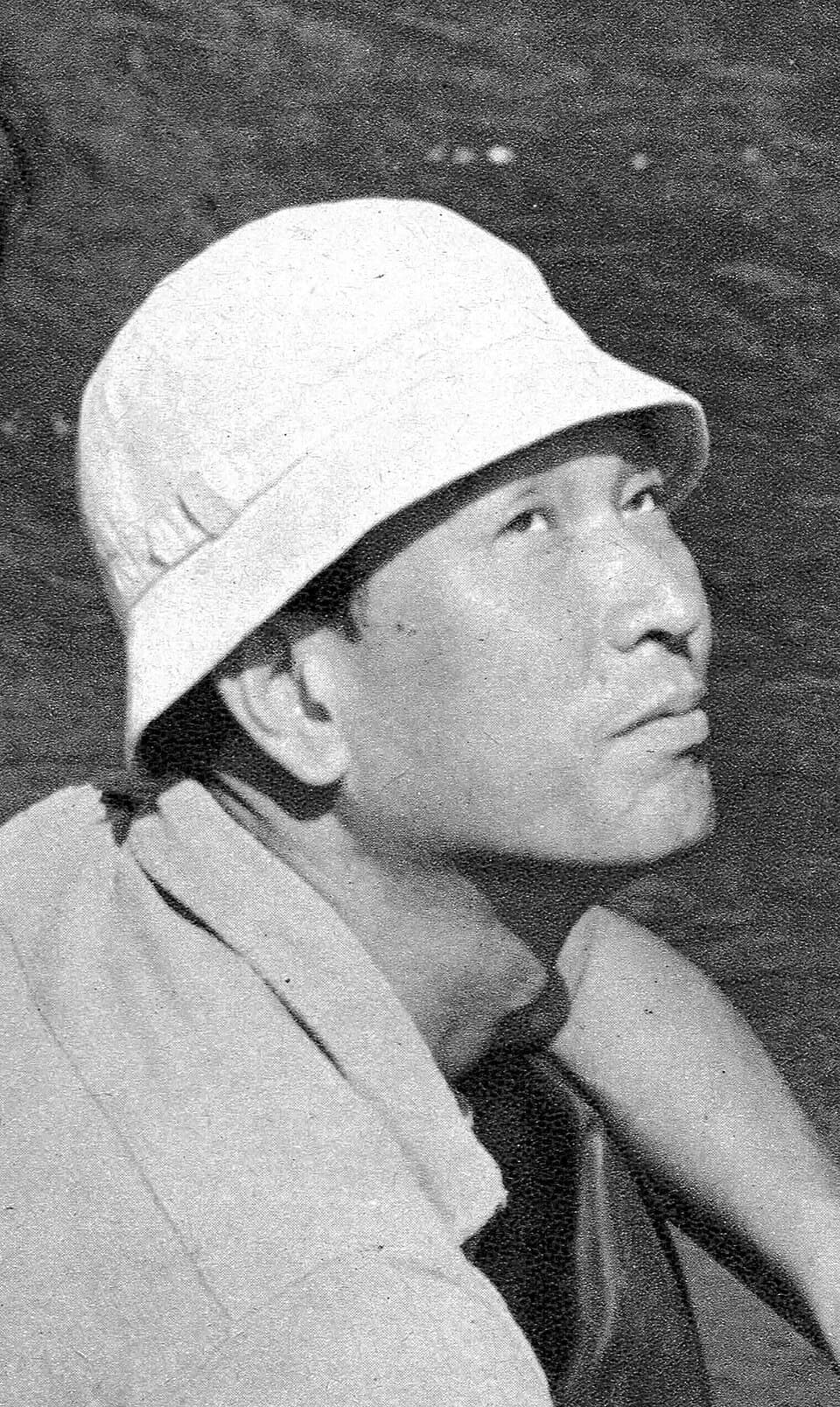
Setagaya, Tokyo. In a room at Toho studios cluttered with annotated scripts and still-damp watercolor notebooks, a tall man pushes back his wide-brimmed cap and removes his tinted glasses. He pours tea slowly, as if framing a shot. The late-afternoon light falls on the table; he begins to speak.
—Do you remember the first event that shook your childhood view of the world?
I was thirteen when the earth opened. In 1923, the Great Kantō earthquake reduced Tokyo and Yokohama to ashes — tens of thousands dead, rivers carrying bodies. My older brother Heigo took me by the hand and forced me to walk through the ruins, to look at every corpse without turning away. I was trembling, and he told me that closing your eyes doesn't make the thing any less real. That day, I learned that a filmmaker has no right to flee what is horrifying. All my life, I filmed catastrophe and resilience because at thirteen, walking through my dead city, I understood that a man is measured by what he dares to face.
Closing your eyes doesn't make the thing any less real.
—How did you continue to create under military censorship, then under American occupation?
I began my first film, The Legend of the Great Judo, in 1943, under the eye of military censors tracking the slightest weakness in national spirit. Then defeat came, Hiroshima, the surrender, and suddenly the American occupier reversed the bans: no more glorifying the world of samurai, jidaigeki was suspect of feudal nostalgia. So I was pushed toward the present, toward this sick postwar Japan that I filmed in The Drunken Angel, then in Ikiru, where a dying petty official seeks to leave a children's park behind him. Strange profession, mine: every power wanted to dictate what I could show. I learned to circumvent, to speak about men rather than flags. That is where I became, I believe, truly a filmmaker.
I learned to speak about men rather than flags.
—They say Rashomon almost never came out. What really happened?
The executives at Daiei studio found my film incomprehensible. A murder told four times, four truths that contradict each other, no culprit designated: they saw chaos, almost provocation. Rashomon slept on a shelf, condemned to oblivion. And then an Italian employee of a distribution company — a stranger, a tiny voice in that machine — begged her boss to send it to Venice. In 1951, it received the Golden Lion. I was stunned; no one in Japan expected that. Think of it: the history of world cinema turned because of the stubbornness of a woman whose name I don't even know. Japan entered the gaze of the West through a door no one had seen open.
The history of cinema turned because of a woman whose name I don't know.
—Many asked you the hidden meaning of that film. Why did you refuse to explain?
After Venice, journalists demanded a key, a sentence that would decipher everything. I answered them this, and I still believe it: “I cannot explain Rashomon. If I could explain it in words, I wouldn't have needed to make it in images. The film means exactly what it shows.” People lie, even without meaning to; they rearrange memory to make themselves bearable to themselves. That is what this story of a murder in the forest tells. They ended up calling it the Rashomon effect, and I hear that today judges, psychiatrists, journalists use that word. It troubles me a little. I wanted to film the weakness of the human heart; they turned it into a concept. Truth, I believe, is not demonstrated, it is experienced.
People lie, even without meaning to, to make themselves bearable to themselves.
—Your demands on set are legendary. How far did you go to achieve truth?
On Seven Samurai, in 1954, I made the actors wear their costumes for weeks before the first take. A garment that is too new lies; it must have known sweat, rain, the rubbing of the body. So I had the fabrics aged, worn, dirtied until they told the life of a peasant or a rōnin. And when rain fell on the final battle, clear water remained invisible on black-and-white film — so I mixed black ink into it, so that it could finally be seen streaking the screen like blades. My crew called me Sensei, sometimes with fear. I know it. But I could not compromise: a false image, and the whole film collapses. Perfection is not vanity, it is a respect owed to the spectator.
A garment that is too new lies; it must have known sweat and rain.
—Your battle scenes seem captured live. What technique allowed that?
I placed several cameras simultaneously, hidden at a distance, to capture the same assault from different angles without the actors playing for the lens. On 35mm film, the action then emerged in all its true confusion, as if the camera were a survivor caught in the melee. Many thought me mad to waste so much film; no one shot that way back then. But I also collected real armor and katanas from the Edo period, and I brought in weapons masters so that every gesture was accurate. Directing hundreds of extras with a megaphone, in the mud, under charging horses — that was a war in itself. I believe action cinema was born from this obsession: never cheat with the bodies of men in motion.
—You were colorblind, yet your color films are dazzling. How is that possible?
People are always surprised that a man who distinguishes colors poorly dared Kagemusha and then Ran. But I didn't see colors like others, so I invented them. Before Ran, in 1985, I painted hundreds of watercolors by hand, one for almost every shot — the red of one army, the yellow of another, the stormy sky above the burning castle. These notebooks were not sketches: they were my films before the films, a painter's storyboard. I always wore my small viewfinder around my neck to frame the world with my gaze, like isolating a fragment of a painting. Deep down, I have always been a painter before being a filmmaker. The camera only extended the brush I held as a child.
I didn't see colors like others, so I invented them.
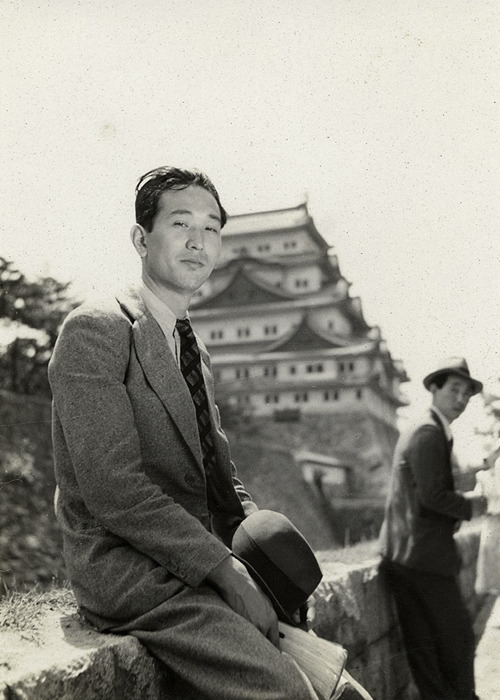
—What would you say to someone who thinks a film is made in one go?
They are entirely mistaken. I like to say that “a film is born three times: first when you write it, second when you shoot it, and third when you edit it. At each birth, you have to reinvent everything.” The morning watercolor does not survive as is on set; the set dissolves in the editing room, in the evening, when I review the rushes with my collaborators, notebook in hand. Nothing is certain. A shot I had dreamed of as sublime turns out dead, and an accident of light suddenly becomes the heart of the scene. To create is to accept losing your film three times to find it again, different. Those who want to control everything at once only make images; they don't make cinema.
To create is to accept losing your film three times to find it again, different.
—There were dark years, around 1971. Do you accept talking about them?
Yes, we must talk about them. At the end of the sixties, I was removed from the big project Tora! Tora! Tora!; Hollywood didn't want my way. Doors were closing, Japanese studios considered me too expensive, too uncompromising. In 1971, alone, convinced I had nothing left to film, I raised my hand against my own life. I survived, but the man who gets up from such an act is no longer quite the same. A filmmaker without a camera is a painter whose hands have been cut off. I sincerely believed that Red Beard would be my last great film, that silence had caught up with me. I tell you this without shame: despair is as much a part of my work as light.
A filmmaker without a camera is a painter whose hands have been cut off.
—How did you return to the light after such a fall?
Through two young Americans who had looked at me as a master while my own country thought I was finished. Francis Ford Coppola and George Lucas produced Kagemusha — the story of a thief promoted to double of a dying lord, condemned to play a role larger than himself. A curious mirror of my own situation. In 1980, the film received the Palme d'Or at Cannes. Think of the irony: those who had grown up admiring Seven Samurai gave me the means to film again. Without them, Ran would never have existed, and I would have died believing that the forest of Rashomon had been my last great set. Recognition sometimes came from very far away, from hands I did not expect — like that employee in Venice, long ago. My whole life is a chain of unexpected rescues.
Those who had grown up admiring my films gave me the means to film.

This imaginary interview was generated by artificial intelligence from sources documented in Akira Kurosawa's profile. It dramatises what the figure might have said based on what we know about them, but does not constitute attested historical testimony. For primary sources and factual documentation, refer to the full profile.