Imaginary dialogue between Alexandre Dumas fils and Alexandre Dumas
by Charactorium · Alexandre Dumas (1802 — 1870) · Literature · 5 min read
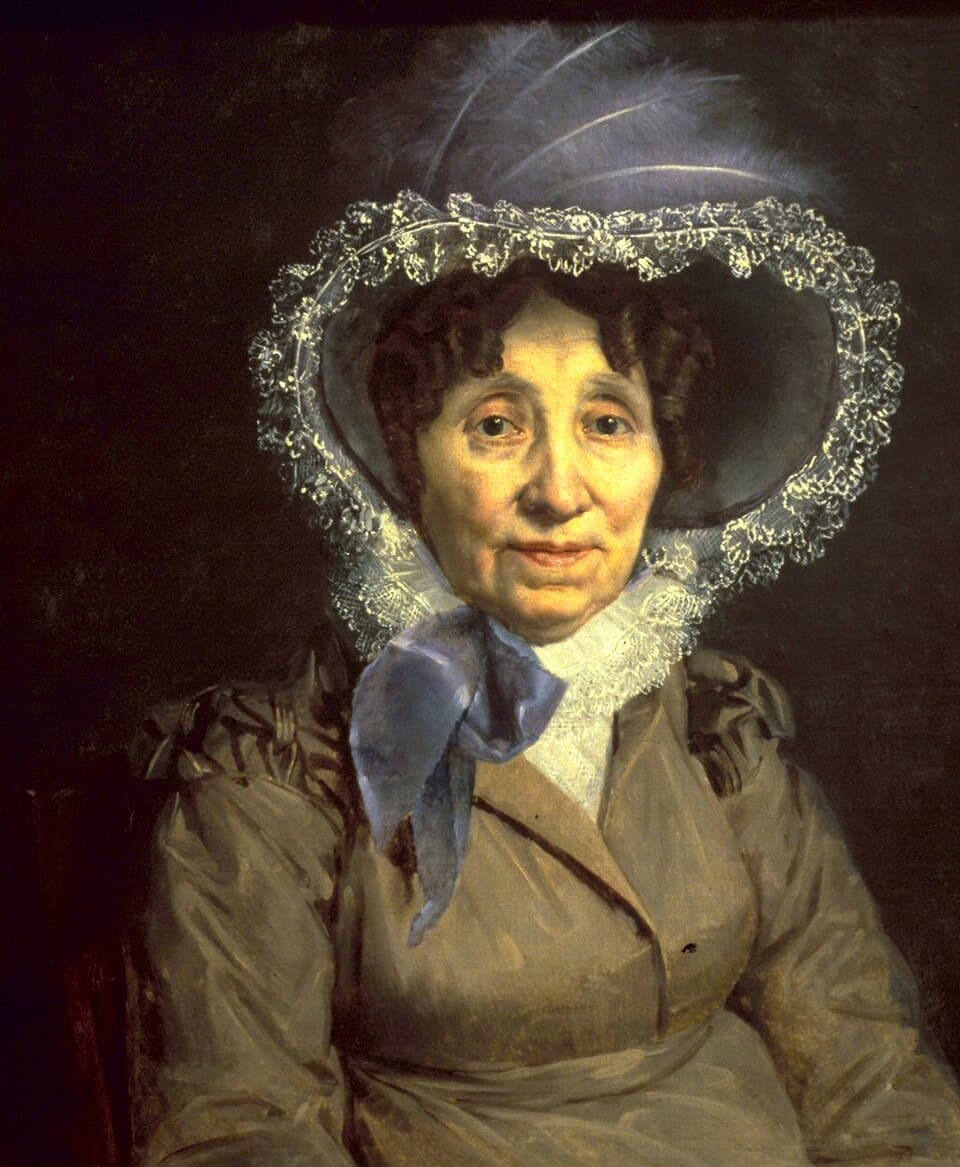
It is in the park of the Château de Monte-Cristo, in Port-Marly, that Alexandre Dumas fils meets his father on a late autumn afternoon in 1847. The workers are still finishing the white stone turrets, and the smell of fresh plaster mingles with that of dead leaves blown by the wind along the paths. The son knows this house as one knows a paternal folly — he has seen creditors and flatterers parade through it — and he comes that day less as a chronicler than as a witness to the magnificent disorder that was his childhood. The father, his pen still stained with ink, welcomes him without ceasing to think about the serial he must deliver by morning.
—Father, do you remember 1844, when readers snatched up each morning's installment of The Three Musketeers? How do you write for that hunger?
You were still little, but you saw the newspaper footmen stamping at the door for my pages. One does not write a Serial like building a quiet book, my boy: one writes for tomorrow, for that subscriber who will reopen the page at nine o'clock and must find a slamming door, a drawn sword. I ended each episode on a tightrope, d'Artagnan suspended over the void, so that boredom never had time to arise. The crowd, you see, is the best of masters: it punishes the slightest length by letting you go. It is the crowd that made me a storyteller, more than all the theorists.
One writes for tomorrow, for that subscriber who must find a slamming door, a drawn sword.
—You sometimes dictated, you rarely crossed out. Didn't you ever fear that speed would carry you too far from care for the sentence?
I am reproached enough for that so that you don't have to do it, you who weigh every word like a goldsmith! But understand me: speed is not negligence. When the story is clear in my head, it flows, and correcting it too much would cool it down. I prefer a lively tale to a perfect and dead page. I have my collaborators, I don't hide it — they give me a framework, an archival fact — but the flesh, the breath, the voice of the characters, that cannot be delegated. The reader never feels the seam when the emotion is right. And besides, I have so many stories in me that I would need three lives to write them slowly.
I prefer a lively tale to a perfect and dead page.
—Tell me about your father, that general whose exploits you so often recounted to me. What did he leave you, the child of Villers-Cotterêts?
My father, General Dumas, son of a nobleman and a slave from Saint-Domingue, was the bravest and most stripped of men. He died when I was four, leaving me his name, his stature, and a pride that nothing could bend. All my life, they tried to remind me of where I came from, the color of my grandmother, like a stain. I made it a banner. That blood, you see, taught me very early that men are worth neither by their birth nor by their skin, but by their heart and courage. You will find that in each of my heroes: the bastard, the outlaw, the humble who rises up. It is my father who speaks through them.
They tried to remind me of where I came from like a stain; I made it a banner.
—When you learned last year that slavery was finally abolished in our colonies, what did you feel, you, the grandson of a slave?
You ask me a question that touches the deepest. My grandmother was sold like an animal, and her blood flows in your veins as in mine — never forget that. Learning that the Republic had finally broken those chains was as if a part of the honor disputed from my father was restored to him. The men of my generation grew up with the Revolution in the cradle: it promised us equality before betraying it a hundred times. I don't make speeches, I am not a man of the podium. But that men stop being sold, that is something I can celebrate without reservation, and that I would like to see you defend after me.
Her blood flows in your veins as in mine — never forget that.
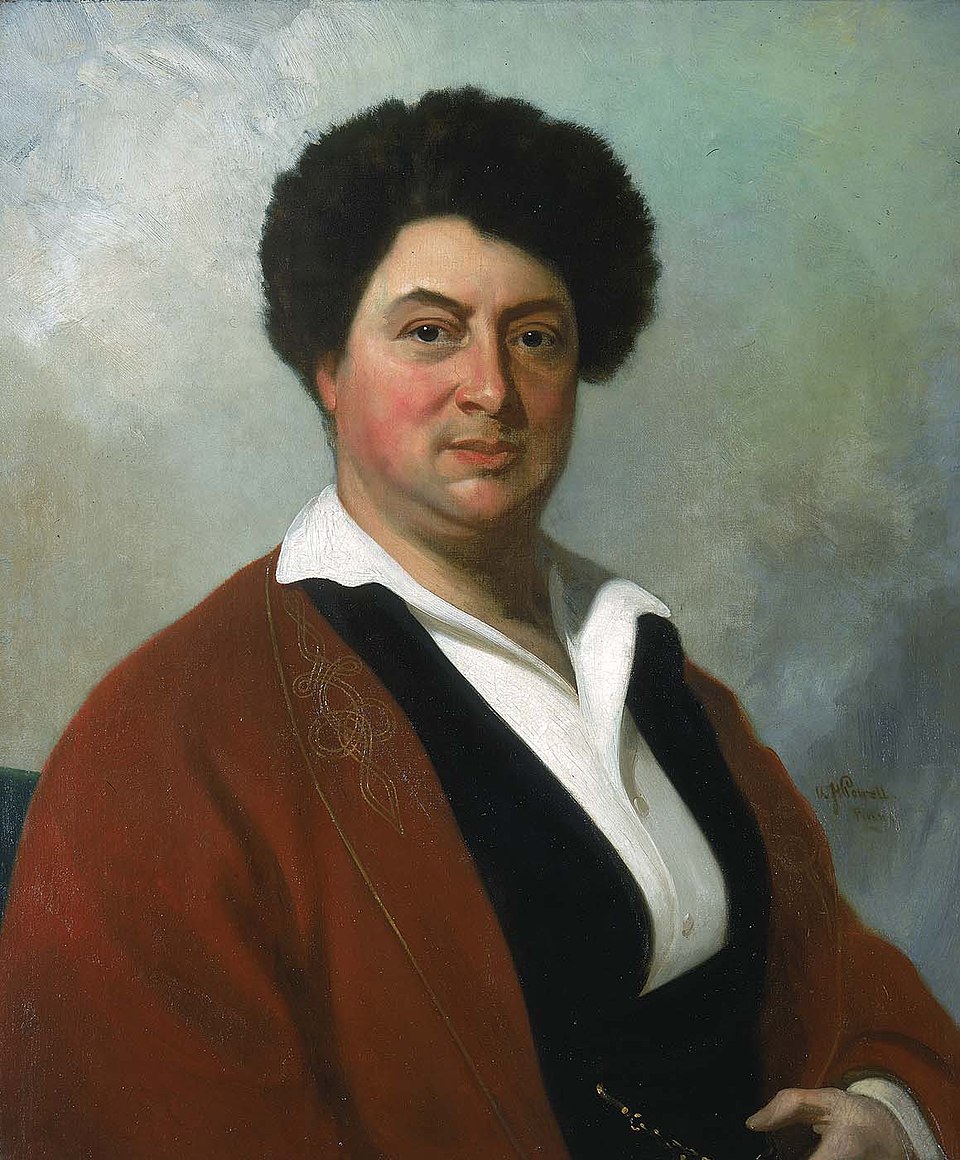
—You are accused of mistreating History, of bending it to your plots. Tell me frankly: what do you seek when you write La Reine Margot?
Ah, the pedants! They want me to recite dates like a clerk. But what is History as they teach it? A cemetery of names and numbers where one is bored to death. I want people to hear the heart of those people beat, to feel the fear of the St. Bartholomew's Day Massacre in the alleys, the smell of blood and fear. I dare say it: I have violated History, but I have given it beautiful children. The novelist gives characters the true colors and passions that the chronicler has dried up. If my reader, closing the book, rushes to open the real chronicles to know the final word, then I have served the past better than ten professors.
I have violated History, but I have given it beautiful children.
—In The Knight of Maison-Rouge, you bring to life the Terror that your own father lived through. Is there any of him in those pages?
He is in them everywhere, even when I am unaware of it. That era when the Revolution devoured its own children, my father lived it with weapons in hand, a soldier of Year II before being disgraced. When I paint a faithful man caught in the turmoil, forced to choose between love and duty, I am only prolonging what I heard about him in my childhood. History, for me, is never distant: it's a family affair. I do not invent settings, I resurrect an air that was still breathed when I was born. That is why my dead speak: they are my neighbors, my ancestors, the shadows that crowded around the cradle.
History, for me, is never distant: it's a family affair.
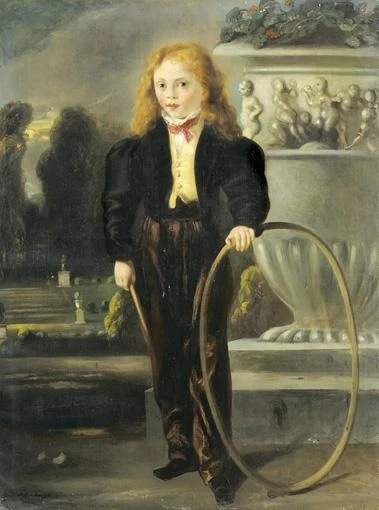
—Here we are in your stone folly, this Monte-Cristo where the masons are still working. You know what the creditors murmur about it. Why this excess?
You frown like your mother when I came home at dawn! Yes, I build a castle for the hero of one of my books, and yes, it perhaps ruins the man who wrote it. But understand well: money is for me only something to spend, never to hoard. I knew the misery of Villers-Cotterêts, counted bread; now my table is open to whoever knocks, parasites included, and I am happy about it. What do you want me to do with my pages except turn them into parties, friends, gardens? I earn fortunes and I never have a cent — that is my way of being free. The day I start counting, I will already be dead.
I earn fortunes and I never have a cent — that is my way of being free.
—Before my birth, in 1830, you left your pen for the barricades. Was Romanticism in the theater not enough for you?
You were not born, indeed, and it's a shame, because you would have seen your father with gunpowder on his face! A year earlier, Henri III and His Court had brought down the old rules of theater: one finally dared to put life, real life, on the French stage. But what are paper passions worth if one stays silent when the people roar in the street? I helped barricade the Théâtre-Français, I ran to get gunpowder — me, the man of letters! For my generation, writing and acting were the same fire. Romanticism was not just a fashion of hairstyle and red waistcoat: it was freedom demanded everywhere at once, on the boards as on the cobblestones.
What are paper passions worth if one stays silent when the people roar in the street?
—You who are well placed to know, what would you like me, your son, to remember from all this uproar and this work?
First remember, my boy, that you carry a name already heavy, and that you will have to make a second one that is your own — do not be content to be my shadow. From me, keep this: I wanted to entertain, and people thought it was a small thing. But to distract a weary man, to keep him awake until dawn for the fate of Edmond Dantès, to give him back a taste for history and courage — I know no nobler profession. I did not write for the learned, I wrote for everyone, the porter as well as the prince. If after me I am still read in schools, it will not be for my knowledge, but because I will have given children the desire to turn the page.
You will have to make a name that is your own — do not be content to be my shadow.
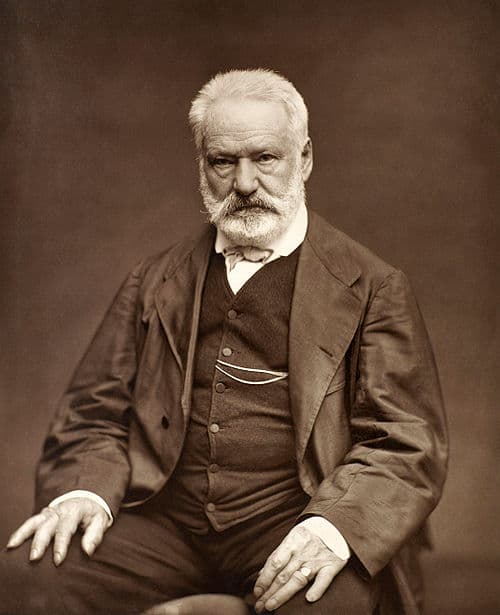
This imaginary interview was generated by artificial intelligence from sources documented in Alexandre Dumas's profile. It dramatises what the figure might have said based on what we know about them, but does not constitute attested historical testimony. For primary sources and factual documentation, refer to the full profile.