Imaginary interview with Alexander the Great
by Charactorium · Alexander the Great (355 av. J.-C. — 322 av. J.-C.) · Politics · 6 min read
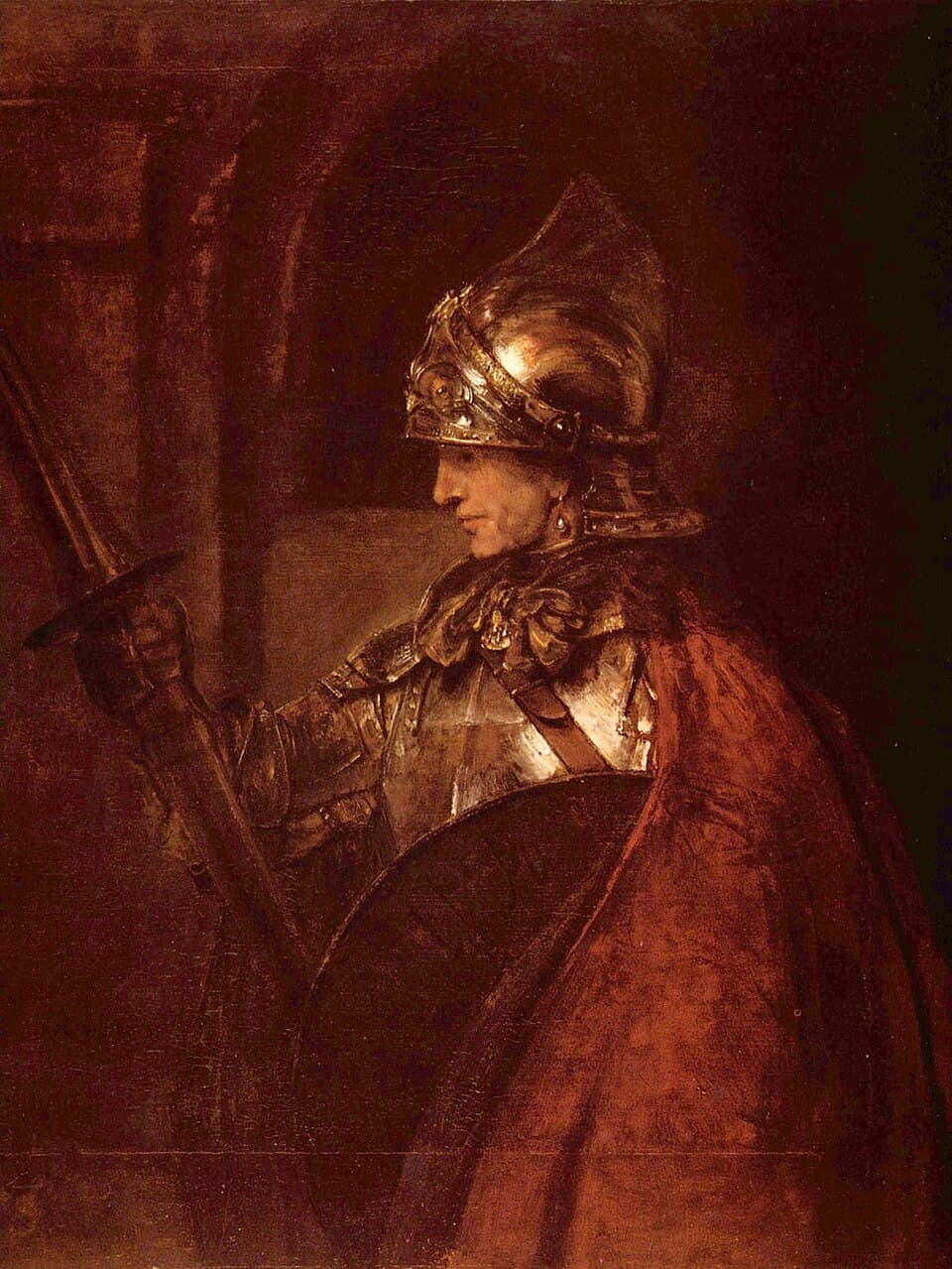
Babylon, summer 323 BCE. Under the royal tent pitched near Nebuchadnezzar's palace, a thirty-two-year-old man receives visitors, the diadem still tied on his brow, the Iliad within reach. The fever has not yet overcome him; he agrees to look back on thirteen years that changed the face of the known world.
—Before empires, there was a horse. How did you tame Bucephalus?
I was twelve, and my father's grooms were giving up one after another before that black beast. I looked where no one else looked: the animal was trembling at its own shadow dancing before it. I turned it to face the sun, spoke softly, and mounted it. Philip then supposedly told me that Macedonia was too small for me, that I must seek a kingdom worthy of me. Bucephalus carried me all the way to the Hydaspes, at the edge of the world, and when he died there, I founded a city in his name. One learns everything from a horse: that an adversary thought untamable often only fights a fear that can be turned.
A beast thought untamable often only fights a fear that can be turned.
—Aristotle taught you for three years at Mieza. What did he leave you that battles did not erase?
At Mieza, my master did not pour rules into us; he showed us how a plant grows, how an argument holds, how a man governs himself before governing others. Of all his lessons, I kept one object above all: the Iliad annotated in his own hand. I slip it under my pillow, next to a dagger. Achilles is my model, and Homer my campaign book. Aristotle repeated that virtue is not received, it is formed by habit, like a spearman's arm grows strong carrying the sarissa. Conquering Asia without first conquering one's own hubris is worth nothing — that is the only frontier he taught me to fear.
—At Gordium, they say you cut the knot with a sword stroke. Why not patiently untie it?
An oracle promised Asia to whoever untied that knot. The wise had bent over it for generations, looking for the hidden end of the rope. That day I understood that the question was not how to untie it, but that it be untied. I drew my sword and cut. I was reproached for the brutality of the gesture; I say it matters little by what path a prophecy is fulfilled, as long as it is fulfilled. That is how I wage war too: at the Granicus, at Issus, I do not go around the obstacle, I pierce through it, at the head of my Companions, where the Persian line seems hardest. Slowness kills more men than audacity.
It matters little by what path a prophecy is fulfilled, as long as it is fulfilled.
—Three times you faced Darius. What made your army strong against the greatest empire in the world?
The Persians counted their men in hundreds of thousands; we counted ours in tight ranks. My father Philip had forged a weapon whose scope Asia did not suspect: the phalanx, where each infantryman holds a sarissa six meters long, so that five points project before the first rank. The enemy breaks on this iron hedgehog before even reaching flesh. While he exhausts himself head-on, I launch the cavalry of the hetairoi on his flank, and I charge with them — a king who watches from behind is not a Macedonian king. At Gaugamela, in 331, that is how the Achaemenid Empire collapsed: not by numbers, but by discipline and the cutting edge placed in the right spot.
—You crossed the Libyan desert to reach the oasis of Siwa. What did you go there to find?
One does not cross the Libyan desert on a whim. I went there in 331, because a voice within me wanted to know where I truly came from. The priest of Ammon greeted me as 'son of the god'. Must I tell you what I felt? Every morning already, I sacrifice to Zeus and Heracles, from whom my lineage claims descent — Siwa only sealed what I suspected. Understand me: a king who leads men to the ends of the earth needs those men to believe they are following something greater than booty. The favor of the gods is not an ornament; it is the cement that keeps an army standing when reason would advise them to go home.
—You tried to impose proskynesis at your court. Why did your companions refuse it?
In Persia, one prostrates before the Great King; it is the custom, the gesture that orders the world since Cyrus. I wanted my court to adopt this proskynesis, so that Greeks and Persians would bend the knee before the same master. But my Macedonians flatly refused: for them, bowing to the ground is reserved for gods, and a man who demands it thinks himself one of them. The disagreement was deeper than mere court courtesy — it was two worlds measuring themselves in a bend of the back. I yielded on the form, but not on the idea: ruling Asia requires speaking the language of its prostrations, otherwise one is only a passing occupier.
—The Susa weddings married your officers to Persian women. What were you seeking by mixing the peoples?
At Susa, in 324, I celebrated dozens of marriages on the same day: my officers united with daughters of the Persian nobility, and I myself already husband of Roxana, princess of Bactria. Some saw it as a whim; it was a policy. A sword conquers territory, but only mixed blood keeps it. I integrated Persian soldiers into my ranks, sealed acts of Asia with Darius' ring and those of Europe with mine. Two seals for one hand: that is my way of ruling. My old Companions grumbled seeing me with the diadem on my brow and the oriental belt at my waist — they wanted a Macedonian king ruling over slaves. I wanted a world where victor and vanquished would eventually become indistinguishable.
—Adopting the costume of Persian kings shocked your men. Do you stand by having worn the clothes of the defeated enemy?
My companions murmured when they saw me exchange the simple chlamys of Pella for the purple and belt of the Persians. They thought I was disguising myself as Darius. But how do you hold twenty nations that have never seen a Greek king, if not by speaking to their eyes in the language they respect? The white diadem I kept from Macedonia; the rest I borrowed from the East so that a Babylonian or a Bactrian would recognize me as their legitimate sovereign. A costume is not a betrayal, it is a silent argument. I conquered with the sarissa; I govern with symbols. Whoever claims to rule Asia without conceding any of its forms will end like Darius: alone, abandoned, stabbed by his own.
—At the Hydaspes, you defeated King Porus. They say you gave him back his throne. Why such clemency?
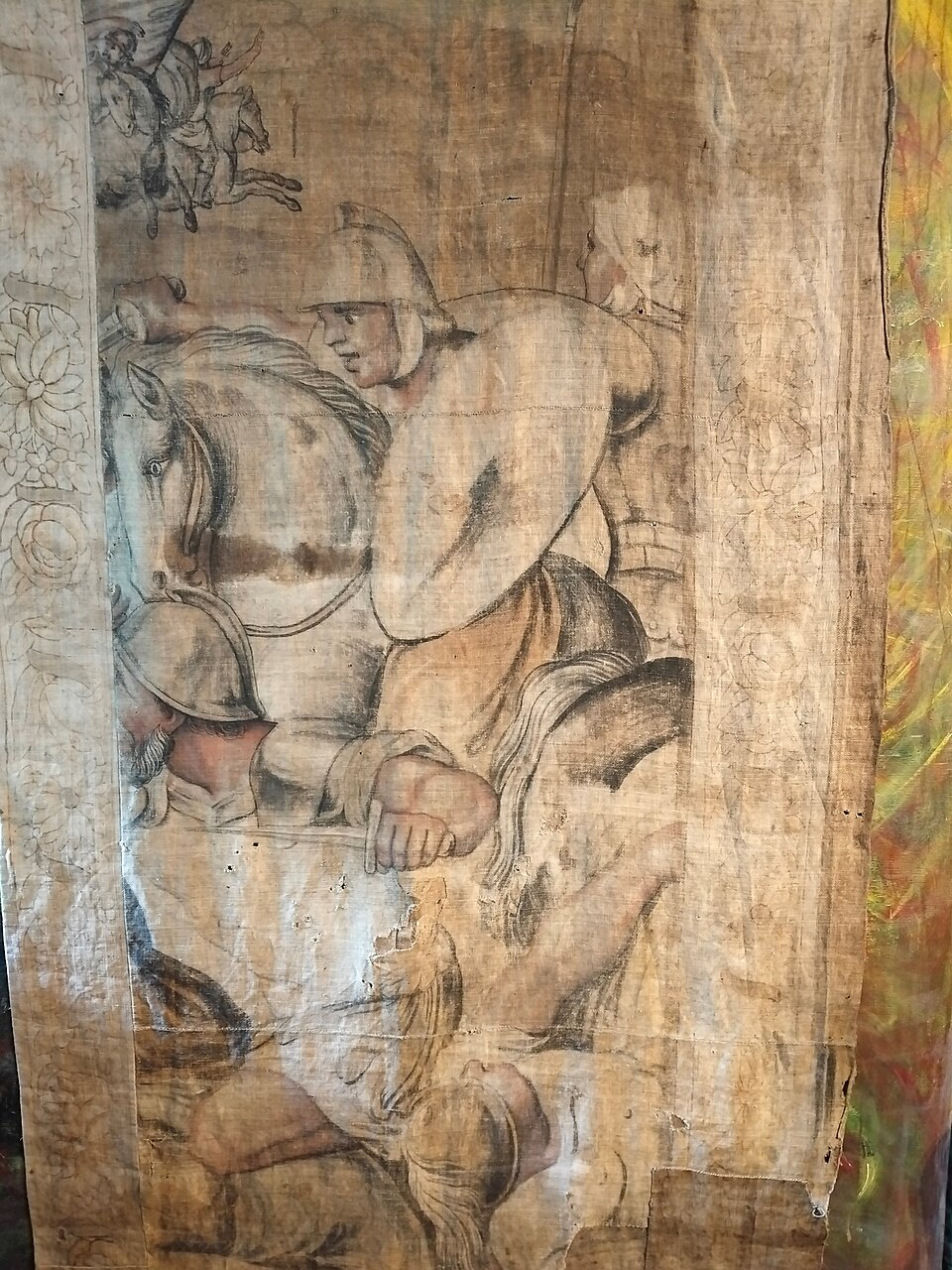
The Hydaspes, in 326, was my last great battle, and one of the toughest: Porus' elephants terrified my horses, the monsoon rain drowned the ground. When they brought him to me, defeated but immense, I asked him how he wished to be treated. He replied: as a king. That dignity, I could only bow to it; I gave him back his kingdom and made him an ally. You see, one does not hold a country by terrorizing its princes but by their returned loyalty. I learned in India that a honored adversary becomes a bulwark, while a humiliated adversary remains an open wound. True conquest begins where vengeance ends.
—At the Hyphasis River, your army refused to advance. What did you feel when your men said no?
I was at the threshold of the unknown, convinced that the Ocean encircling the earth was only a few marches away. And there, on the banks of the Hyphasis, my men planted their sarissas and would advance no further. Eight years of marching, endless monsoons, wounds that would not heal — they were exhausted. At first I raged, I shut myself in my tent like Achilles before the walls of Troy. Then I understood that a king who pushes his soldiers beyond their hearts no longer leads an army but a herd of dead men. I had twelve giant altars erected for the gods, and we turned back. That was my bitterest defeat: not before an enemy, but before the limits of those who loved me.
That was my bitterest defeat: not before an enemy, but before the limits of those who loved me.
—You founded about twenty cities, from Egypt to Afghanistan. What did you want to leave behind?
Wherever I passed, I traced the plan of a city and left Greeks, veterans, a market, a theater. The most beautiful remains Alexandria of Egypt, founded in 331 at the mouth of the Nile — Diodorus himself said it was destined to become the most commercial city of the inhabited world. These cities are not garrisons; they are seeds. I spread the Greek language, its gods, its way of thinking, like planting olive trees whose harvest one will not see. A won battle unravels in a generation; a city endures. If I am to be remembered in a century, I would like it to be less for the kings I overthrew than for the hearths of Greeks I lit to the ends of Asia.

This imaginary interview was generated by artificial intelligence from sources documented in Alexander the Great's profile. It dramatises what the figure might have said based on what we know about them, but does not constitute attested historical testimony. For primary sources and factual documentation, refer to the full profile.