Kids interview Alexander the Great
by Charactorium · Alexander the Great (355 av. J.-C. — 322 av. J.-C.) · Politics · 5 min read
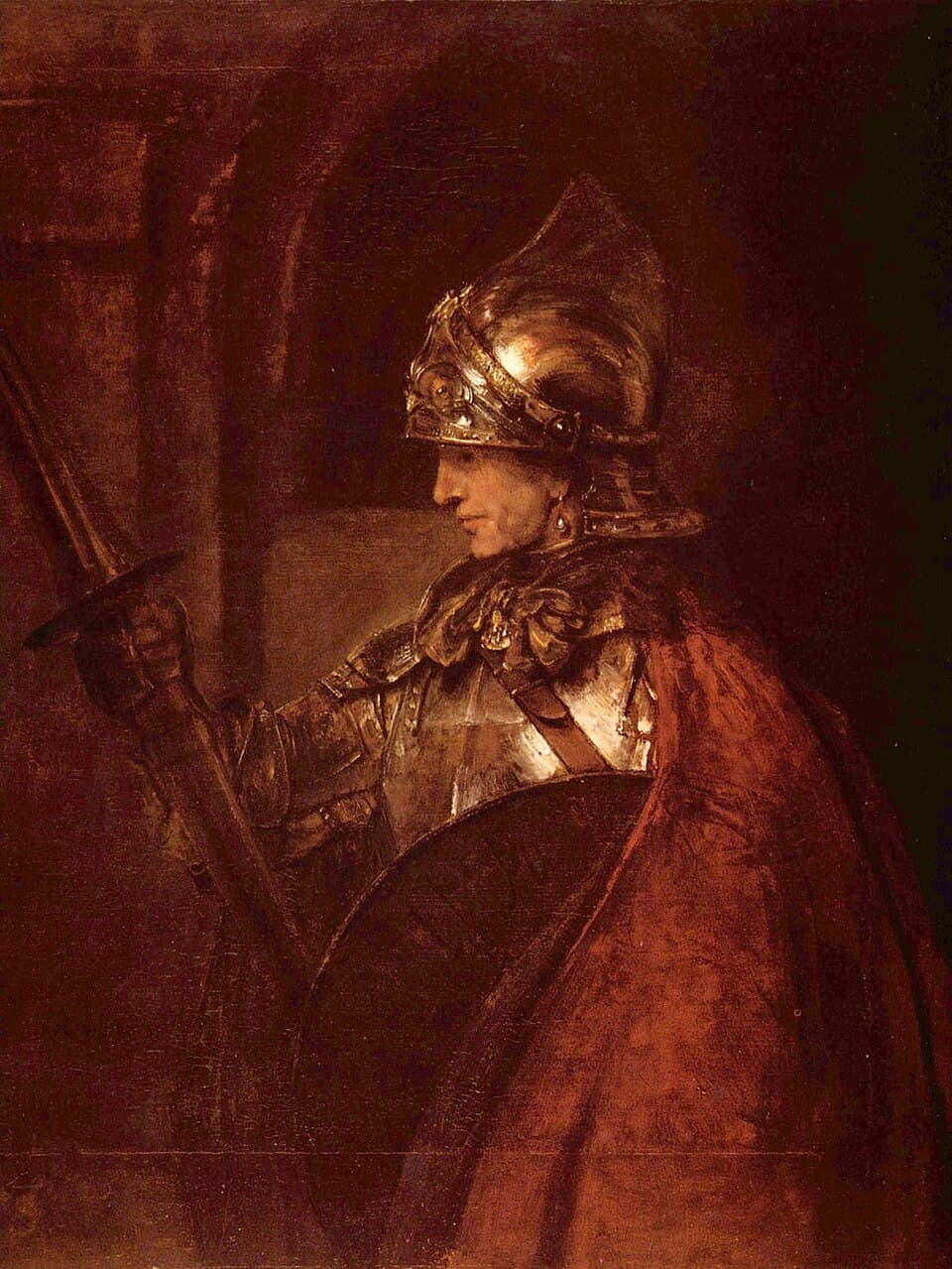
Two young visitors, each twelve years old, arrived this morning with their school trip. In front of them, on a folding chair, a man with light hair and a keen gaze awaits them with a smile. This is Alexander, king of Macedon. He has placed his white-plumed helmet beside him and signals them to come closer.
—Is it true that you tamed a horse no one could ride?
It's true, and I was about your age, twelve. That horse was called Bucephalus. All the men at my father's court had tried him, and all had given up. But I watched the animal for a long time. I understood a simple thing: he was afraid of his own shadow, dancing on the ground. So I turned him to face the sun, so the shadow fell behind him. And then he calmed down. I mounted him. My father, moved, said to me that day: 'Seek a kingdom worthy of your size, Macedon is too small for you.' You see, sometimes you just need to look at a problem differently.
It's not enough to pull hard on the reins: you have to understand what the other is afraid of.
—How old were you when your parents sent you to school? What was it like?
I didn't have school as you imagine it, with many students. At thirteen, my father entrusted me to a teacher, the greatest scholar of his time: Aristotle. Imagine a quiet garden, at Mieza, far from the palace. There, for three years, we talked about everything: plants, stars, courage, justice, poems. My teacher didn't give me ready-made answers. He pushed me to search, to observe the world for myself. And he made me love one book above all, the Iliad, the story of heroes fighting under the walls of Troy. That love never left me.
A good teacher doesn't fill your head: he teaches you to look.
—And the impossible knot, did you really cut it with your sword?
Yes! It was in a city called Gordion. There was a very ancient knot, so tight that no one could see where to begin. An old prophecy said: whoever unties this knot will be master of Asia. People tried with their fingers for hours, in vain. I thought for a moment. The prophecy didn't say how to undo it. So I drew my sword and cut it with one stroke. Some cried foul. But the knot was undone, wasn't it? Sometimes, my child, the right answer isn't the one you were told to use.
The prophecy didn't say how to undo it: so I cut it.
—How did you manage to beat a giant empire with your small army?
The Persian empire was immense, it's true, and my army much smaller. But we had a terrible weapon: the phalanx. Imagine hundreds of soldiers packed tightly together, shield against shield. And each brandishes an enormous spear, the sarissa, five to seven meters long! The ranks behind passed their points over the front ones. For the enemy, it was like throwing themselves at a moving wall of spikes. In three great battles — Granicus, Issus, Gaugamela — we brought down the largest kingdom of the known world. It wasn't numbers that mattered. It was order, training, and trust among us.
It's not numbers that win a battle, it's order.
—Did you stay behind to command, or did you go fight at the front?
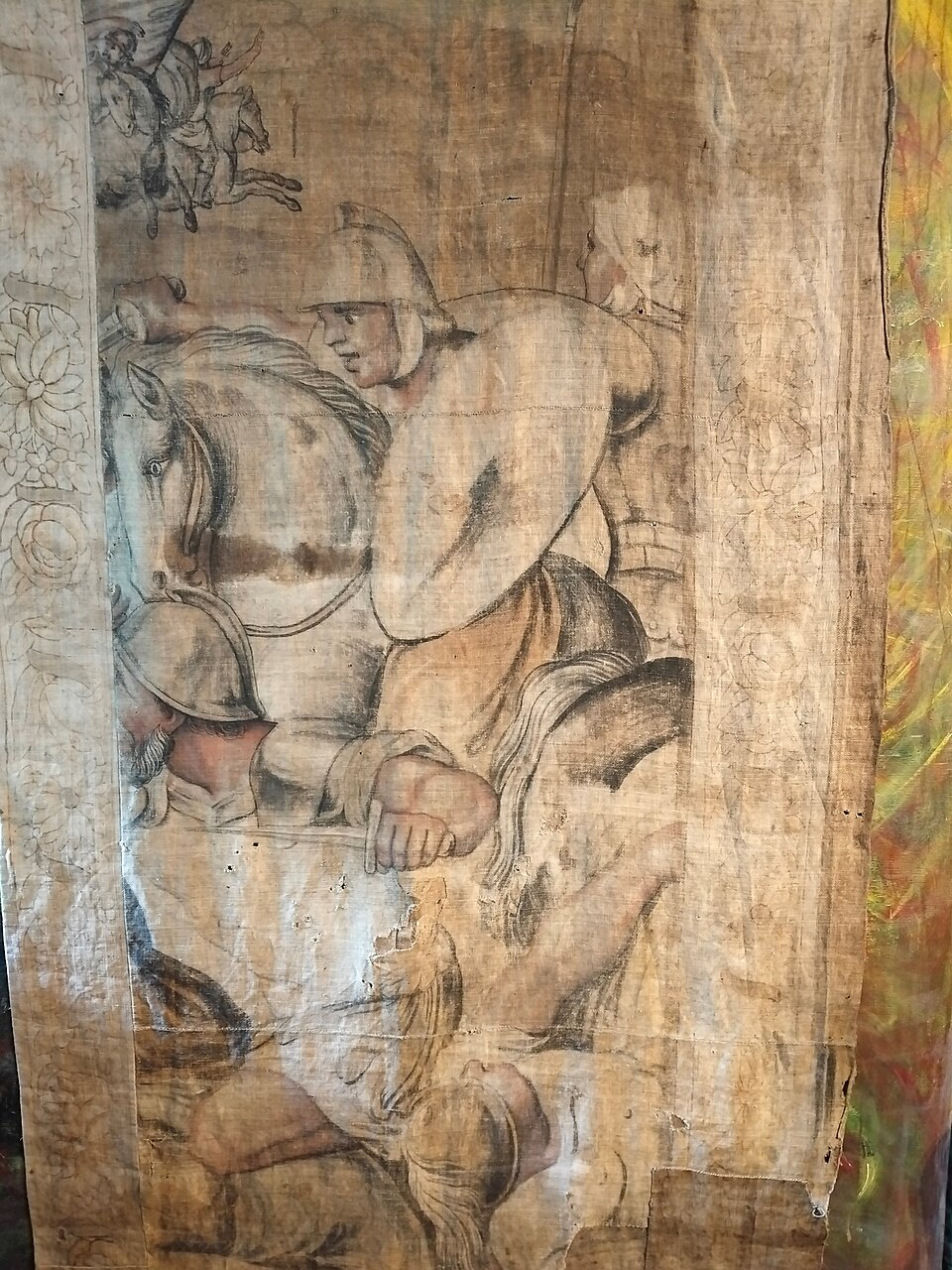
At the front, always at the front! I led my elite cavalry, the Hetairoi — that word means 'the Companions'. They were the nobles closest to me, almost friends. I launched them into the charge and galloped at the head, on Bucephalus, where the blows fell hardest. Do you think that's crazy? Maybe. But understand me: a king who stays safe while his men die will never be followed for long. My soldiers accepted the worst sufferings because they saw me share the danger. I was wounded many times. But that blood shed before them was worth all the speeches in the world.
My men followed me because I shared the danger, not because I ordered it.
—Why did you go into the desert to see a priest? What were you looking for?
Ah, Siwa... It was an oasis lost in the middle of the Libyan desert. An exhausting journey, under a blazing sun, where you risked dying of thirst. Why go? Because there was an oracle there — a sanctuary where the god Ammon answered men's questions through the voice of a priest. When I arrived, the priest greeted me as 'son of Ammon'. Can you imagine what that does to a young man? I felt that my life was not ordinary. Every morning already, I sacrificed to Zeus and Heracles, from whom I claimed descent. There, I believed I touched something greater than myself.
In the heart of the desert, I sought to know who I really was.
—Is it true that you slept with a book under your pillow?
Absolutely! Under my pillow, I kept my copy of the Iliad, the great poem by Homer, annotated by my teacher Aristotle. Everywhere, even into Asia, this book followed me. My hero was Achilles, the warrior of Troy. I felt like him. Moreover, at Troy, I took from a temple a shield that I believed was his, and I carried it into battle. You see, a book is not just words on a page. It is a travel companion. When I was afraid or doubtful, at night, I reread those verses, and Achilles' courage flowed back into me.
A book is not words on a page: it is a companion on the road.
—Did you marry a faraway princess? Why not a girl from home?
I married Roxane, a princess of Bactria, a distant land toward the mountains of Asia. And later, in the city of Susa, I organized a huge wedding: dozens of my officers married Persian women on the same day. Why? Because I had an idea in mind, perhaps a dream. I didn't just want to conquer the Persians, I wanted our two peoples to become one. Greeks and Persians mixed, through marriages, through customs. Many of my Macedonians didn't like that. But I thought: what's the point of winning an empire if you despise those who live in it?
What's the point of winning an empire if you despise those who live in it?
—Were your Macedonian friends angry when you dressed like the Persians?
Very angry, yes. I had adopted the diadem, that white headband of Persian kings, and some of their ceremonial clothes. For me, it was a way to tell the Persians: I am your king too. But the worst conflict came from proskynesis. Among the Persians, one prostrated oneself, forehead to the ground, before the sovereign. I wanted to impose it at my court. My Macedonians flatly refused: for them, you only bow like that before the gods, never before a man. There, I understood a limit. You can conquer vast territories, but you cannot force people's hearts to bend. That resists.
You can conquer vast territories, but not force people's hearts to bend.
—And the enemy you defeated at the very end, did you punish him?
You're surely talking about King Porus, in India, near a river called the Hydaspes. A courageous adversary, huge, who had fought to the end. After my victory, he was brought to me, defeated. I asked him: how do you want me to treat you? He answered with a single word: 'Like a king.' No begging, no fear. That dignity moved me. So, instead of humiliating him, I gave him back his kingdom and made him my ally. You see, crushing an enemy is easy. Respecting him and turning him into a friend is much more useful — and much harder.
Crushing an enemy is easy; turning him into a friend is an art.
—You died very young. Do you feel you accomplished what you wanted?
I died in Babylon, at only thirty-two. That's young, yes. Too young to finish everything. I had founded dozens of cities, including the most beautiful, Alexandria, in Egypt. I had spread the Greek language and ideas from the Mediterranean to the gates of India. But my empire, barely born, was torn apart by my generals after me. Is that a failure? I don't think so. You know, you measure a life not by how long it lasts, but by the traces it leaves. Centuries after me, Greek was still spoken in Babylon. And you, today, you know my name. That, perhaps, is my true conquest.
You measure a life not by how long it lasts, but by the traces it leaves.
This imaginary interview was generated by artificial intelligence from sources documented in Alexander the Great's profile. It dramatises what the figure might have said based on what we know about them, but does not constitute attested historical testimony. For primary sources and factual documentation, refer to the full profile.