Kids interview Alfred Wegener
by Charactorium · Alfred Wegener (1880 — 1930) · Sciences · 4 min read
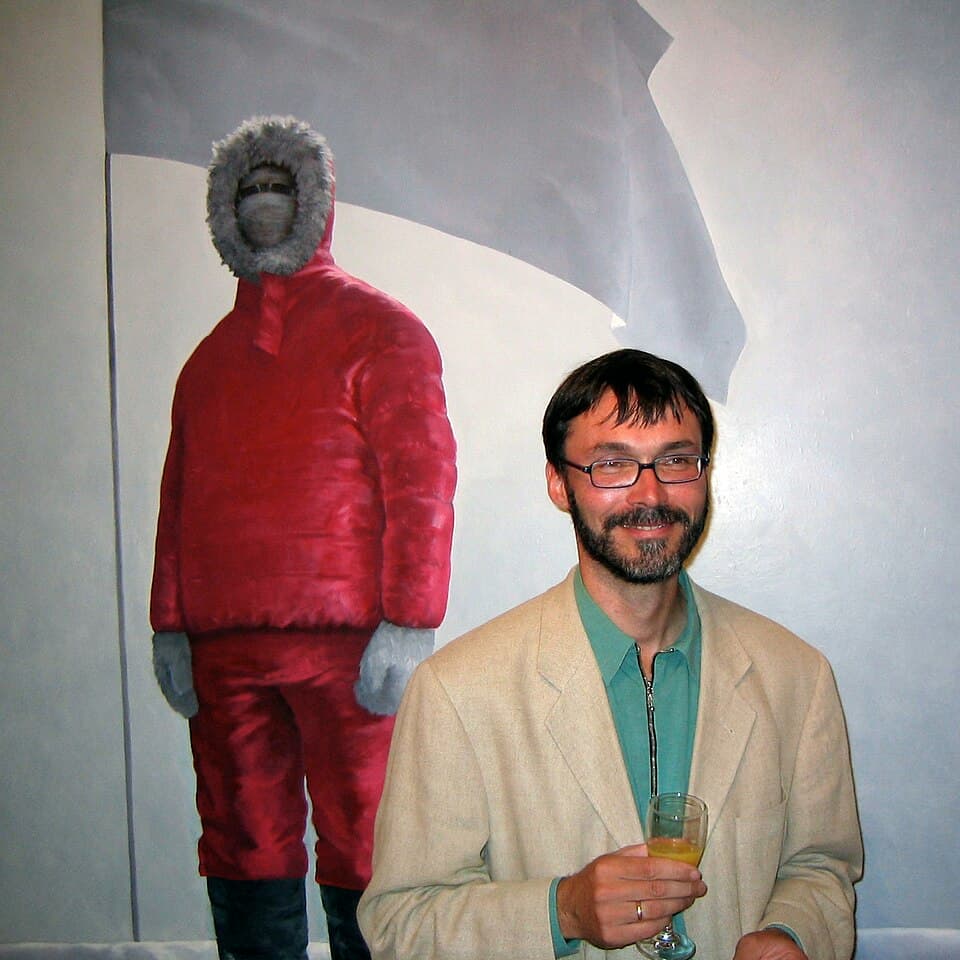
Two twelve-year-old visitors push open the door of a room full of maps and globes. A gentle-eyed man, who still smells of the cold wind of the polar lands, awaits them. His name is Alfred Wegener, and he has so much to tell them.
—How old were you the first time you set out for the ice?
I was very young, my child. In 1901, I was barely over twenty, and already I dreamed of the white lands. Later, I set off for Greenland, that great land of ice at the top of the Earth. Imagine a vastness bigger than your gaze, without a tree, without a house, just the howling wind. I wore thick clothes, I clutched my barometer to measure the air. And every evening, I filled my notebook. It was hard, but I was happy. The ice spoke to me of Earth's history.
The ice spoke to me of Earth's history.
—Is it true you guessed something just by looking at a map?
Yes! And you can do it too, tonight. Take a geographic map and look carefully. There, on the left, South America. On the right, Africa. Look at their coasts, those edges along the sea. You see? They look alike. The hollow on one side, the bump on the other. Like two pieces of the same drawing that someone tore apart. In 1912, I wrote that these coasts "fit together like puzzle pieces." It wasn't a coincidence, I was sure of it. These two continents were once attached to each other.
Take a map, and you'll see the puzzle of the Earth.
—But how can you prove that two countries were once attached?
Good question! Coasts that fit together weren't enough. So I looked for something else: fossils. You know what those are? They are very ancient remains of plants or animals, turned to stone over millions of years. And there, surprise: we found exactly the same fossils in Africa and South America. Yet these little creatures couldn't cross a vast ocean! The only explanation is that the two lands once touched. The same rock on both sides of the sea is a proof you can't invent.
The same rock on both sides of the sea never lies.
—And what exactly is Pangaea?
Ah, Pangaea! That's a word I loved. Imagine going very, very far back in time. Not a thousand years, but hundreds of millions of years. At that time, there weren't several continents separated by oceans. Everything was united in a single giant piece. One great land. That's what I called Pangaea. Then, very slowly, slower than you can see, it split. The pieces drifted apart, like rafts on water. And that's how continental drift was born: the lands still move today, beneath your feet.
Beneath your feet, the Earth still moves, ever so slowly.
—If you had such good evidence, why didn't scientists believe you?
You've put your finger on my great sadness, my child. My evidence was beautiful: the coasts, the identical fossils, the rocks. But I was missing one thing. I couldn't explain how the continents moved. What force could push such heavy lands? I couldn't say. And for the scientists of my time, an idea without a mechanism was like a door without a key. In 1922, many rejected my theory. Yet I felt deep down: being right too early is almost like being wrong.
Being right too early is almost like being wrong.
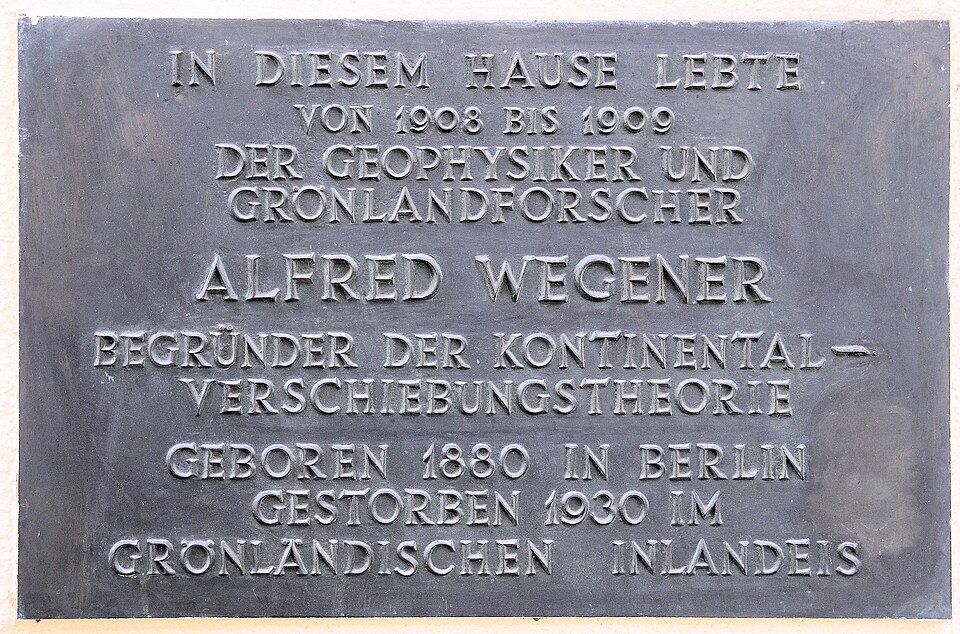
—Is it true that a scientist talked about a flying hippopotamus?
Ha! You've heard that story? Yes, it's true. At a big congress, in 1926, my colleagues got angry at me. Some laughed. One of them said my theory was as impossible as a flying hippopotamus in the sky! Picture the scene: me standing there with my maps and fossils, and all around serious gentlemen shaking their heads. It hurts, you know, to have what you believe true mocked. But I didn't shout. I packed up my evidence and carried on. Time, for its part, mocks no one.
Time, for its part, mocks no one.
—What was it like sleeping in the cold of Greenland?
Brrr, just thinking about it! Up there, the cold isn't like a winter at home. It bites, it burns the skin, it freezes your eyelashes. We slept huddled under thick skins, and in the morning our breath made ice on the blankets. We ate little: dried foods, enough to hold on, never a good hot meal. My hands trembled as I wrote in my field notebook. But do you know why I endured all that? Because this white desert held secrets about Earth's climate and rocks. And I wanted to read them.
The cold bit, but the ice held secrets.
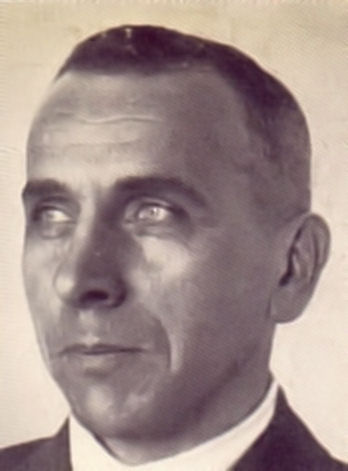
—Why did you go back there if it was so dangerous?
Because science isn't done only in a warm office, my child. To understand the Earth, you sometimes have to go touch it where it is harshest. Greenland, I had known it for years, since my youth expeditions. I knew it could be cruel. In 1930, I went back one last time, at fifty, to help my companions who were short of supplies. I wasn't afraid of danger: I had a duty not to abandon them. A man of science owes courage to the truth, but also to his friends.
A man owes courage to the truth, and to his friends.
—Did you think that one day you would be believed anyway?
Deep in my heart, yes, I believed it. Not for revenge, no. But because the evidence was there, patient, waiting. The coasts, the fossils, Pangaea: none of that would disappear because people laughed at it. I told myself that one day, perhaps after my death, someone would find the key I was missing, that force that moves continents. And then my idea would awaken. That's science: a good idea can sleep a long time, but it doesn't die. It simply waits for the world to be ready to hear it.
A good idea can sleep a long time, but it doesn't die.
—What would you like people to remember about you today?
I would like you to remember this: never be afraid to see the world differently. Everyone in my time thought the continents were fixed, planted there forever. I dared to say the opposite, with just a globe and maps. I was criticized, but I held firm. If one day at school you have an idea that surprises everyone, don't throw it away too quickly. Find your evidence, observe, be patient. Continental drift is my gift. And you too, one day, you may see what others do not yet see.
Never be afraid to see the world differently.
This imaginary interview was generated by artificial intelligence from sources documented in Alfred Wegener's profile. It dramatises what the figure might have said based on what we know about them, but does not constitute attested historical testimony. For primary sources and factual documentation, refer to the full profile.