
French mathematician (1752–1833), he contributed to number theory, geometry, and analysis. He is known for the Legendre polynomials and the method of least squares.
Adrien-Marie Legendre(1752 — 1833)
Adrien-Marie Legendre
France
8 min read
Frequently asked questions
Key Facts
- 1752: born in Paris
- 1782: prize from the Royal Academy of Sciences in Berlin for his work on ballistics
- 1805: publication of the method of least squares in his Nouvelles méthodes pour la détermination des orbites des comètes
- 1825–1832: publication of the Traités des fonctions elliptiques
- 1833: died in Paris
Works & Achievements
A complete rewriting of Euclidean geometry into a clear and rigorous textbook, this work displaced Euclid's texts in French education and was translated into many languages; it went through more than twenty editions and remained a standard reference for over a century.
The first major French synthesis of number theory, containing in particular the conjecture of the law of quadratic reciprocity and foundational work on the distribution of prime numbers, which would directly influence Gauss.
A work on mathematical astronomy in which Legendre first published the method of least squares, a statistical technique for fitting a curve to experimental data, now indispensable across all the sciences.
A three-volume treatise developing the tools of integral calculus, notably the study of Eulerian functions (the Gamma and Beta functions) and the first elliptic integrals, laying the groundwork for decades of subsequent research.
A masterwork published in three volumes after more than thirty years of research, classifying elliptic integrals into three fundamental kinds; Abel and Jacobi would immediately draw on it to revolutionize the field.
A memoir presented to the Académie royale des sciences laying the foundations of the theory of elliptic functions, in which Legendre shows that certain apparently transcendental integrals obey regular algebraic laws.
Anecdotes
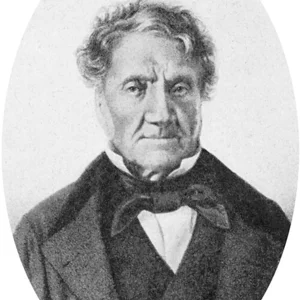
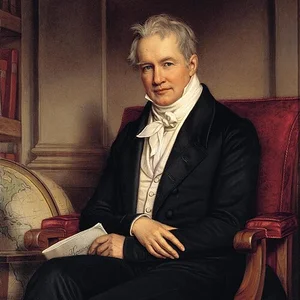
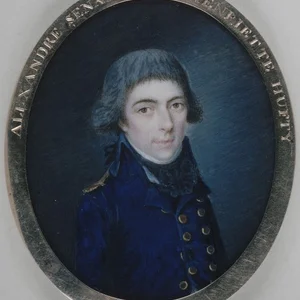
For nearly two centuries, the portrait circulating in textbooks and encyclopedias under the name Adrien-Marie Legendre was actually that of Louis Legendre, a revolutionary deputy who happened to share his surname. It was not until 2009 that a researcher identified a caricature published in 1820, finally revealing the mathematician's true face. An case of mistaken identity going unnoticed for so long illustrates just how much Legendre's reputation rested on his ideas rather than on his person.
In 1824, Legendre flatly refused to vote for the government-endorsed candidate of Charles X in an election at the Institut de France. This act of independence cost him dearly: the Ministry of the Interior revoked his state pension, plunging him into serious financial hardship. It was his wife, Marguerite-Claudine Couhin, who provided for their needs until the end of his life.
The method of least squares — a fundamental statistical tool still used today to fit experimental data — was published by Legendre in 1805. But the great mathematician Carl Friedrich Gauss immediately claimed to have discovered it independently as early as 1795, without ever having published it. The ensuing priority dispute poisoned relations between the two scholars and remains one of the most famous cases of contested scientific credit in the history of mathematics.
Legendre played an active role in the major Revolutionary metrology projects that led to the creation of the metric system. He served on the commission tasked with precisely measuring the arc of the meridian between Dunkirk and Barcelona — a monumental geodetic operation designed to define the meter as one ten-millionth of a quarter of the Earth's meridian. This fieldwork combined mathematics, astronomy, and large-scale surveying.
Legendre polynomials, which he introduced in 1782 to solve problems of gravitational attraction between celestial bodies, are today ubiquitous in physics: they appear in the equations of quantum mechanics, electromagnetism, and geophysics. Legendre himself could never have imagined how widely these abstract mathematical functions would become indispensable tools in modern physics, two centuries after their invention.
Primary Sources
Of all the principles that can be proposed for this purpose, I think there is none more general, more exact, or easier to apply, than the one we have used in the preceding researches, which consists in making the sum of the squares of the errors a minimum.
Geometry is the science whose object is the measurement and properties of extension. It is ordinarily divided into plane geometry and geometry in space, or solid geometry.
Every prime number of the form 4n+1 is the sum of two squares, and it can be expressed in this way in only one manner, disregarding the order of the terms.
I recognized that these kinds of integrals, despite their apparently transcendental nature, are susceptible to a regular theory and can be reduced to three fundamental types.
Elliptic functions form a class of transcendents whose study is as necessary for the progress of analysis as that of logarithms and circular functions.
Key Places
Legendre studied mathematics and physics here, earning his degree in 1770. This prestigious college, founded by Mazarin, trained the intellectual elite of Paris.
Legendre taught mathematics here from 1775 to 1780, a position that allowed him to develop his research while gaining valuable teaching experience.
A central hub of French scientific life where Legendre was elected a member in 1783 and presented most of his papers; it was also here that his refusal to vote in 1824 cost him his pension.
The northernmost point of the great Franco-Spanish triangulation survey (1792–1798) in which Legendre took part — an operation used to define the metre as the universal unit of length.
Legendre spent his final years in this then semi-rural district of Paris, where he died on 9 January 1833 in modest circumstances after his pension had been revoked.
Typical Objects

Fundamental tools of the geometer, essential to Legendre in his work on Euclidean geometry and his *Éléments de géométrie*, a textbook he wrote to replace the ancient texts of Euclid.

Indispensable in the 18th century for carrying out astronomical and geodesic calculations, these tables were Legendre's primary tool for numerical computation during the meridian measurements.

An angle-measuring instrument used in the geodesic surveys in which Legendre took part to define the metre, particularly for measuring the latitude of observation stations.

The universal writing tool of scholars of the era, with which Legendre drafted his memoirs, his letters to fellow scientists, and his lengthy treatises running to several hundred pages.

An instrument for measuring horizontal and vertical angles, used in geodesic triangulation surveys in the field in which Legendre participated to link the observatories of Paris and Greenwich.

Legendre developed his theories in dense working notebooks filled with series expansions, integrals, and proofs, before submitting them to the Académie in the form of formal memoirs.
School Curriculum
Vocabulary & Tags
Key Vocabulary
Daily Life
Morning
Legendre rose early and devoted the first hours of the morning to pure mathematical work, when the mind is at its sharpest. Seated at his Parisian desk, he filled notebooks with calculations, developed his series, and drafted his memoirs by quill, in the silence of his apartment.
Afternoon
The afternoon was reserved for institutional duties: weekly sessions at the Académie des sciences (later the Institut de France), meetings with colleagues such as Laplace or Lagrange, and reading memoirs submitted by other scholars. Legendre also handled administrative tasks at the Bureau des Longitudes, of which he was a member.
Evening
In the evenings, Legendre corrected his proofs, replied to scientific correspondence with mathematicians across Europe, and continued reading recent works. The social life of Parisian salons held no appeal for him; he preferred the company of his wife and the quiet, studious atmosphere of his home in Auteuil.
Food
In Legendre's time, the Parisian bourgeoisie ate two main meals: lunch around noon and dinner in the evening. The diet consisted of bread, vegetables, boiled or roasted meat, and wine diluted with water. Meals for scholars of modest means like Legendre — especially after 1824 — were simple and unpretentious.
Clothing
Legendre wore the bourgeois dress of his era: knee breeches until the Revolution, then long trousers under the Empire and the Restoration, a black coat with a high collar, a knotted white cravat, waistcoat, and frock coat. Under the Restoration, men's fashion leaned toward the elegant restraint typical of academic circles.
Housing
Legendre spent most of his adult life in Paris, in apartments on the Left Bank close to academic institutions. In his final years, he lived in Auteuil — then a leafy suburb on the outskirts of Paris — in a modest house where he endured his last years in financial hardship after losing his pension.
Historical Timeline
Period Vocabulary
Liens externes & ressources
Références
Œuvres
Éléments de géométrie
1794
Essai sur la théorie des nombres
1798
Nouvelles méthodes pour la détermination des orbites des comètes
1805
Exercices de calcul intégral
1811–1817
Traité des fonctions elliptiques et des intégrales eulériennes
1825–1832
Mémoire sur les intégrations par arcs d'ellipse
1786