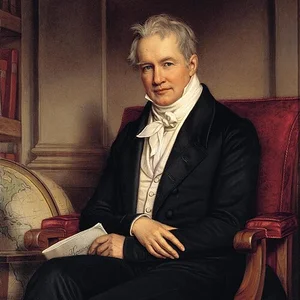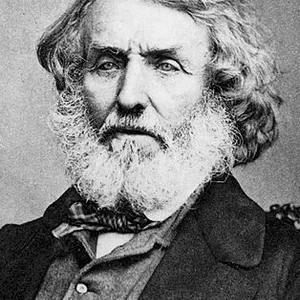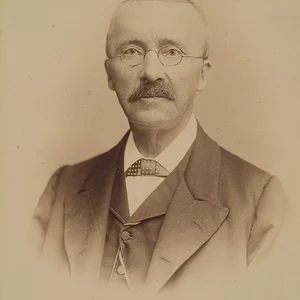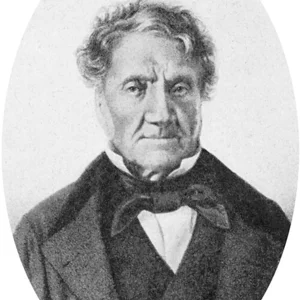

French botanist and explorer (1773-1858), companion of Alexander von Humboldt during their famous expedition to South America (1799-1804). He catalogued thousands of plant species unknown in Europe and spent the rest of his life in Argentina.
Aimé Bonpland(1773 — 1858)
Aimé Bonpland
France
8 min read
Frequently asked questions
Key Facts
- 1773: Born in La Rochelle
- 1799-1804: Expedition with Humboldt to South America (Venezuela, Colombia, Ecuador, Peru, Mexico, Cuba)
- 1804: Return to Europe with more than 60,000 plant specimens collected
- 1821: Settles permanently in South America (Argentina and Uruguay)
- 1858: Death in Argentina at the age of 84
Works & Achievements
The first major work published following the expedition, it presents the most remarkable plants collected in South America with highly precise color illustrations. This publication established Bonpland's reputation as a foremost botanist in Europe.
A systematic study of a family of tropical plants particularly widespread in the Americas, showcasing Bonpland's taxonomic rigor and his ability to organize and describe hundreds of new species.
A monumental seven-volume work describing thousands of new plant species collected during the American expedition. It stands as a founding reference of modern tropical botany.
A collection of more than 60,000 plant specimens gathered throughout his lifetime, now dispersed between Paris, Buenos Aires, and other scientific institutions. These collections remain an irreplaceable primary source for contemporary botanists.
Anecdotes
During their crossing of the Orinoco in 1800, Bonpland and Humboldt nearly perished in rapids. Despite the danger, Bonpland kept collecting plants along the riverbanks, refusing to lose a single specimen. This scientific stubbornness earned him Humboldt's admiration; Humboldt wrote that he had never seen a naturalist so fearless.
Back in France, Bonpland was appointed personal botanist to Empress Joséphine at Malmaison. He transformed the château's gardens into one of the richest in all of Europe, acclimatizing hundreds of tropical species brought back from his travels. When Joséphine died in 1814, he was so deeply affected that he resolved to leave France for good.
In 1821, Bonpland was arrested on the orders of Paraguayan dictator Gaspar Rodríguez de Francia and imprisoned for nearly nine years without trial. The news triggered a wave of outrage across Europe: Humboldt, Simón Bolívar, and the Tsar of Russia all interceded on his behalf. Released in 1831, Bonpland nonetheless chose to remain in South America rather than return to Europe.
Bonpland died in Argentina in 1858 at the age of 84, still active in his botanical research. By the time of his death, he had collected and described more than 60,000 plant specimens. He is today regarded as a father of South American botany, and several plant species bear his name, including the genus *Bonplandia*.
Primary Sources
We felt it necessary to present, in this work, the most remarkable plants we collected during our journey through the equinoctial regions of the New Continent, many of which have not yet been described.
Genera and species not yet described or insufficiently known are set forth, illustrated with figures, and compared with related forms.
I live here surrounded by my plants and my students. Though far from Europe, I never cease to work for science, and I hope my collections will be useful to the botanists who come after me.
This family of plants, so widespread in the tropical regions of America, displays such distinct and consistent characteristics that it seemed useful to us to dedicate a special monograph to it.
Key Places
Birthplace of Aimé Bonpland, this major French Atlantic port is where he grew up and developed his earliest scientific curiosities, before moving to Paris to study medicine and botany.
Empress Joséphine's château on the outskirts of Paris, where Bonpland served as resident botanist from 1809 to 1814. There he created one of the richest botanical gardens in Europe, successfully acclimatizing many exotic species.
Great river of South America explored by Bonpland and Humboldt in 1800. During this perilous journey, Bonpland identified hundreds of previously unknown plant species in the equatorial riverside forests.
The place where Bonpland lived and died, settling there permanently after his release from Paraguay. He ran an estancia and continued his botanical research until his death in 1858.
The port from which Bonpland and Humboldt set sail on June 5, 1799, aboard the Spanish corvette Pizarro, bound for their historic expedition to South America.
Typical Objects

An indispensable tool for the travelling naturalist, the botanical press allowed Bonpland to dry and preserve the plants collected during the expedition. He carried several copies in order to process dozens of specimens on each day's march.

Bonpland filled entire notebooks with precise descriptions, sketches, and notes on the plants he observed, their habitats, and their local uses. These notebooks formed the scientific foundation for the major publications he co-authored with Humboldt.

Essential navigation instruments for pinpointing the geographical location of botanical discoveries, the sextant allowed Humboldt and Bonpland to record the exact latitude and longitude of each collection, lending an unprecedented geographical dimension to their work.

To preserve insects, small animals, and fragile plants, Bonpland used jars filled with alcohol or sealed hermetically. Transporting these collections back to Europe presented a considerable logistical challenge.

Essential for making headway through the dense Amazonian rainforest, the machete was the travelling naturalist's everyday tool in tropical terrain. Bonpland used it as much to hack a path through the undergrowth as to collect bark samples and cuttings.

A vast collection of dried and classified plants, the herbarium assembled by Bonpland comprises tens of thousands of specimens. Part of it is today preserved at the Muséum national d'Histoire naturelle in Paris, forming an invaluable record of South American biodiversity in the nineteenth century.
School Curriculum
Vocabulary & Tags
Key Vocabulary
Daily Life
Morning
During the South American expedition, Bonpland rose before dawn to take advantage of the morning cool and explore the surrounding forests. He devoted the first hours of the day to intensive collection of plants, insects, and seeds, filling his notebooks with detailed descriptions before the tropical heat became overwhelming.
Afternoon
The afternoon was reserved for processing the specimens gathered in the morning: pressing plants, careful labeling, writing scientific notes, and organizing the collections. During river voyages, he used quiet moments to observe and describe the bankside vegetation from the boat.
Evening
In the evenings, Bonpland and Humboldt discussed the day's observations, compared their notes, and planned the next day's itinerary. Evenings were also an opportunity to talk with local inhabitants — indigenous people, missionaries, or settlers — to gather information on the medicinal and culinary uses of local plants.
Food
During the expedition, Bonpland shared in the local food: manioc, maize, tropical fruits, smoked fish, and game depending on the region. He noted with great interest the food plants unknown in Europe and the ways they were prepared. Back in France and later in Argentina, his diet became more European again, though he gradually adopted local culinary habits.
Clothing
On expedition, Bonpland wore lightweight, durable clothing suited to the tropics: a linen shirt, cotton trousers, sturdy boots, and a wide-brimmed hat to shield himself from the sun. He carried a waterproof cape for sudden tropical downpours. In Paris, he dressed like the educated bourgeois of his day: dark coat, cravat, and frock coat.
Housing
During the expedition, Bonpland most often slept in Jesuit missions, indigenous huts, forest bivouacs, or aboard river vessels. At Malmaison, he enjoyed comfortable lodgings within the imperial estate. In Argentina, he lived in a modest but practical estancia, surrounded by botanical gardens he cultivated himself until the end of his life.
Historical Timeline
Period Vocabulary
Liens externes & ressources
Références
Œuvres
Plantes équinoxiales (avec Humboldt)
1808-1817
Monographie des Mélastomacées
1806
Nova genera et species plantarum (avec Humboldt et Kunth)
1815-1825
Collections de l'herbier Bonpland
1800-1858