Imaginary interview with Alhazen
by Charactorium · Alhazen (965 — 1039) · Sciences · Technology · Philosophy · 5 min read
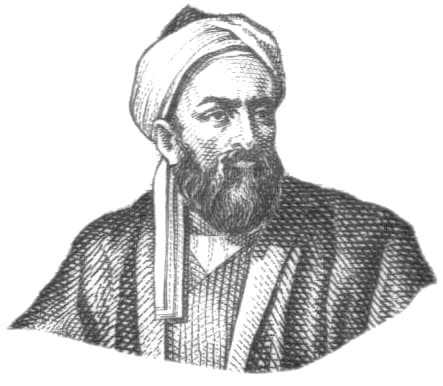
Fatimid Cairo, around 1030. In a house with an inner courtyard where a fountain murmurs, an old man receives his visitor near a room with closed shutters, pierced with a single small hole through which a ray of light filters. On the table, a brass astrolabe, a reed pen, and the seven volumes of his great work await copying.
—How would you describe to a layman this dark room where you spend so many hours?
Come closer, but keep silent, for here light is my only master. I had the shutters of this room closed — what the people of my country call Bayt al-Zulma — and pierced a hole no wider than a sesame seed. Look at the far wall: the outside world paints itself upside down, horsemen walking head-down, the garden inverted, everything turned over like a cloth. Nothing magical about it, only proof that light travels in straight lines, each ray faithful to its path. Many scholars before me assumed; I wanted to see. This room is my most honest witness, more reliable than a treatise of a thousand pages.
The outside world paints itself upside down, everything turned over like a cloth.
—Your Greek predecessors taught that the eye projects its light onto things. What made you doubt Euclid and Ptolemy?
I have the greatest respect for the ancients, and Ptolemy remains a beacon in the night of knowledge. But respect is not blind submission. They claimed that the eye emits rays to grasp objects, like a hand groping at a distance. Yet if you stare at the sun, you retain its pain and mark: it is not your eye that wounded it, but its brightness that penetrated you. I called inbi'āth this emission that goes from things toward us, not from us toward things. Truth, my friend, lies not in illustrious books, but in what repeated experience deigns to show us. I doubted out of fidelity, not pride.
Respect for the ancients is not blind submission.
—Many are content to reason. Why this obstinacy to endlessly repeat your experiments?
Because the human mind is quick to err, and quicker still to love its own mistakes. When I establish something about the nature of light, I do not rely on a single observation: I redo it, change the time, the source, the distance, I record each result on my parchment with the same patience as an accountant keeping his ledgers. Geometry, this handasah that I love so much, gives me the proof; but experience alone gives me the certainty that my proof touches the real world and not a dream. A man who seeks truth must make himself the enemy of his own opinions as much as of others'.
The human mind is quick to err, and quicker still to love its own mistakes.
—It is said that you promised the caliph to tame the Nile floods. What really happened?
Ah, the folly of youth and the ambition of a scholar! I had announced that with dikes I could regulate the floods of the Nile, whose waters swell and recede each year in a rhythm that no one has been able to curb. The caliph Al-Hakim summoned me from the East, showered me with honors. But when I went up the river to the highlands, I saw with my own eyes the impossible: no human hand, no dam, could contain that liquid beast. The caliph was a master with an unpredictable heart; one did not betray his hope without fear for one's head. I measured my presumption as one measures an angle: too great.
I saw with my own eyes the impossible: no human hand could contain that liquid beast.
—You endured several years in a perilous situation. How did you survive the caliph's wrath?
There are storms that one does not fight head-on: one bends like the reed of the calamus. To escape the wrath of Al-Hakim after the Nile failure, I put on the mask of a madman. I was believed bereft of reason, and one ceases to fear a fool as one ceases to fear a child. Placed under house arrest, alone with my thoughts, I found in this forced seclusion the leisure that the court would never have granted me: it was there, in silence, that I began to write my great book on optics. When the caliph mysteriously disappeared, in the year 1021, I recovered both my freedom and my face. Providence writes straight with our crooked lines.
One puts on the mask of a madman; one ceases to fear a fool as one ceases to fear a child.
—What does this Book of Optics, to which you devoted so many years, represent to you?
The Kitāb al-Manāẓir is the child of my seclusion, seven volumes into which I poured all that light deigned to confide in me. I demonstrate there, step by step as one climbs a staircase, that light propagates in straight lines from every point of a luminous body, in all directions, and that the eye only receives what enters it. I studied curved, spherical, and parabolic mirrors, up to that point of reflection that others, it is said, will find arduous after me. God willing, men I will never know will open this book in a language I do not understand, and will find in it the means to see more clearly. That is my only allowed vanity.
The Book of Optics is the child of my seclusion, into which I poured all that light deigned to confide in me.
—You sought to measure the height of the sky itself. How does one go about such a feat?
By patiently observing that fragile moment when day dies: twilight. When the sun has sunk below the horizon, its light continues for a time to illuminate the sky, because it bends and breaks as it passes through the air, like a stick seems broken when dipped in water. By measuring the duration of this lingering brightness, with my astrolabe to capture the stars, I was able to estimate how high the envelope of air that covers us extends — some ten miles, I concluded. Air is therefore not nothing: it has thickness, weight, a boundary. The sky, my friend, lets itself be surveyed by one who knows how to read shadow as others read writing.
Light bends as it passes through the air, like a stick seems broken when dipped in water.
—What would you say to those who see the moon as a self-luminous body?
I would tell them to look more carefully, and without fear of contradicting appearances. In my Maqāla fī al-Daw', my treatise on light, I maintained that the moon is only a dark sphere that reflects back to us the borrowed brightness of the sun, like a bronze mirror reflects the flame of an oil lamp. Its light and that of the sun are of the same nature, one being merely the echo of the other. Any truly luminous body, on the other hand, spreads its brightness in all directions, spherically, without ever exhausting itself. Observe the moon wax and wane: it is shadow and sun playing on its round face, not some fire that belongs to it. Creation is more economical with its lights than one imagines.
The moon is only a dark sphere that reflects back to us the borrowed brightness of the sun.
—What does an ordinary day in your Cairo home look like?
It begins before dawn, at the call of the Fajr, when the city still sleeps and the mind is clearest. After prayer, a little bread and some dates, then I sit in the morning light, which I consider most favorable for calculation and reviewing my notes. The afternoon belongs to my camera obscura and to verifying my drawings; sometimes a copyist comes to collect my treatises, or a young man eager for handasah. At evening, after the Maghreb, I go up to observe the refraction of stars skimming the horizon, and I dictate my conclusions by lamplight, until the Isha that closes the day. A life regulated like the course of the spheres.
A life regulated like the course of the spheres.
—You live a stone's throw from the House of Wisdom. What does this place represent for a man like you?
The Dar al-Hikma, the House of Wisdom, is what drew me to Cairo, leaving the banks of my native Basra and the rumors of Baghdad. It is a place where knowledge from the Greeks, Persians, and Indians is translated, preserved, and compared — a treasure of kitāb, of books, where the scholar can finally breathe. A man alone, however obstinate, is nothing without this chain of hands that copied, transmitted, corrected before him. I stand on the shoulders of those who translated Euclid and Ptolemy, and I strive to add my modest stone to the edifice, for those who will come. Knowledge is a lamp passed from hand to hand through the darkness of the ages.
Knowledge is a lamp passed from hand to hand through the darkness of the ages.
This imaginary interview was generated by artificial intelligence from sources documented in Alhazen's profile. It dramatises what the figure might have said based on what we know about them, but does not constitute attested historical testimony. For primary sources and factual documentation, refer to the full profile.