Kids interview An Lushan
by Charactorium · An Lushan (703 — 757) · Military · Politics · 5 min read
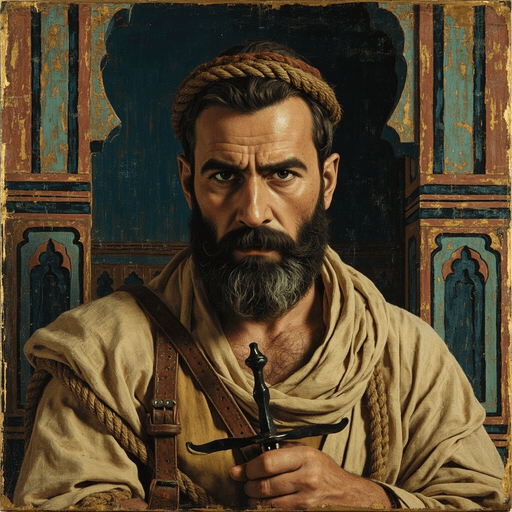
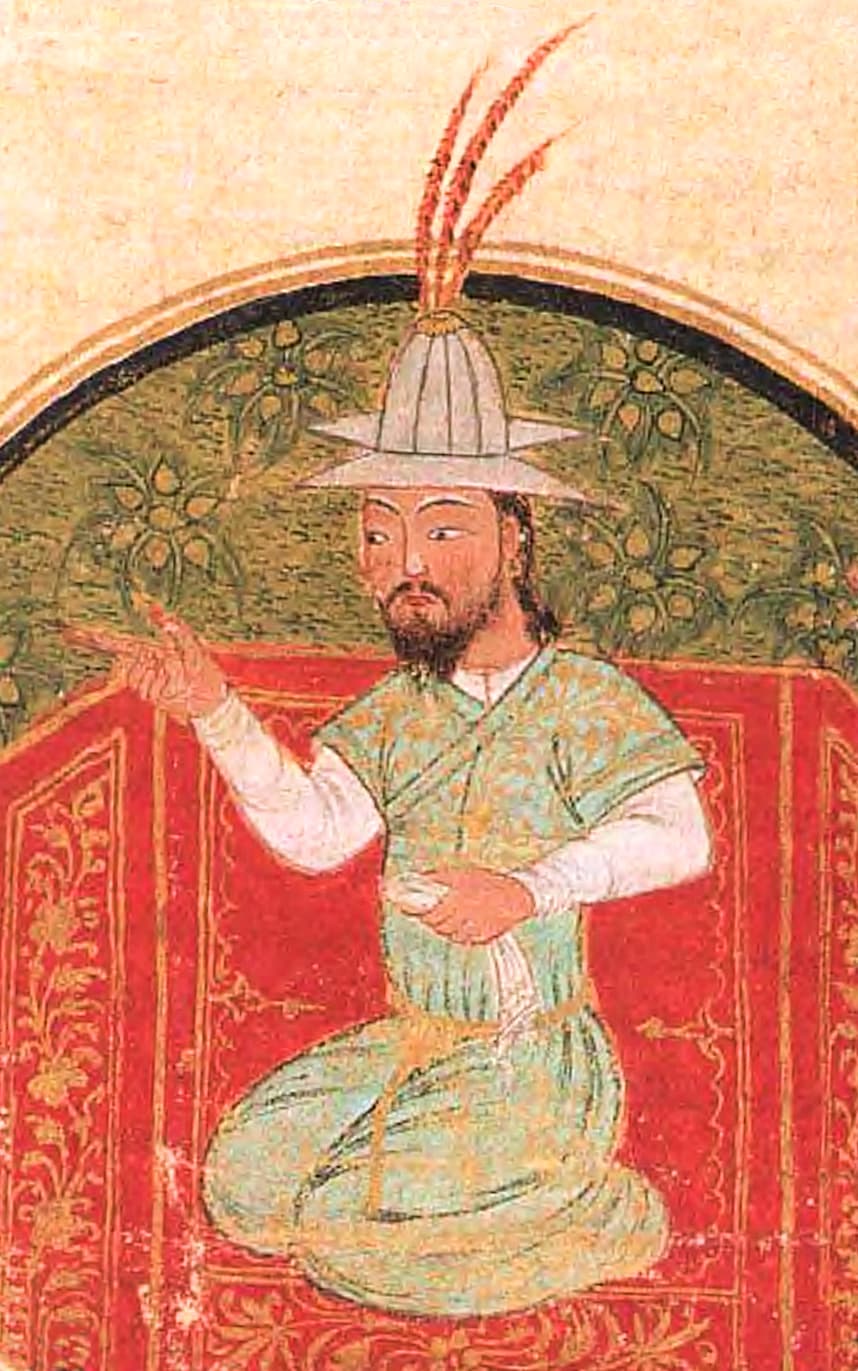
Two young visitors, on a school trip, stand before an immense old man seated on a felt carpet. He smells of leather and horse. He looks at them with a tired smile and waves them closer. “So, you want me to tell you?”
—Where were you born, really? Was it far from the big city?
Yes, my child, very far. I was born in Yingzhou, far to the northeast, where the empire ends and the steppe begins. Imagine a region where Chinese, Turkic horsemen, and merchants from far away called the Sogdians mix—traders who followed the great Silk Road. My father was of that people, my mother was Turkic. At home, it smelled of dust, sheep, and saddle leather. No one would have bet a penny on that fat boy from the margins. And yet, it was from those forgotten borders that I set out to conquer two capitals.
It was from the forgotten borders of the empire that I set out.
—Is it true you spoke many languages? What was that for?
Six languages, my boy! The languages of the steppe peoples around my home. You know why? Because as a kid, I had neither title nor fortune. So I started as a broker on the border markets—the one who stands between two merchants who don't understand each other and helps them trade for a few coins. An old Chinese book says of me that 'I understood the languages of six peoples.' That was my true treasure. A chief who speaks the other's language can convince him, or spy on him. My mouth served me long before my sword.
My mouth served me long before my sword.
—They say you were very fat. Is it rude if I ask?
Ha! No, it doesn't bother me, go ahead. I was enormous, it's true. They say my belly hung down to my knees, and it took two servants to lift my paunch when I dressed! And yet—listen well—before Emperor Xuanzong, I danced. A Central Asian dance, fast, spinning like a top: the whirling dance, the huxuan. Imagine that big man whirling and twirling with the lightness of a child. The court laughed, the emperor loved it. A warrior doesn't have to be grim, my little one. I knew how to make people laugh, and that opens many doors.
A warrior doesn't have to be grim.
—Is it true a lady put you in a cradle like a baby?
You heard right! At court, the emperor's favorite woman was called Yang Guifei. They called her 'imperial consort,' the highest lady after the empress. She 'adopted' me as her son—even though I was much older than her, can you imagine the farce! One day, to amuse the palace, the ladies swaddled me like a giant infant and carried me in a huge cradle. The emperor cried with laughter. It was funny, but think a moment: the more they laugh with you, the less they suspect. My buffoonery was also a shield. No one fears the fat man who dances.
No one fears the fat man who dances.
—How does one become so powerful when one isn't even the king?
Patiently, my child, piece by piece. The emperor appointed me jiedushi—that's the word for 'military commissioner,' the governor who commands the soldiers of a border region. Usually, one commands only one. I ended up accumulating three: Fanyang, Pinglu, and Hedong. By 751, that meant nearly 180,000 soldiers obeyed me, not the capital. Imagine three great armies in one hand. I had my cavalry, my archers, my garrisons. An empire, you see, is like a body: when one arm becomes stronger than the head, one day that arm wonders why it still obeys.
When an arm becomes stronger than the head, it wonders why it obeys.
—What weapons and clothes did your soldiers have?
Enough to make the earth tremble, my boy. My cavalry wore lamellar armor: hundreds of small iron plates laced together, flexible as a second skin and hard under blows. At the shoulder, the composite bow—a short bow of wood, horn, and sinew, shot at a gallop, even while turning on the horse. And under their feet, rigid stirrups to hold steady during the charge. The best came from the steppes, like me. In the morning, I inspected my troops; in the afternoon, I had them practice archery. An army must be fed every day, like a horse. Otherwise it falls asleep—and a sleeping army wins nothing.
An army must be fed every day, like a horse.
—Why did you betray the emperor who liked you?
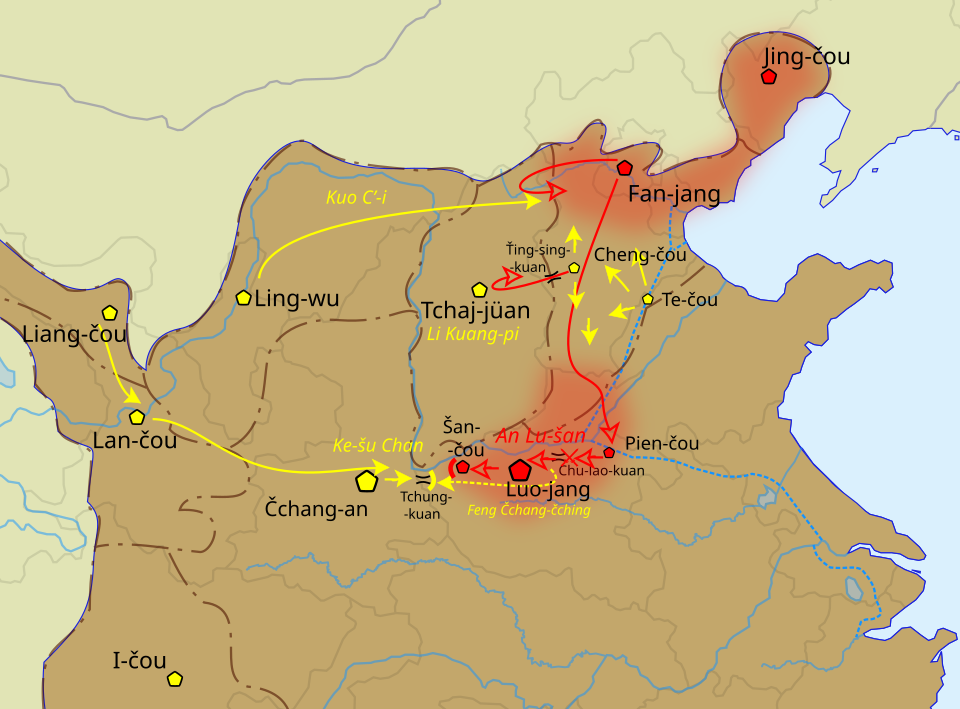
Ah… the stinging question. Listen: at court, a man hated me, the minister Yang Guozhong. He kept saying I would revolt. Eventually, better to strike before being struck. In the winter of 755, I raised my troops at Fanyang, claiming a secret order commanded me to punish that minister. It was my pretext. The truth? Peace had lasted so long that, says a chronicle, almost no one knew how to wage war anymore. I did. One day, the emperor asked me what my big belly contained. I replied: 'nothing but a loyal heart.' A few years later, I lied.
Peace had lasted so long that no one knew how to wage war anymore.
—And then, did you become emperor for real?
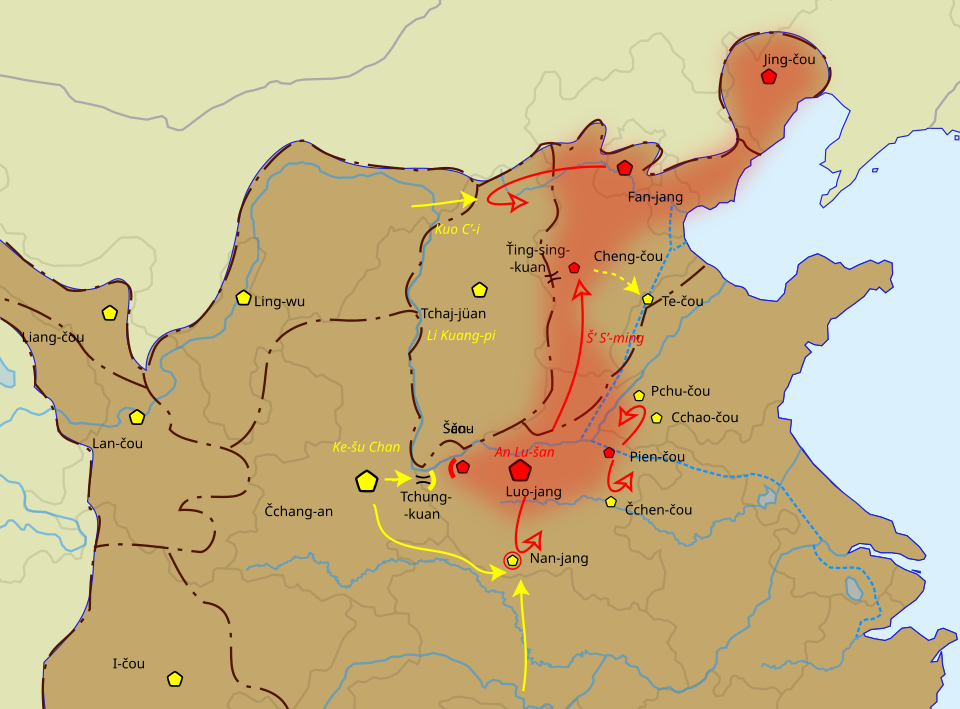
Almost, my little one, and very quickly! My armies rushed and took the two capitals: first Luoyang, in the east, then Chang'an, the great one, one of the largest cities in the entire world at the time. Emperor Xuanzong had to flee south. And I, in Luoyang, proclaimed myself emperor of a new dynasty: the Yan. A poet later wrote that 'the war drums made the earth tremble.' Those were my drums. But you know, a throne seized by force is a slippery throne. I sat down on it… I didn't have time to settle in.
A throne seized by force is a slippery throne.
—What happened to you in the end? Were you sick?
Yes, and it's sad, I won't hide it from you. Once emperor, my body gave out. I gradually lost my sight—imagine governing without seeing the faces around you. Ulcers gnawed at me, the pain made me furious, I screamed, I struck. Around me, everyone trembled. Even my own son, An Qingxu, who couldn't wait any longer for power. In 757, one night, a trusted man entered my tent on his orders… and killed me. Betrayed as I had betrayed. The wheel always turns, my child. Always.
Betrayed as I had betrayed. The wheel always turns.
—After your death, what remained of all that?
Ruins, my boy, and a lesson. The war I ignited lasted eight more years and killed millions. The Tang empire, that golden age, never truly recovered. The worst is that other military governors, those jiedushi like me, saw that one man could defy the capital. So they kept their armies, their taxes, their power. For a century and a half, China bled from the wound I had opened. Remember: he who shows that a rule can be broken does not destroy just once. He teaches all others to do it again.
He who breaks a rule teaches all others to do it again.

This imaginary interview was generated by artificial intelligence from sources documented in An Lushan's profile. It dramatises what the figure might have said based on what we know about them, but does not constitute attested historical testimony. For primary sources and factual documentation, refer to the full profile.