Kids interview Anggun
by Charactorium · Anggun (1974 — ?) · Performing Arts · Music · 5 min read
That morning, two middle school students arrive in a small dressing room cluttered with sheet music. A singer with a gentle smile seats them on an old sofa. Her name is Anggun, and she has promised to tell them everything.
—How old were you when you became famous in Indonesia?
You know, my dear, I was just a kid. At 14, I released a rock album sung in my language, Dunia Milikku, which means "the world belongs to me." Imagine a huge country, with thousands of islands and millions of people: suddenly, everyone knew my name. I had been singing in Jakarta studios since I was 7. I thought fame was forever. But in my head, a little voice said: "And elsewhere? And further?" That voice never let go of me. It's what one day pushed me to leave everything behind.
I thought fame was forever.
—What was it like arriving in Europe without speaking the language?
Very hard, I'll tell you frankly. Around 1991, I left my country with a suitcase and a dream. First London, then Paris. I didn't know a single word of French. Imagine: you walk into a bakery and can't even ask for bread. I had been a star, and there I became nobody again. So every morning, I took lessons, repeated pronunciation out loud, over and over. I learned the language in a few months, by sheer willpower. And I refused to live off my former fame. I wanted to start over, from zero.
I had been a star, and there I became nobody again.
—Didn't you feel like giving up and going home?
Oh yes, often! There were years when nothing worked. I knocked on record label doors, and they stayed closed. It wasn't until 1994 that I finally signed with Sony Music France. Years of effort, can you imagine? At night, I thought of my family, my Indonesian cooking, the rice and nasi goreng of my childhood. I was homesick. But I told myself: "If you go back now, you'll wonder your whole life what might have happened." Patience, my dear, is sometimes the greatest courage.
Patience is sometimes the greatest courage.
—How did you craft your song 'Snow on the Sahara'?
Ah, that one! We built it little by little, in the afternoons, in the studio. My producer was Erick Benzi. Imagine two worlds meeting: on one side, the gentle melodies of Asia that I carried inside me; on the other, the electronic arrangements of the West. We mixed them together, like blending two colors to create a new one. Those sessions were long, demanding. We would redo a single phrase a hundred times. And in 1997, the song was released in over thirty countries at once! For a girl who didn't sing in English initially, it was a small miracle. Blending cultures, you see, can travel far.
We blended two worlds, like marrying two colors.
—Is it true you shot the music video in the actual desert?
Yes, in the Sahara! Imagine sand dunes as far as the eye can see, so high they look like golden mountains. The burning wind, the immense silence, and me, tiny in the middle of it all. It was terribly hot during the day, biting cold at night. That's where the title comes from: snow on the Sahara, two things you never see together. A bit like me, the Indonesian singing in France. That desert was the perfect image of my music: opposites that meet and, together, become beautiful.
Snow on the Sahara: two things you never see together.
—What's it like having two countries in your heart at the same time?
It's a richness, my dear, not a tearing apart. In 1998, I obtained French nationality. It's called naturalization: when a country welcomes you and says "you are one of us now." That day, I said something I still believe: I am proud to be Indonesian, and proud to be French. These two identities don't fight in my heart. They hold hands. At home, in Paris, there are batiks hanging on the wall, those painted fabrics from my island, next to very European furniture. Two worlds in one house. Two passports, but one voice.
My two identities don't fight: they hold hands.
—Your stage outfits are very beautiful, why are they like that?
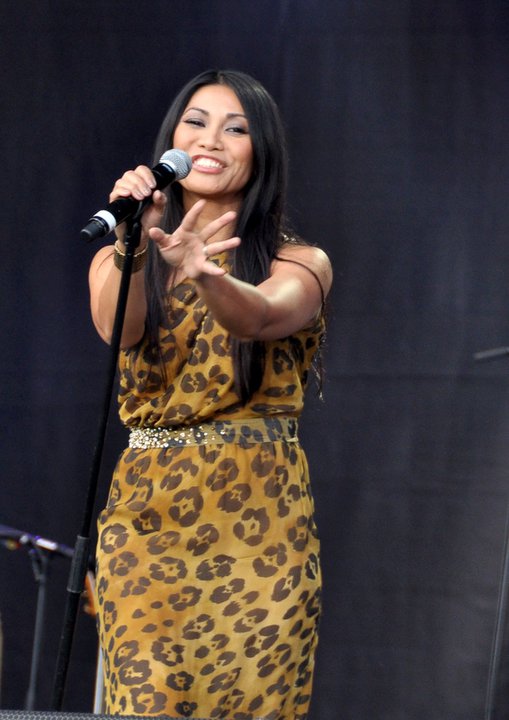
Because they tell who I am! Look closely: my stage outfits mix batik patterns, those traditional designs from the island of Java, with the cut of French haute couture. On one side, the craftsmanship of my ancestors; on the other, the elegance of my adopted country. When I step on stage, I wear both my cultures on my skin, literally. People first see a beautiful costume. But now you know how to read what it says. Every thread tells a journey between Jakarta and Paris. Our clothes, you see, can speak for us.
I wear both my cultures on my skin, literally.
—What was it like singing for France in front of so many people?
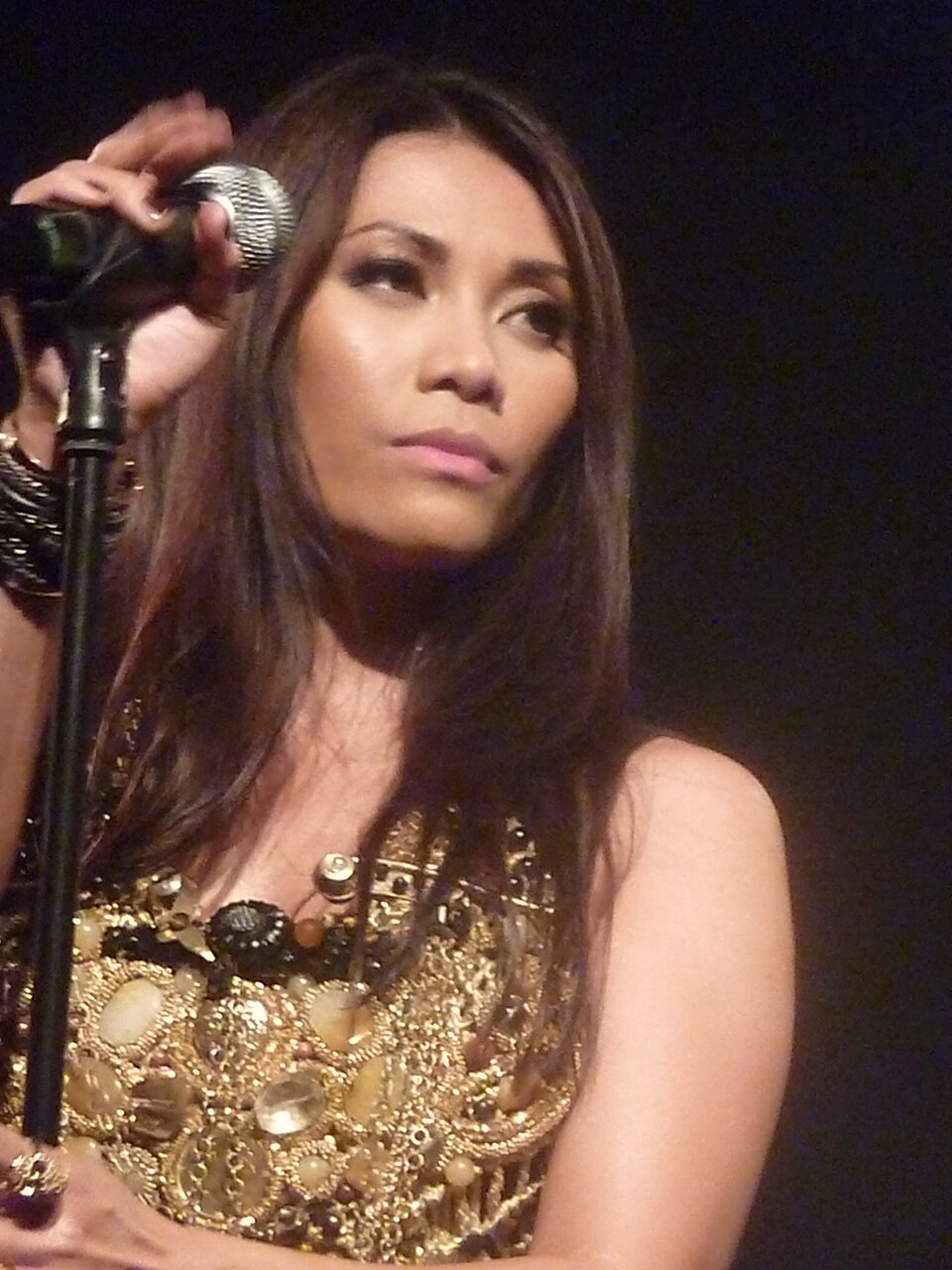
Dizzying, my dear! In 2012, I represented France at Eurovision, that big song contest between countries. It was in Baku, a distant city on the edge of a strange sea. My song was called Echo (You and I). Imagine: 125 million people watching you at once, in dozens of countries. Your heart beats so loud you can almost hear it. I chose to sing half in French, half in English. A girl born in Jakarta carrying the French flag before the whole world. When the music started, I thought: "There, my entire journey fits into these three minutes."
My entire journey fit into those three minutes.
—Why didn't you sing only in French that night?
Good question, you see clearly! I could have sung only in French, to show I was defending my adopted country. But that wouldn't have been honest. So I blended both languages, French and English, in the same song. It was my way of telling the whole world: I am French, yes, but I come from elsewhere, and I don't hide it. The theme of the song, precisely, was love that unites people across borders. Embracing who you truly are, even before millions of eyes, that's real courage. You always sing better when you don't disguise yourself.
You always sing better when you don't disguise yourself.
—Did you help your country when the big wave, the tsunami, hit?
Yes, and it remains one of the most painful moments of my life. At the end of 2004, a giant wave ravaged the coasts of Southeast Asia. My Indonesia was hit head-on: entire villages wiped out, so many families lost. I was far away, in Paris, and I felt helpless. So I did the only thing I knew how to do: use my voice and my fame to raise aid. Later, in 2008, UNICEF appointed me a Goodwill Ambassador. I fought for children, against child labor. When you have the chance to be heard, you must speak for those who aren't heard.
When you are heard, you must speak for those who aren't heard.
—If you had one piece of advice for us, what would it be?
I'll share what life has taught me, to you two who came to listen. I left Jakarta with almost nothing, learned a new language, failed, started over. And one day, a little Indonesian girl found herself carrying the French flag before the world. So never be afraid to be different. What makes you unique, that blend of everything you are, is your greatest strength, not your weakness. Cultivate it like a garden. And above all, be patient with your dreams. The most beautiful things, my dear, take time to grow.
What makes you different is your greatest strength.
This imaginary interview was generated by artificial intelligence from sources documented in Anggun's profile. It dramatises what the figure might have said based on what we know about them, but does not constitute attested historical testimony. For primary sources and factual documentation, refer to the full profile.