Imaginary interview with Ann Putnam
by Charactorium · Ann Putnam (1679 — 1716) · Society · Spirituality · 5 min read

Salem Village, a gray afternoon in 1706. In the small house where she raises her younger siblings, a twenty-seven-year-old woman receives us near the hearth, the family Bible open on her lap. Fourteen years after the trials, Ann Putnam Jr. agrees to revisit what made a twelve-year-old girl the most prolific accuser in New England.
—How did those hearings unfold when, as a child, you testified before the court?
I was twelve years old when they led me into the Meeting House of Salem Village, the very one where on Sundays my father listened to the sermon. There, before the judges, my body no longer belonged to me. A force pinched me, pricked me, twisted my limbs on the floor while the clerks wrote. I screamed that an invisible specter was biting me, and the whole assembly saw my fits without understanding them. Today words fail me to say what I thought I saw then — shapes that pressed me to sign a book. They called it spectral evidence, and we, the convulsed girls, were called the afflicted. The court took our cries for truths.
Before the judges, my body no longer belonged to me.
—What exactly did you see when you said a specter was tormenting you?
I said I saw the apparition of the prisoner rise up in the room and afflict me, and at once I fell into a fit before the court. It was not a coldly played comedy, understand me: in a house where Scripture is read morning and evening, where Satan is spoken of as a neighbor prowling at the doors, a child learns to people the shadows with demons. The specter pinched me, pricked me, pressed me to sign its book — those words I spoke against Rebecca Nurse. The sewing pins lying on the hearth table became in my mouth weapons that witches drove into my flesh. Terror and faith mingled until they became a single voice.
—Tell us about Rebecca Nurse, that elderly woman you accused.
Rebecca Nurse was seventy-one years old, a pious matriarch respected by the whole village. Thirty-nine neighbors signed a petition swearing to her virtue — a rare thing, courage in a time when defending an accused marked you yourself. It did no good. On July 19, 1692, she was hanged on Gallows Hill, that hill where nineteen souls went to the gallows. My written deposition weighed in the balance of her death. Of all the shadows I cast, hers returns most often to haunt my nights, for no one could honestly believe her linked to the devil. Such a holy woman, condemned on the testimony of a child: that is the injustice that marked minds for a long time.
Of all the shadows I cast, hers returns most often.
—You didn't just accuse strangers, but also church members. Why them?
No one was safe, not even the most devout. I was among the first to denounce Martha Corey, a congregation woman who prayed in the front row — and the village understood then that even the pious could be targeted. Worse still: my testimony helped implicate George Burroughs, a former Salem pastor. A churchman hanged in August 1692, that had never been seen. They said he presided over the witches' sabbath like a black priest. At twelve, denouncing a pastor seemed to me to strike evil down even in its sanctuary. I did not realize I was striking the living, not demons.
—Many noticed that your accusations often targeted your family's enemies. How do you explain that?
The Putnams were at the heart of old land and parish quarrels that poisoned the village long before my birth. Since Salem Village obtained its own congregation in 1672, families had been tearing each other apart over field boundaries and the choice of pastors. When the controversial Samuel Parris settled in 1689, the parish split into two camps. I will not pretend I chose my victims on a map of grudges — but a child breathes the air of her home. The names my parents spoke with bitterness at the evening table, those are often the ones my mouth delivered to the judges. The fear of the devil and old neighborhood hatreds flowed from the same source.
The names spoken with bitterness at table, those are often the ones my mouth delivered to the judges.
—How did the devil come to seem so present in the Salem of your childhood?
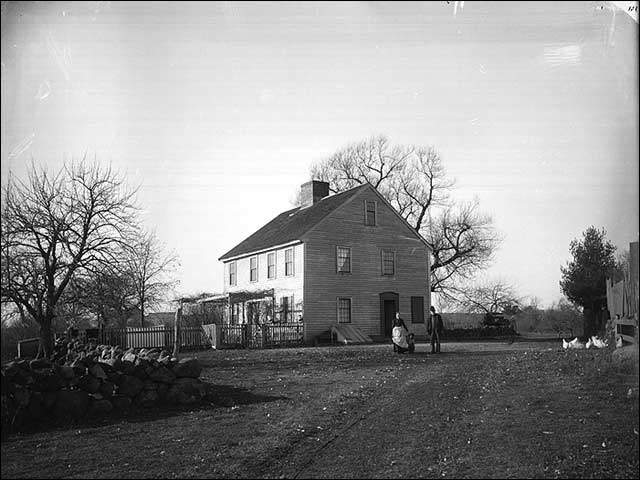
Imagine a hamlet of wooden farms, with small windows, surrounded by the forest from which Indian raids were feared since the start of King William's War. At Samuel Parris's parsonage, his daughter Betty and niece Abigail were seized by inexplicable fits that winter. They tried a witch cake, that rye cake mixed with urine fed to a dog to unmask the witch — an old folk magic recipe in a country that nevertheless claimed to be wholly God's. From this panic the contagion was born. Every creak of a door, every dead beast became the work of a pact signed in the devil's book. We lived in a world where the invisible weighed heavier than bread.
—In 1706, you stood before the church for a public apology. How did you come to that?
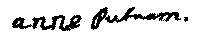
It took time, and much mourning. In 1697, Massachusetts decreed a day of fasting to atone for our errors; doubt was already gnawing at the colony. Grown up and orphaned, I stood in the Meeting House while the pastor read my repentance aloud before the whole assembly. I confessed that I desired to be humbled before God for having been, in 1692, an instrument to accuse several persons of a grave crime whereby their lives were taken away, when they were innocent. A public repentance, as our faith demanded. They say I am the only accuser to have apologized thus. It was not a relief: it was the only act left to me.
It was not a relief: it was the only act left to me.
—You called yourself 'an instrument' of Satan. What did you mean by those words?
By saying instrument, I was not trying to wash myself clean. Among us, man is a vessel: either God fills it with His grace, or evil seizes it and moves it as a hand moves a tool. I sincerely believe I was deceived, seized by a power I did not command, without personal hatred for those I named. But to admit one was the devil's tool is not to deny one served — it is to confess that one let one's hand become the hand of evil. I did not ask to be absolved, only that it be known that Rebecca Nurse and the others were innocent, and that I proclaimed it before God and the living.
—After the trials, your life changed into a completely different ordeal. Tell us about it.
In 1699, both my parents died the same year, and I was left alone at nineteen with nine younger brothers and sisters to raise. Gone were the days of the courts; came those of the spinning wheel and distaff, spinning until night, porridge to prepare before dawn, the little ones to wash and instruct in the catechism. I never took a husband — who would have wanted a girl whose name dragged through the trials? My house, a wooden farm around its great fireplace, became what it should always have been: a place of work and prayer. My days boiled down to keeping alive those whom blood entrusted to me.
Gone were the days of the courts; came those of the spinning wheel and distaff.
—Looking at your whole life, what meaning do you give it?
I will die young, I sense it — the body wears out quickly when the soul carries such a weight. My life holds two images: a child convulsed on the floor of the Meeting House, pointing at innocents; and a woman standing in the same place, fourteen years later, listening to her shame being read. Between the two, nineteen hanged on Gallows Hill and a colony that, in 1711, finally rehabilitated the condemned and compensated their families. If I am remembered, let it not be only as the accuser, but as the one who, alone among her kind, came back to say aloud: they were innocent. The Bible that accused through my mouth at least taught me that word: repentance.
A child pointing at innocents; a woman, in the same place, listening to her shame being read.


This imaginary interview was generated by artificial intelligence from sources documented in Ann Putnam's profile. It dramatises what the figure might have said based on what we know about them, but does not constitute attested historical testimony. For primary sources and factual documentation, refer to the full profile.