Kids interview Ann Putnam
by Charactorium · Ann Putnam (1679 — 1716) · Society · Spirituality · 5 min read

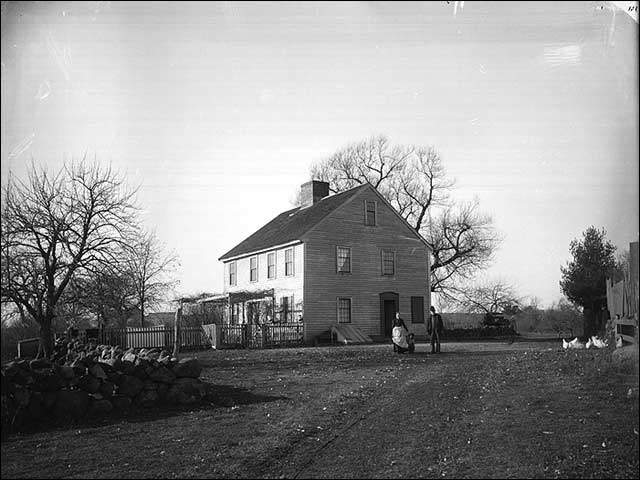
Two twelve-year-old students push open the door of a small wooden house in old Salem. A woman in a white cap waits for them near the fireplace. In a soft voice, she invites them to sit down: she is willing to tell them about the terrible year when she, too, was their age.
—How old were you when it all began, in the courtroom?
You know, my child, I was only twelve years old. Picture a little girl in a freezing room, full of grave men in dark clothes. I was called one of the afflicted — that was the name given to girls who claimed to be tormented by witches. Before the judges, I would suddenly fall to the ground. I would scream that I was being pinched, bitten, as if invisible hands were twisting my arms. No one saw those hands, but everyone believed me. It was in 1692, at the Meeting House in Salem Village. I was so small, and yet my word weighed more than that of grown-ups.
—What was it like when you fell into a fit in front of everyone?
Oh, it was frightening, even for me. My body would stiffen, my limbs would twist. I felt like burning pins were piercing my skin. You see, we girls sewed all day with pins and needles; well, we said the witches stuck invisible ones into us. I would scream that a shape was pressing me to obey. The judges leaned in, distressed. A pastor, Mr. Hale, later wrote that no one could understand our strange movements. Perhaps I didn't understand them either. But the fear, that was real, deep in my belly.
—What was that famous devil's book you kept talking about?
Imagine a big ledger, my child, a book that was never shown to anyone. They said the devil offered it to people to sign their names. Signing meant giving yourself to him forever. We called that a covenant — a pact, but backwards: instead of promising yourself to God, you promised yourself to evil. The specters, I said, pushed my hand toward that book. The ghost of Rebecca Nurse tormented me to put my mark on it. I resisted, I wept. In our Puritan world, refusing to sign meant staying on God's side.
—Did you have other ways of guessing who was a witch?
Yes, and some were very strange. At the very beginning, a neighbor baked a witch cake. They mixed rye flour with the urine of the sick girls, then fed the cake to a dog. They believed the animal would reveal the culprit. Does that seem dirty and bizarre to you? It did to us too, deep down. And then there was spectral evidence: a girl only had to say she saw someone's ghost to accuse them. No visible trace, just my word. The judges eventually banned it, because nothing could be verified.
—Why did you often accuse the same families in the village?
Ah, that is a question I carry heavily. You see, our village had been divided for a long time. Quarrels over land, fences, and especially the parish: in 1672, Salem Village had gotten its own church, and that stirred up jealousies. My family, the Putnams, had its friends and its enemies. Many of the people I accused were exactly the families at odds with mine. I didn't lie on purpose, my child — but the fear of the devil and old grudges mixed in my head without my knowing.
We see evil more quickly in those we dislike.
—Weren't you afraid to accuse an old lady everyone respected?
Rebecca Nurse was seventy-one years old, my child. A pious, gentle woman, esteemed by the whole village. Thirty-nine neighbors even signed a petition to defend her — imagine, thirty-nine! And yet my word, and that of the other afflicted, weighed more than theirs. She was hanged on July 19, 1692, on Gallows Hill. Was I afraid? Yes, with a mixed fear: fear of the specters, and fear of keeping silent. When a child is believed by judges, she feels carried by a current stronger than herself. For a long time, that face haunted me.
—What did it smell like at your farm in the morning?
In the morning, it smelled of smoke and porridge. We got up at dawn for prayer — my father read the Bible aloud, and we had to listen in silence. Then came the chores: relight the fire in the great fireplace, go help milk the cows. Our house was made of wood, with small windows and plank floors. At daybreak, we ate porridge, cornbread or rye bread. To drink, cider or small beer — we were wary of water. You see, the life of a girl like me was made of prayer and work, from dawn to dusk.
—Is it true you raised your brothers and sisters all alone?
Yes, my child. In 1699, both my parents died, within a short time of each other. I was nineteen, and suddenly had nine younger siblings to care for. No more carefree days. I spun wool at the spinning wheel, I sewed, I cooked, I taught catechism to the youngest. A white linen cap on my hair, an apron over my gray dress — modesty demanded we wear no bright colors. I never married. All my youth was spent in that work. But you know, taking care of the little ones soothed my troubled heart a little.
—Why, years later, did you ask for forgiveness in front of everyone?
Because the burden had become too heavy to bear. In 1706, I was an adult, an orphan. I stood before the whole church congregation, while the pastor read my words aloud. I admitted that in 1692, I had been an instrument for accusing people I now believe were innocent, and whose lives had been taken. I said I had been deceived by Satan, without hatred for them. Imagine that little church full of people listening to me in silence. My legs were trembling. I am the only one of the accusers to have asked forgiveness in this way.
One can be an instrument of evil and still have to ask for forgiveness.
—What would you like people to remember about your story?
That children too can do great harm without meaning to, my child. I was twelve, and my word sent innocents to their deaths — nineteen people hanged on Gallows Hill. Remember this well: when everyone is afraid at the same time, fear becomes a storm, and it sweeps away reason. Later, the colony decreed a day of fasting to repent, then rehabilitated several of the condemned. As for me, I carried my guilt until my death at thirty-six. If my story teaches you to doubt before accusing, then it will not have been in vain.
When everyone is afraid at the same time, fear becomes a storm that sweeps away reason.

This imaginary interview was generated by artificial intelligence from sources documented in Ann Putnam's profile. It dramatises what the figure might have said based on what we know about them, but does not constitute attested historical testimony. For primary sources and factual documentation, refer to the full profile.