Imaginary interview with Anna Pavlova
by Charactorium · Anna Pavlova (1881 — 1931) · Literature · 6 min read
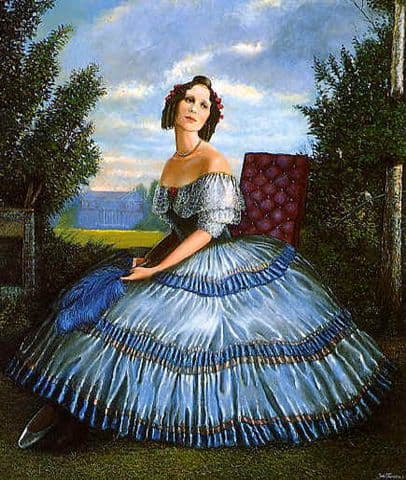
The Hague, a winter evening in 1930. In a hotel room where a leather-banded trunk already awaits, Anna Pavlova receives us between trains, a shawl over her shoulders and her gaze still inhabited by the stage. She speaks softly, but each word seems counted like a step.
—Do you remember the day you entered the Imperial Ballet School?
I was eight years old, and Saint Petersburg in that autumn of 1890 seemed as vast and cold as a deserted palace. I was placed at the barre of the Imperial School, that house under the tsar's watch where the dancers of the Mariinsky were trained. I was thin, ill-built for dance, they said; I was found too fragile, with those too-high arches that would later become my torment. But from the first lesson, I knew. From my eighth year, dance has been my whole life — I have sacrificed everything for it, comfort, fortune, personal happiness. I have never regretted that bargain.
From my eighth year, dance has been my whole life — I have sacrificed everything for it.
—How did you experience your departure from Russia in 1913?
One doesn't really leave a country when one believes they will return. In 1913, I boarded a train as I had done a hundred times, for one more tour, without guessing that I would never see the Mariinsky Theatre where I had been prima ballerina assoluta again. Then came 1917, and the Russia I had known collapsed all at once, with its imperial schools and gilded boxes. I found myself exiled without having chosen it, carrying my entire country in my memory and in my feet. Perhaps that is why I wanted ballet to be universal: when you no longer have a homeland, you build one on every stage.
When you no longer have a homeland, you build one on every stage.
—Tell us about that two-minute solo that followed you everywhere, The Dying Swan.
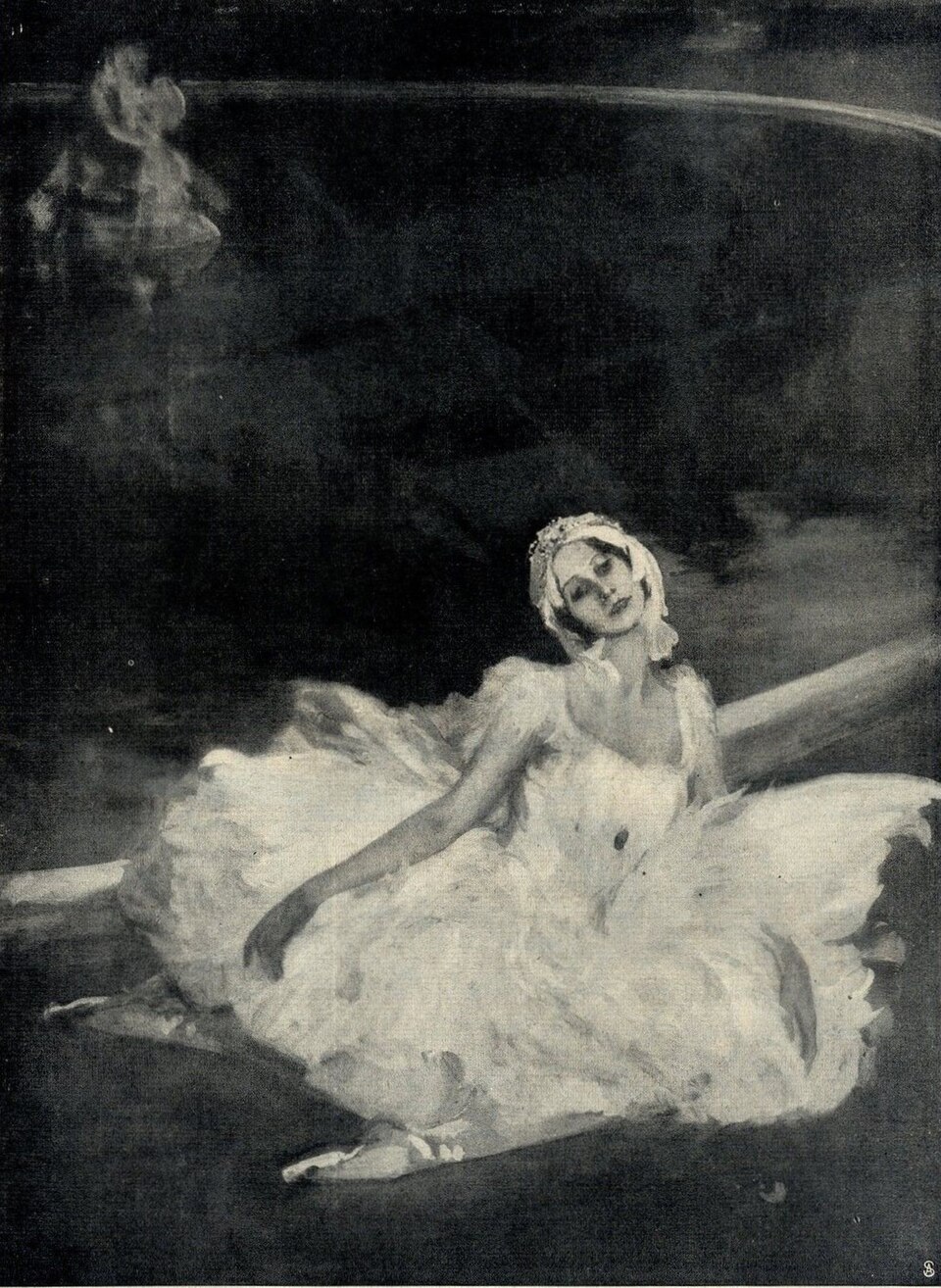
In 1905, Michel Fokine composed a tiny thing for me to the music of Saint-Saëns: two minutes, barely. Not a ballet, almost nothing — a bird that refuses to die and dies anyway. I danced The Dying Swan thousands of times, in sumptuous theaters and under tents, and I believe I never danced it twice the same way. People see fragility, agony; I seek the obstinacy of life, that last quiver of the arms that refuse to surrender. A London poet once wrote that it was not a dance but a poem in motion. I have never done anything longer with something so brief.
A bird that refuses to die and dies anyway.
—Why do you hold so dearly to that white swan costume that you take to every stage?
That tulle tunic, that feathered diadem, that down along the arms — it has become my face in the eyes of the whole world. On the lithographed posters that announce my shows from city to city, I am recognized by that swan costume before my name is even read. It weighs almost nothing and yet contains everything: my years at the Mariinsky, my swans at Hampstead, that idea that beauty is made to take flight. I pack it myself in my trunk with a devotee's care. A costume, for a dancer, is not a disguise; it is a second skin one puts on to say what the body alone cannot say.
A costume, for a dancer, is not a disguise; it is a second skin.
—They say you modified your own slippers. What did you find wrong with them?
Nature had given me arches too high and toes too long — a flaw for someone who must stand on the tips of her toes. Every evening, the pain reminded me of this imbalance. So I asked my cobbler to slip a piece of rigid cardboard under my toes, a small insole that distributed the weight and finally gave me the ease to dance without betraying the effort. I was accused of cheating; I replied that I was not hiding my weakness, I was correcting it. This workshop tinkering eventually changed the making of pointe shoes for those who came after me. Grace, you see, is often built with cardboard and stubbornness.
Grace is often built with cardboard and stubbornness.
—What does an ordinary day in your discipline look like?
It begins before everyone else. I rise early and spend an hour or two at the barre, alone or with my ballet master, even when the tour has exhausted me the night before. This morning exercise is as necessary to me as bread — I believe it commands the rest of the day. In the afternoon, I rehearse with my company, correcting a shoulder, a gaze, a poorly opened hand, with a rigor that is sometimes called cruel. And I eat little: broths, vegetables, a bit of chicken, nothing heavy before appearing. A dancer is an instrument that is tuned each morning, otherwise it sounds false come evening.
A dancer is an instrument that is tuned each morning.
—What drove you to travel the world with your own company?
Starting in 1913, I took my troupe where ballet had never set foot. In India, in Australia, in Latin America, I sometimes performed in halls where the audience was discovering for the first time a woman dancing on the tips of her toes. I already said, before the war, that the art of ballet must be universal — that every child in the world could see a ballet and understand what beauty means. My life became intertwined with those endless tours, months on end in a sleeper car, my trunk my only home. It was not ambition. It was a mission: to sow everywhere a seed that others would make grow.
To sow everywhere a seed that others would make grow.
—Do you ever think of those who saw you dance in those distant cities?
Constantly. There are faces, in the darkness of the hall, of whom I sense they have just been transformed. I was told that in Lima, a little girl, having seen me dance, decided that very evening to devote her life to dance. I will never know her name or what became of her, and yet that is perhaps my truest work — far more than a role or an ovation. A poster peels off, a tour is forgotten, but a vocation kindled in a child's heart lasts. I dance for two minutes; sometimes that is enough to decide an entire existence that is not my own.
A poster peels off, a tour is forgotten, but a vocation kindled in a child's heart lasts.
—They say you raise swans at home. What do they bring you?
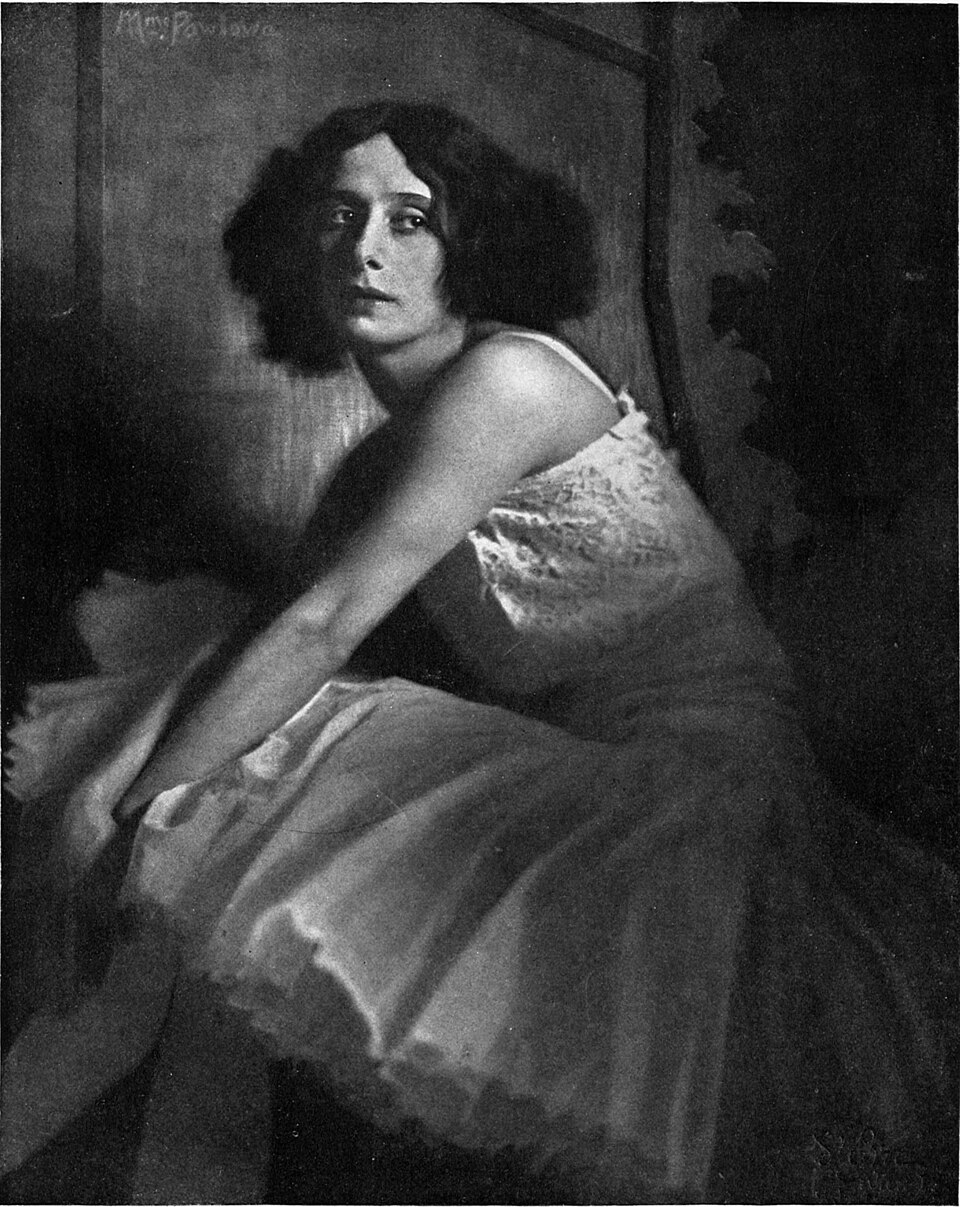
At Ivy House, my home in Hampstead, there is a pond, and on that pond, swans. I watch them for hours. One of them, whom I call Jack, lets me approach and rests his neck on my arm. People think the swan is graceful by nature; it is false, it is powerful, a bit brutal, and its grace comes from an effort it conceals — exactly like ours. By observing them, I learned the carriage of the head, the slowness of the neck, that way of holding oneself that gives the illusion that nothing costs. My house by the water is the only place in the world where I truly stop, between trains, to relearn how to be still.
The swan is powerful, a bit brutal, and its grace comes from an effort it conceals.
—What does this demand to never stop dancing mean to you?
My husband and impresario Victor Dandré sometimes urges me to take care of myself, to refuse a city, one more season. I cannot. I told him one day that if I stopped dancing, I would cease to live — and it was not a figure of speech, it was a literal fear. My health is declining, I feel it during my tours of 1929, but slowing down seems to me a small death before the big one. So I get back on the train, I reopen my trunk, I close my swan tunic again. As long as my feet respond, I dance; the day they fall silent, nothing will remain of me but an empty costume in a wooden trunk.
If I stop dancing, I will cease to live.
—If you imagined that people would still speak of you in a century, what would you want them to remember?
What a strange thought. If I were to be read in a hundred years, I would like them not to remember the technique — the pointe work, the turns, all that critics rave about. Fokine said of me that I could embody an emotion with such sincerity that the audience forgot the technique and saw a soul. Let them remember that: not a skillful dancer, but two minutes of The Dying Swan that made strangers weep on six continents. The rest — the imperial titles, the ovations, my trunk worn by the rails — will fade. A true emotion, offered once to a child in Lima or Bombay, that is all a dancer can hope to leave behind.
Not a skillful dancer, but two minutes that made strangers weep on six continents.
This imaginary interview was generated by artificial intelligence from sources documented in Anna Pavlova's profile. It dramatises what the figure might have said based on what we know about them, but does not constitute attested historical testimony. For primary sources and factual documentation, refer to the full profile.