Imaginary dialogue between Sylvia Plath and Anne Sexton
by Charactorium · Anne Sexton (1928 — 1974) · Literature · 6 min read
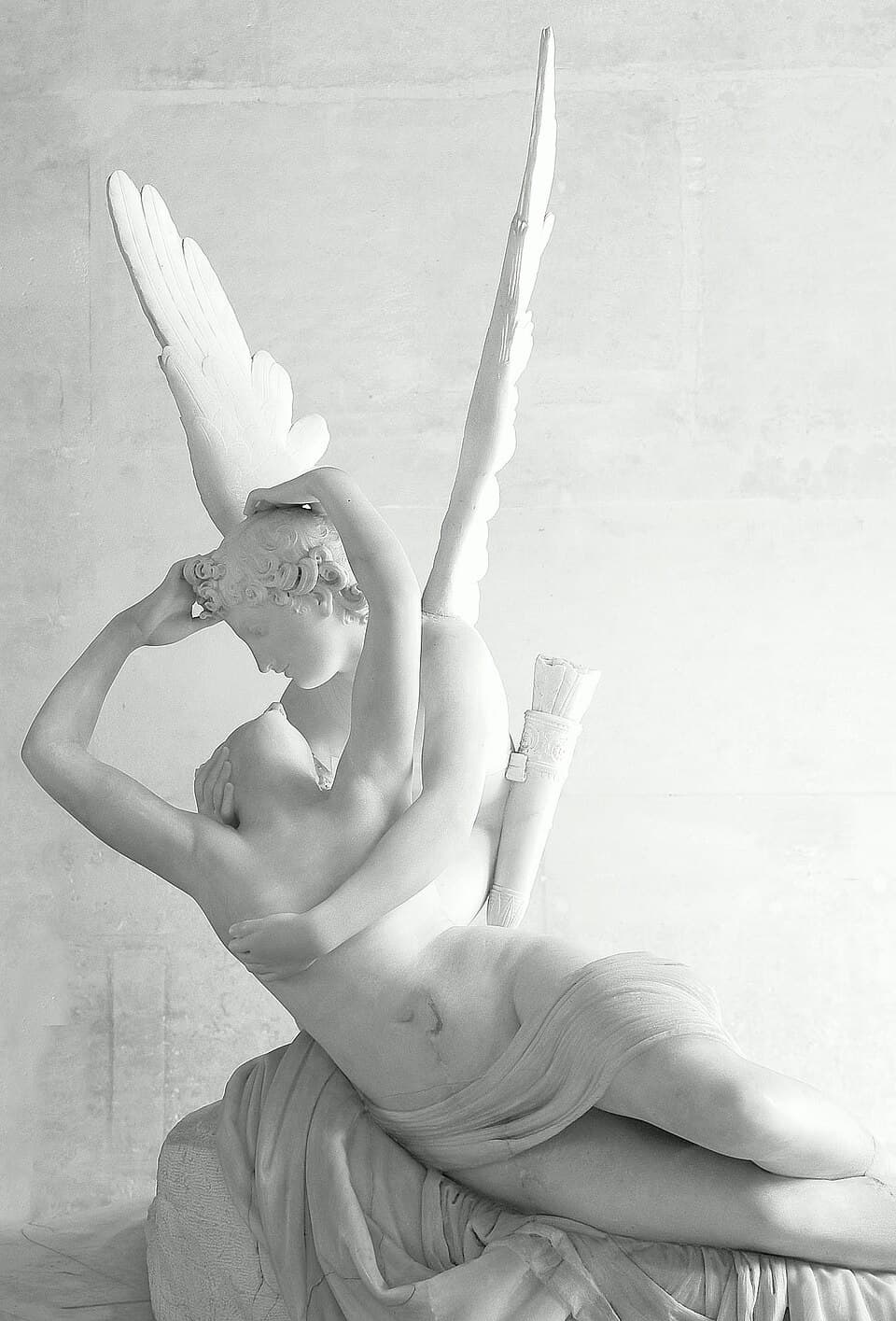
It is in a cozy Boston living room, this fall of 1962, that Sylvia Plath, visiting from England, meets Anne Sexton. On the coffee table, an open bottle, an already full ashtray, and the fresh proofs of All My Pretty Ones. The two women have known each other since Robert Lowell's seminar four years earlier, where they immediately recognized each other as sisters in dark poetry. Plath has not come as a journalist: she comes to sound out her friend, the one who writes death as she herself does.
—Anne, do you remember our Tuesdays at the Ritz after Lowell's seminar? We drank too much, Starbuck laughed. What remains of that for you?
Sylvia, those Tuesdays saved me as much as poetry did. We would leave Lowell's class exhausted, wrung out by his critiques, and we would park my car haphazardly in front of the Ritz to drink three martinis before dinner. Starbuck paid, we recited our verses in low voices between tables of respectable people. That's where I understood I wasn't alone in writing from the bottom of the well. You could immediately see where a line lied, where it trembled for real. We talked about death the way others talk about the rain, without lowering our voices. I never found that freedom with anyone else. The seminar taught me the craft; you taught me that I wasn't crazy for wanting to say everything.
We talked about death the way others talk about the rain, without lowering our voices.
—You started so late, at twenty-eight. I heard it was your doctor who got you writing. Is that true, Anne?
Absolutely true, and I'm not ashamed of it. Before 1957, I was just a suburban housewife who had never read a poem seriously. After my depression and first attempt, my psychiatrist, Dr. Orne, told me to write — to hold on, not to die. I watched a TV show about the sonnet form, and I tried. The words came like a hemorrhage you can't stop. Poetry wasn't a literary ambition for me, Sylvia; it was a prescription. The doctor wanted to keep me alive and handed me, without knowing it, the only tool that could contain me. I owe my vocation to my illness; it's a debt I can never repay nor fully forgive.
Poetry wasn't a literary ambition for me; it was a prescription.
—You record your therapy sessions, I'm told. Why keep on tape what most would want to forget as quickly as possible?
Because I don't remember anything, Sylvia. That's the worst of my illness: whole hours vanish, I leave Dr. Orne's office and all that's left is a hole. The tape recorder runs so I can listen to myself again, find the woman who speaks and whom I've already forgotten by the time I close the door. Often, listening back to the tape, I recognize a phrase, an image, and I steal it for a poem. My therapy and my writing feed each other until they become indistinguishable. People find it morbid, keeping your own sick voice in an archive. For me, it's my only continuity: without those reels, I would be a stranger to myself every morning. You, who have written since childhood, can't know what it's like to have to piece yourself together every day like a puzzle.
—How do you work, Anne? I imagine you at your typewriter at night. Does the poem come all at once, or do you wrench it out?
I wrench it out, always, line by line. People think confessional poetry gushes forth raw, like a scream — that's false. I type at the machine all afternoon, sometimes until night, and I rework the same poem twenty, thirty times. A stanza can cost me a week. I fill notebooks with dreams, snippets, overheard phrases, and then I fish out the raw material. The cigarette burns in the ashtray, the coffee grows cold, and I file each syllable like a relentless goldsmith. The naturalness people attribute to me is the fruit of relentless labor. The emotions are real, but the form is calculated to the millimeter — otherwise it would be just a diary, not a poem. You, who polish your verses to the bone, know better than anyone that sincerity never exempts you from craft.
The naturalness people attribute to me is the fruit of relentless labor.
—Your nights are bad, I know. What do you do with those hours when sleep refuses you, when the whole house sleeps?
My nights are my workshop and my hell, Sylvia. Insomnia keeps me awake when Kayo and the girls are asleep, and I go downstairs to write or reread my notebooks by the light of a single lamp. It's the hour when anxiety loosens its tongue, when the images I dare not look at in broad daylight finally surface. I jot down my dreams before they flee, because that's where my best verses sleep. But it's also the most dangerous hour, the one when the urge to end it all comes prowling back, almost tender. I write in part not to give in — every poem finished before dawn is a night won over something else. Morning finds me emptied, my head heavy with medication, unable to get up for breakfast. The world thinks I write by day; in truth, all my poems are born from insomnia.
Every poem finished before dawn is a night won over something else.
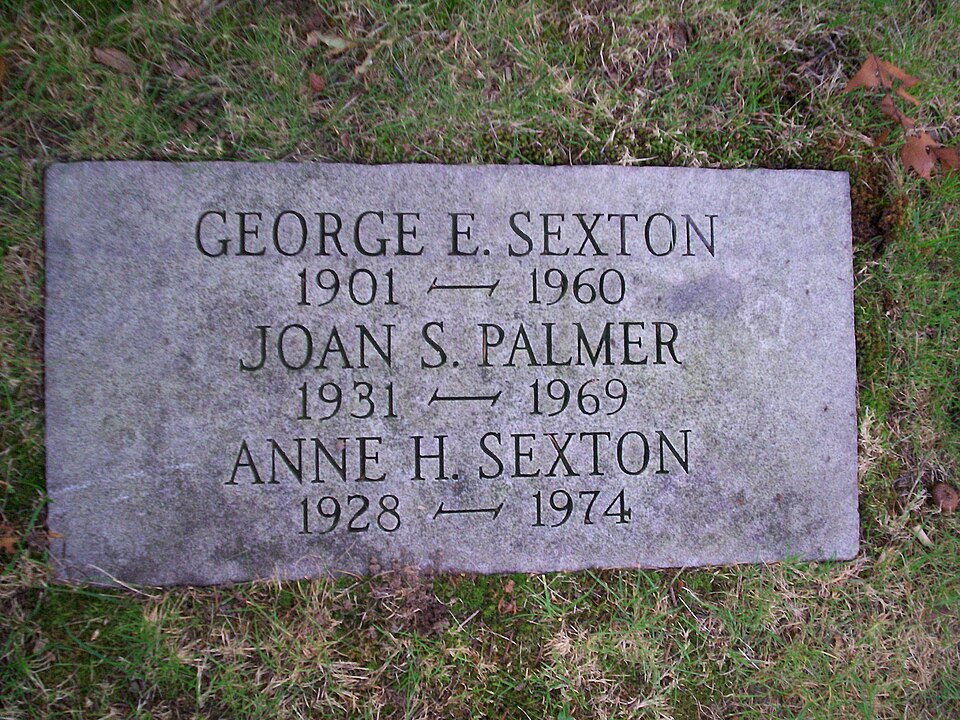
—Your first book was called To Bedlam and Part Way Back. It takes courage to sign your own asylums. Were you afraid of scandal, Anne?
I feared silence far more than scandal. When To Bedlam came out in 1960, putting my hospitalizations on the cover, naming the asylum, madness, electroshock — that wasn't done, especially for a woman, especially for a suburban mother. I was accused of washing my dirty laundry in public. But what else was I supposed to write? I didn't have war, grand travels, or erudition. I had McLean, tranquilizers, the pit of depression. That was my only material, and I seized it with both hands. The title itself says I came back from madness only halfway — never entirely. Writing it cost me, but staying silent would have killed me more surely. A woman who says out loud what all women keep quiet: that's the real scandal, and I claim it.
—In All My Pretty Ones, there's that poem, Housewife — the woman who marries her house. Where does that quiet rage come from, Anne?
It comes from my own kitchen, Sylvia. I was that woman who marries her house, whose skin becomes pink walls, who has a heart, a liver, and intestines like the home itself. Suburbia is a pretty comfortable coffin: the mowed lawn, the husband coming home, the girls at school, and in the middle a woman suffocating without daring to name it. That unease, so many of us carry it in silence, draped in our impeccable suits. I wrote it because I had no other way out. People applaud the perfect housewife, but no one asks what she broods over while scrubbing the sink. My poetry gives voice to that suburban prison the American dream refuses to see. The respectability of my dresses hides exactly what my poems dig up.
Suburbia is a pretty comfortable coffin.
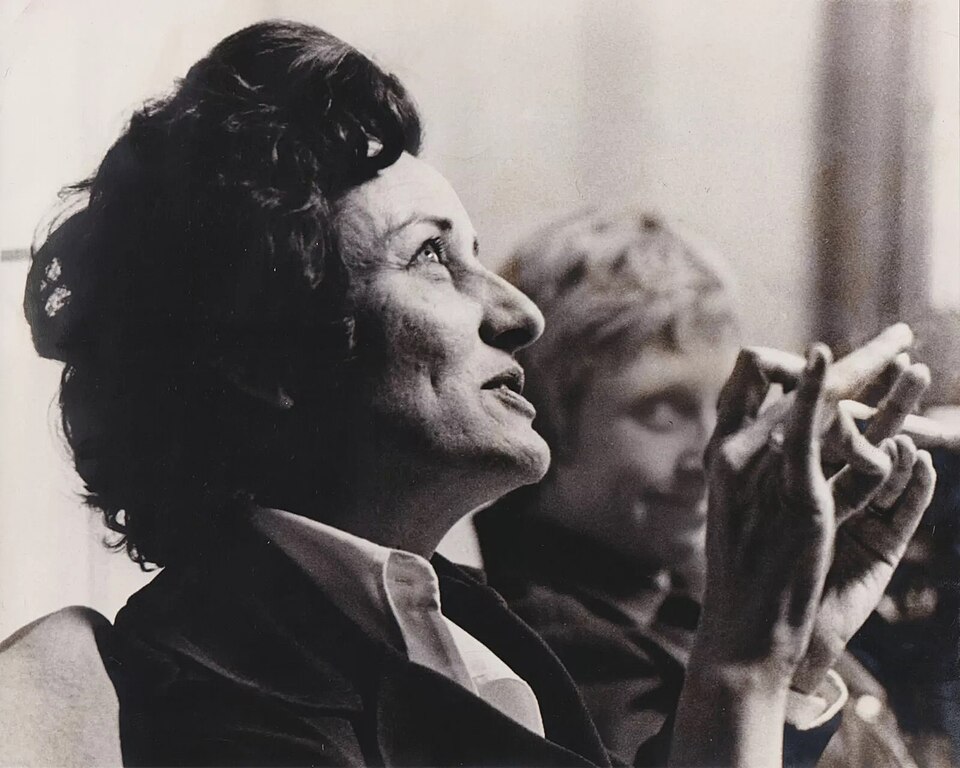
—You once told me you dreamed of taking poetry out of lecture halls. What do you want, Anne — to be read by those who never read verse?
Exactly that, Sylvia. I tolerate less and less the idea that poetry is reserved for academics who dissect it among initiates. I want a housewife to open me and recognize herself, an eighteen-year-old girl to hear me without a dictionary. I dream of poetry read aloud, listened to almost like a song, with music behind it perhaps. I think about it more and more: going on stage, making reading a performance, taking the poem out of the dusty book. Performance doesn't betray the text; it gives back its ancient breath, that of the bard and storyteller. Scholars will reproach me, they'll say I'm vulgarizing. Too bad. A poem that reaches only ten professors is a half-dead poem.
A poem that reaches only ten professors is a half-dead poem.
—You're known to be fascinated by Grimm's fairy tales. What does a poetess of madness seek in witches and princesses?
I seek the cruelty hidden under the sugar, Sylvia. The Grimm tales read to children are full of mutilations, dead mothers, ovens, and forests — the truth of our lives, barely disguised. Someday I want to rewrite them in my own way, turn them inside out to show their black lining and that biting irony the varnish removes. Snow White poisoned, the stepmother, the girl forced into marriage: they are our women's stories, everything is already there. By taking them up, I could speak about us without going through my patient's couch alone. The tale is a convenient mask: it says the unbearable while pretending to amuse. That's the kind of book that could open a wide audience to me while remaining faithful to my obsessions.
—We both write about death, Anne, each at her own window. Do you think that brings us closer, or will it end up losing us?
Both, Sylvia, and you know it as well as I do. What we share — that attraction to the void, that almost loving taste for dying — has bonded us like nothing else could. No one, not even Kayo, understands what you understand with a single glance. But I'm not fooled: writing about death endlessly also tames it, makes it familiar, keeps it within reach. We play with a fire that one day will not forgive. Yet I choose to believe that the poem keeps us on this side, that it is the rope we hold onto. As long as we write, we remain. Just promise to keep writing to me, wherever you are in England — I need to know you are at your window when I am at mine.
As long as we write, we remain.
This imaginary interview was generated by artificial intelligence from sources documented in Anne Sexton's profile. It dramatises what the figure might have said based on what we know about them, but does not constitute attested historical testimony. For primary sources and factual documentation, refer to the full profile.