Imaginary interview with Anne Sexton
by Charactorium · Anne Sexton (1928 — 1974) · Literature · 6 min read
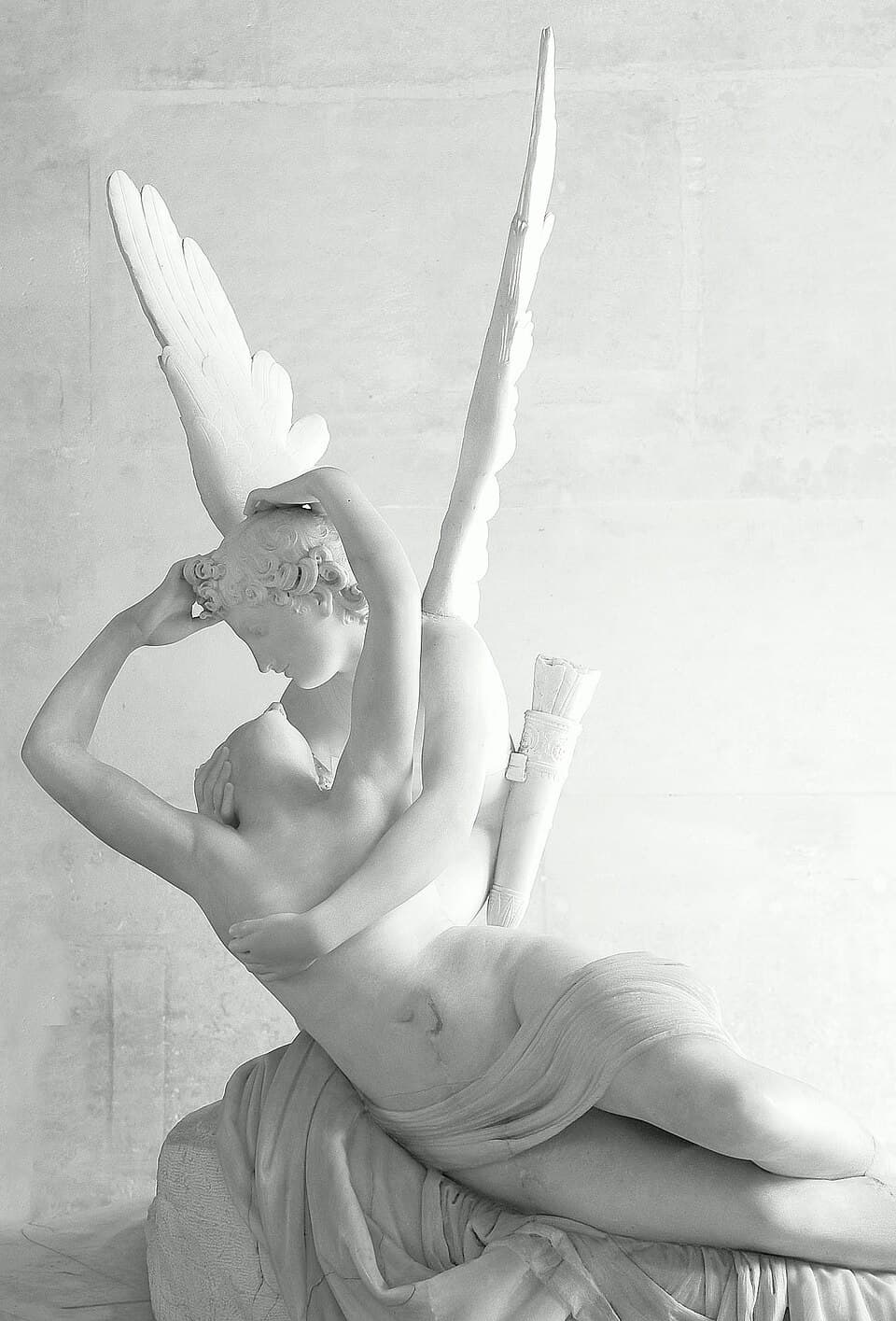
Weston, Massachusetts, an afternoon in 1974. Cigarette smoke rises above the typewriter, in a suburban house where the too-green garden clashes with the blackened sheets of revisions. Anne Sexton, a glass within reach, agrees to reflect on how a housewife with no degree became one of the most troubling voices in American poetry.
—How does a woman with no literary training come to write poems at twenty-eight?
It wasn't literature that found me, it was illness. In 1956, after the birth of my second daughter, something broke — they called it postpartum depression, a polite word for not wanting to live anymore. There was the first attempt, then Dr. Martin Orne, my psychiatrist in Boston. One day, he suggested I write, not to become a poet, but to survive the afternoon. I had always believed poems were for educated people, especially men. I sat down at my typewriter and discovered my nightmares could fit into verses. Four years later, To Bedlam and Part Way Back was published. Suburbia had given birth to a witch.
It wasn't literature that found me, it was illness.
—What did this medical order to put the unspeakable into words mean to you?
They called it writing therapy, as if it were a bandage, but it was a blade. Each poem forced me to face what the good society of Newton had taught me to silence: madness, shame, the hospital. Dr. Orne kept recordings of our sessions — hundreds of hours where my voice groped for truth. Writing extended that search, but without the safety net of the couch. The difference is that a poem doesn't keep medical confidentiality; it exposes itself, printed, offered to strangers. I turned a prescription into a vocation, and I'm never sure I got the better end of the deal. Healing and creating don't always go hand in hand.
—Do you remember meeting Sylvia Plath?
1958, Robert Lowell's seminar at Boston University. I walked in trembling, convinced they would expose the fraud of a housewife. There was this intense young woman, Sylvia Plath, and the poet George Starbuck. After class, the three of us would drive to the Ritz-Carlton, park shamelessly in a no-parking zone, and drink martinis while talking about death with the appetite of starving people. Sylvia and I shared the same abysses, and oddly it made us joyful. We almost competed: who had come closer to the end, who could best turn it into a poem. We had no idea those drunken conversations would become legend.
We drank martinis while talking about death with the appetite of starving people.
—How did you experience Sylvia Plath's death in 1963?
February 1963, in London. The news hit me like a door slamming in an empty house. We had talked so much about that temptation, she and I, that her death seemed both monstrous and familiar — almost a betrayal, as if she had dared first. We had walked the same walls, those of McLean Institute, the hospital where they put women suburbia can no longer contain. I felt jealousy, yes, that shameful thought: she had accomplished what I talked about endlessly. Then I wrote, because it was the only way I knew to stay among the living a little longer.
Her death seemed both monstrous and familiar.
—What defines, in your view, this poetry they called confessional?
They called it confessional poetry, as if we were in a confessional, but we were rather on an autopsy table, opening ourselves up. The principle is simple and scandalous: take your own intimate life, the ugliest, most shameful parts, and make them the stuff of poetry. In the evening, in my notebooks, I jotted down my dreams, my rages, the phrases heard at the psychiatrist's. In the afternoon, at the typewriter, I revised each line twenty times, a cigarette between my fingers. In Her Kind, I dared to write: 'I have gone out, a possessed witch, / haunting the black air, braver at night.' That witch was me, finally fully spoken.
We were on an autopsy table, opening ourselves up.
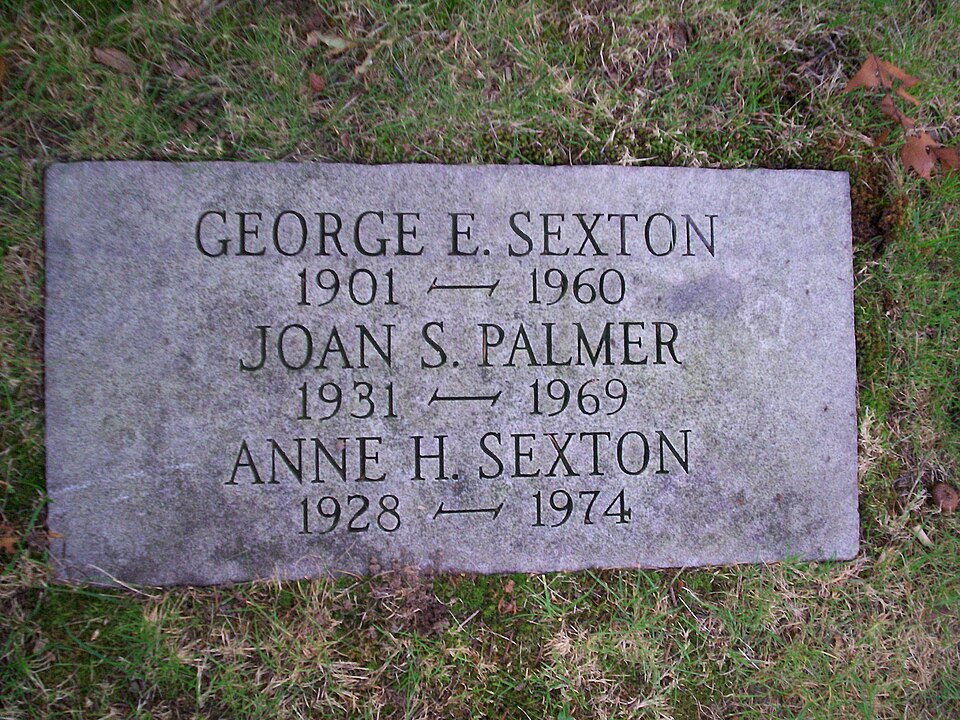
—Suicide runs through your work with rare frankness. Why refuse to veil it?
Because veiling it would be lying, and lying is the poet's only sin. In Wanting to Die, I tried to say what no one wants to hear: 'Since you ask, most days I cannot remember. / I walk in my clothing, unmarked by that voyage.' They accuse me of making death seductive; I answer that I simply name it as I carry it. Live or Die, my collection from 1966, is organized like a diary, a constant swing between the rope and the desire to stay. Receiving the Pulitzer Prize in 1967 for those poems was dizzying: America officially rewarded a woman who wrote about wanting to die. I never knew if it was an honor or a misunderstanding.
—What does the typewriter represent concretely for you?
My typewriter is the most liberating tool I know, more than a lady's pen. The keys make a machine-gun sound that covers the heavy silence of the house. The afternoon is my true kingdom: the girls at school, the dishes abandoned, and me revising, starting over, piling up versions of the same poem until the line stops lying. I don't believe in sudden inspiration; I believe in craft, in stubborn revision. A poem, for me, is not a cry thrown onto the page, it's a cry reworked a hundred times until it takes the exact shape of truth. Suburbia thinks I'm doing housework; in reality, I'm forging.
—With Transformations, you take on the Grimm fairy tales. Where did that idea come from?
One day, I reread the Grimm brothers' fairy tales that I read to my daughters, and I saw what childhood masks: jealous mothers, sold daughters, princesses whose only power is to wait. I wanted to rewrite them in verse, with a grating irony. Transformations, in 1971, brings together sixteen of those tales turned inside out, where Snow White and company finally speak the raw language of our suburban neuroses. To my great surprise, it became my most read book — because you can enter it without a university degree. I had reached an audience that my personal abysses frightened. Twisting a fairy tale is like slipping poison into a candy that everyone accepts.
Twisting a fairy tale is like slipping poison into a candy.
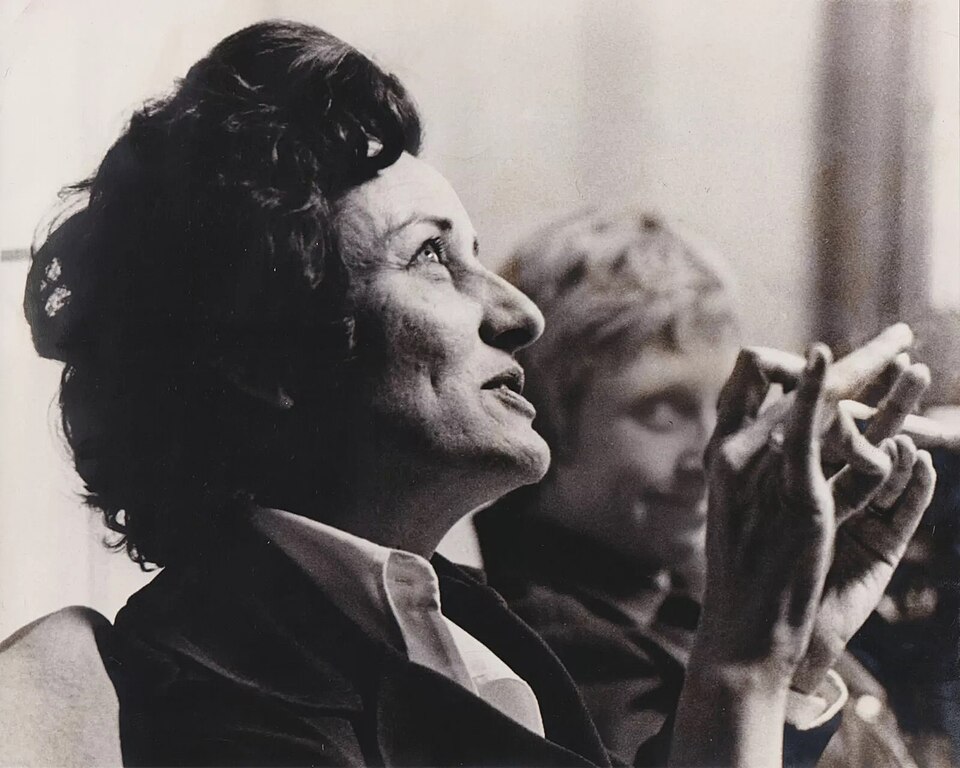
—You also started a rock band. What were you seeking by going on stage?
I formed a band, Anne Sexton and Her Kind, where I recited my poems backed by musicians. They called me crazy, once again. But I was suffocating in the carpeted rooms where poetry is whispered among initiates, like a secret to be ashamed of. I wanted it to come out, to take on body and rhythm, so a twenty-year-old could receive it in their gut like a song. The band's name came from my poem Her Kind: that misunderstood witch was me, and also all those who felt like strangers in the clean decor of the American dream. Reciting my verses in the noise was a refusal to let poetry remain a museum piece.
—Your poems are born in the heart of suburbia. How does this setting nourish your writing?
Suburbia, those single-family homes with mowed lawns and gleaming kitchens, is the official decor of post-war happiness. They wanted me to be a model wife in Weston, smiling, busy, fulfilled. But those pink walls, as I write in Housewife, have a heart, a mouth, intestines: some women end up marrying their house, swallowed by it. Betty Friedan gave it a name in 1963 with The Feminine Mystique — that malaise without visible cause that ate away at housewives. My poem said the same pain, but from the inside, with blood. Contrast is my fuel: the cleaner the decor, the more the hidden distress becomes screaming.
Some women end up marrying their house, swallowed by it.
—Would you say your poetry is linked to the women's struggle of your time?
I never wrote a manifesto, yet my poems marched to the same beat as the women's liberation movement rising in the sixties. When I published Love Poems in 1969, speaking of the female body, desire, menstruation, flesh, was considered indecent; a woman was not forgiven such frankness. But I was only saying aloud what thousands of wives from Newton to Weston swallowed in silence. I think my contribution was not political but carnal: showing that a woman could make her intimate life, deemed too small, too domestic, into material as grave as war or death. That was my way of claiming an existence.
This imaginary interview was generated by artificial intelligence from sources documented in Anne Sexton's profile. It dramatises what the figure might have said based on what we know about them, but does not constitute attested historical testimony. For primary sources and factual documentation, refer to the full profile.