Imaginary dialogue between Pierre Bourdieu and Annie Ernaux
by Charactorium · Annie Ernaux (1940 — ?) · Literature · 5 min read
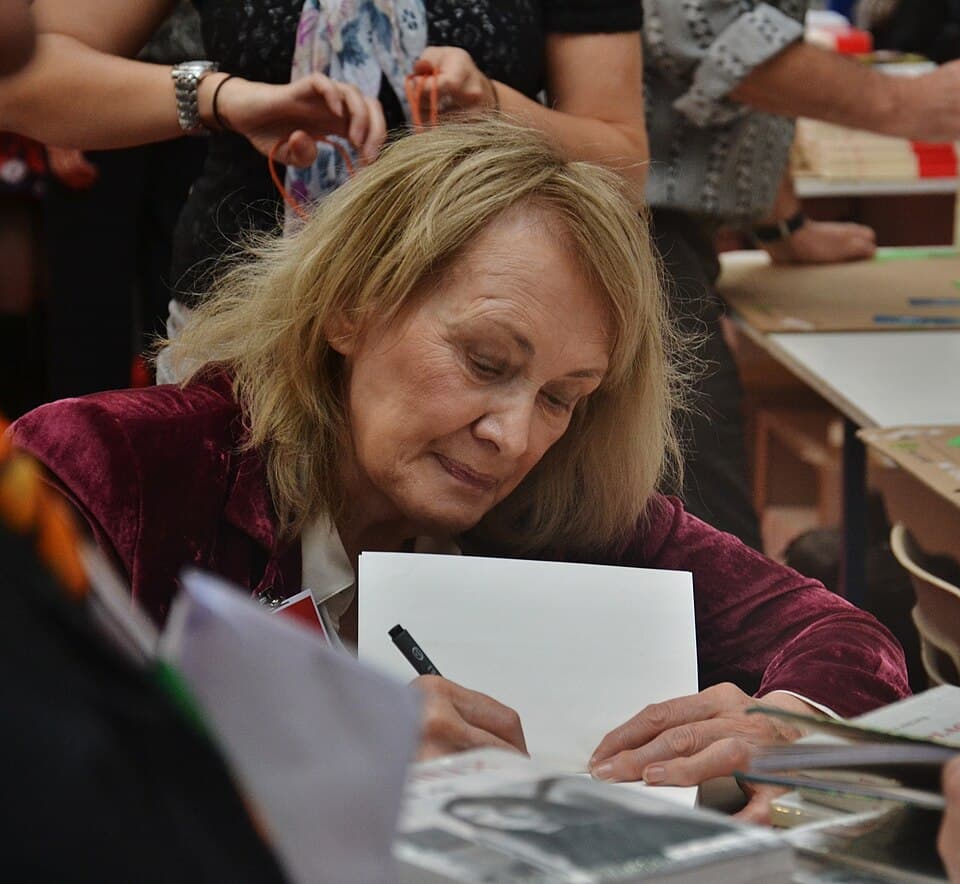
It is in the house in Cergy-Pontoise that Pierre Bourdieu meets Annie Ernaux in the autumn of 2001. On the kitchen table lie marked-up notebooks and a stack of old photographs. They have read and respected each other for years—he, the sociologist from Béarn who became a professor at the Collège de France; she, the shopkeeper's daughter from Yvetot who became a professor of literature. Bourdieu has come as a class defector to speak to a class defector, convinced that they have carved the same wound with different tools.
—Annie, I'm sitting in your kitchen in Cergy, but it's the counter of the café-grocery in Yvetot that I first want to ask about. What does a child learn behind that counter?
Behind that counter, Pierre, you first learn to see. My parents ran a café-grocery in Yvetot, and all day long the workers filed in, the women who asked to be served 'on the tab' until payday. I heard their language, their silences, the fatigue in their backs. And in the evening, at school, I was taught another language, the one that judged the first. I grew up on the border, a translator despite myself between two worlds that didn't speak to each other. That counter wasn't a backdrop: it was my first observation post, long before I knew it could become books.
—So you knew very early on that your family wasn't like others. That gap—was it shame for you?
You put a scholarly word on it: distinction. I lived it as shame. In Shame I recounted that scene of a Sunday when my father, in a fit of violence, nearly killed my mother—and the child's shock at suddenly understanding the gulf separating her from 'proper' families. Later, in classes, at the agrégation, I was ashamed of my parents, then ashamed of having been ashamed. My father died two months before I passed the exam: he didn't see his daughter definitively cross to the other side. That gap, that class betrayal, is the burning core of everything I write.
I was ashamed of my parents, then ashamed of having been ashamed.
—They say it took you nearly ten years to write A Woman's Story. What resisted so strongly under your pen?
Ten years, yes. After Cleaned Out, I wanted to write my father as a novel character, with beautiful sentences, emotion. With each attempt, I felt I was betraying him a second time—that fine style was a bourgeois way of looking down on him. I threw it all away. I had to understand that, to do justice to a dominated life, I had to renounce literature as it had been taught to me. The day I wrote the first flat sentence, without metaphor, without irony, I knew I had finally found the book. That renunciation was the greatest act of love in my life as a writer.
—This 'flat writing' you claim—I've looked for it in my sociological prose. But you put the 'I' in it. Why?
Because the impersonal 'I' doesn't exist, Pierre. When you write about inheritors or class defectors, you also speak about yourself, but science forces you to erase yourself. I don't have that right: I must start from my body, my memory, my precise shame, to reach something collective. I call it autosociobiography: my life is only interesting because it is traversed by History, by my class, by my condition as a woman. The 'I' I use is not a diary; it's a transpersonal 'I,' a place that others can come to occupy. It's my way of doing sociology: by embodying it to the bone.
—In A Woman's Story, your father dies just before your agrégation. You who have read me, how do you write a dominated man without betraying him one last time?
That's the question that paralyzed me for ten years. My father had left the land for the factory, then the factory for his shop; all his life he was afraid of not being in his place, of speaking badly, of displeasing those more educated than him. To betray him would have been to pity him, or conversely to idealize him as a noble man of the people. I chose to note his gestures, his words, his modest prides, without comment, as if drawing up a report. The distance I took is not coldness: it's the only tenderness possible when you yourself have crossed to the other side. Writing his place was acknowledging that I had left mine.
it's the only tenderness possible when you yourself have crossed to the other side.
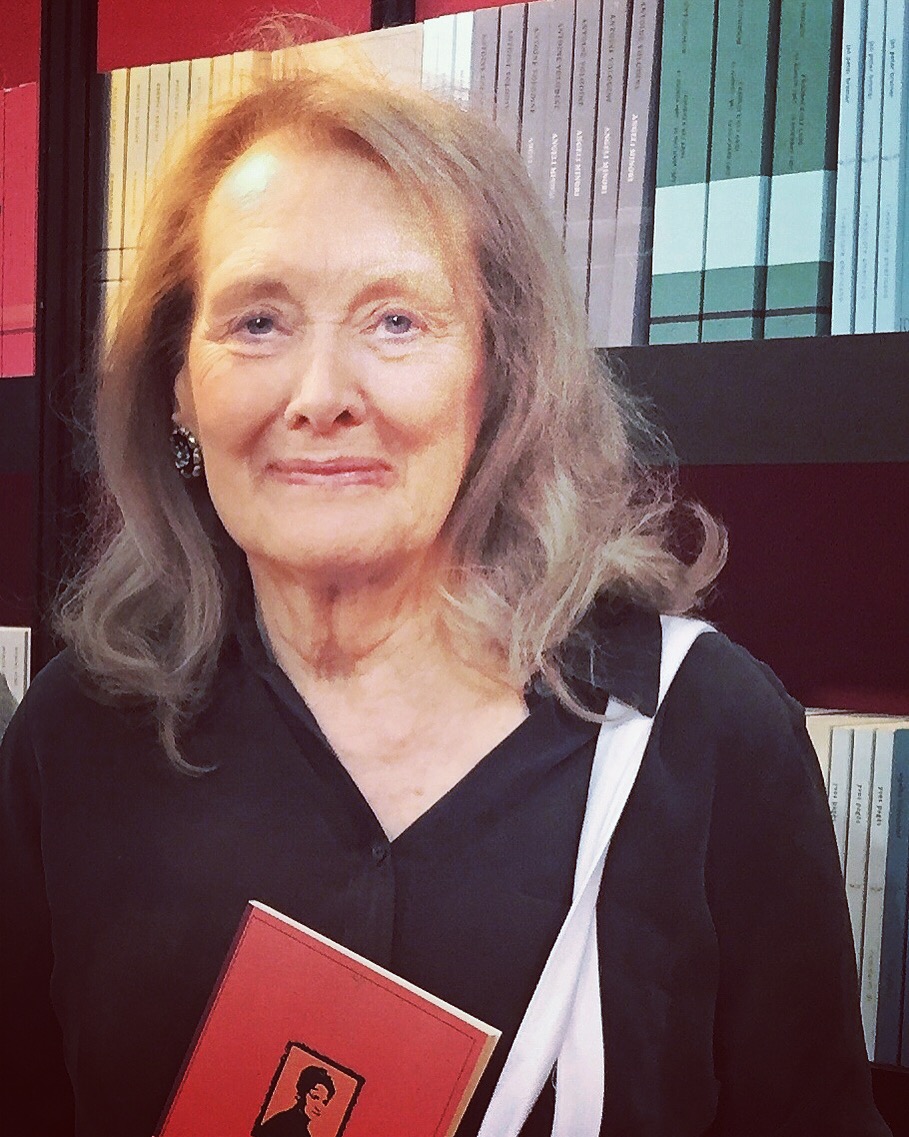
—And your mother, in A Woman's Story, pushes you toward books—toward the education that would separate you from her. What paradox did you carry there?
The paradox of love that separates, Pierre. My mother believed with all her strength that school would save her daughter from the factory and dependence; she deprived herself to buy me books, she was proud of my report cards. But every book I read took me away from her, from her language, from her ways that I was taught to find vulgar. She built with her own hands the class defector who would end up ashamed of her. A Woman's Story is my debt to that woman who wanted for me a life she could not share. When she died in Pontoise, struck by the disease of memory, I understood that I wrote so as not to let her disappear entirely.
—You have just published Happening, your illegal abortion in 1963. Why did you wait nearly forty years to write that body?
Because I had to become able to look it in the face, without shame and without pathos. In 1963, abortion was a crime; I found myself alone, a student, looking for a back-alley abortionist in back kitchens, abandoned by medicine and by the law. I lived in my body what thousands of women lived in silence. Writing it today is not confessing; it's making public an event that society wanted to keep buried in private shame. The Neuwirth law, the Veil law came after me. I wanted to say that before them, there were women's bodies, mine among others, abandoned to clandestinity.
—In Masculine Domination, I tried to think about what women endure. You write it from the inside. What will my concept never say?
Your concept will say the structure, Pierre—and better than I. But it will never say the sweat, the fear in the belly, the precise shame of an eighteen-year-old girl who dares not say no. I didn't first think domination: I felt it in my flesh, in men's gazes, in that desire to be chosen that made me accept the unacceptable. Sociology names; literature brings back to life. When I write a scene, the reader doesn't learn that domination exists: they undergo it with me, at the same moment. That, I think, is where our two trades touch without merging.
Sociology names; literature brings back to life.
—On your table, photographs and notebooks. You mentioned a future book that would blend your memory with that of an entire era. Where do you stand?
It's my big project, the one that frightens me most. I want to write no longer 'I' but 'she,' or 'we'—to capture a woman's life from the war to today, but through what was common to an entire generation: songs, slogans, objects, television images. Each chapter would start from a photograph of me, and around it the memory of an entire France would rise. In Exteriors, I had begun to note the outside world, the RER commuters, the shopping centers of Cergy. Now I'm looking for the form that would dissolve my singular life into the flow of the years. If I ever succeed, it will be my most impersonal and truest book.
—We both come from far away—you from Yvetot, me from Béarn. In the end, what have we made of that class defector within us: a science, a body of work, or a revenge?
Not a revenge, Pierre—revenge would still be a way of proving them right. What we have made of it, I believe, is fidelity. You built a science to understand the machine that crushes your people; I made books so that my father's life, my mother's life, the lives of women like me would not be considered nothing. We turned the weapon of school against school, knowledge against the contempt we were taught to feel for our own. I don't write to triumph at having crossed to the other side; I write to bear witness to where I come from. Deep down, you and I have never really left the counter and the farm.
We turned the weapon of school against school.
This imaginary interview was generated by artificial intelligence from sources documented in Annie Ernaux's profile. It dramatises what the figure might have said based on what we know about them, but does not constitute attested historical testimony. For primary sources and factual documentation, refer to the full profile.