Imaginary dialogue between Frank Butler and Annie Oakley
by Charactorium · Annie Oakley (1860 — 1926) · Performing Arts · Sports · Society · 6 min read

It is under the veranda of their home in Ohio, on an autumn afternoon in 1925, that Frank Butler meets the woman he simply calls Annie. A freshly oiled rifle rests on the table, next to an old impresario's notebook blackened with tour dates. They have been husband and wife for nearly half a century, and Frank, who saw her beat the best marksmen and move crowds, comes that day not as an agent, but as the closest witness, determined to make Little Sure Shot reveal the woman behind the legend.
—Annie, remember Cincinnati? You were fifteen and I had bet that no local guy could beat me. What do you remember from that day?
You who were facing me, Frank, you know better than anyone that my hands didn't tremble. I came from the Ohio woods, a kid who hunted rabbits to pay off my mother's mortgage, and suddenly I was pitted against a confident professional marksman. We aimed target after target, elbow to elbow, and I beat you by a single point. I didn't feel triumph, rather the seriousness of a job well done. What I don't forget is your look after the last shot: you weren't humiliated, you were curious. A man who loses and, instead of sulking, comes to shake your hand, that's already a real man. That one-point margin decided two lives at once.
That one-point margin decided two lives at once.
—After our wedding, I put down my gun to carry yours, manage contracts, handle the posters. Did you ever find it strange that your husband became your assistant?
Strange to others, perhaps, never to us. I was raised to believe a woman should stay in the background, and yet the man who had courted me chose to hold the lamp while I aimed. You counted the cartridges, you negotiated the fees, you held between your lips the cigarette I would shoot off — and for that act, you need trust, not gallantry. I think you understood before I did that my skill was worth more in the spotlight than yours. You stepped back so I could step forward three steps. Few husbands know how to make that calculation without bitterness, and that may be your finest markmanship.
You stepped back so I could step forward three steps.
—In 1885, we joined Buffalo Bill's Wild West Show. Do you remember what you felt entering under that huge canvas?
My stomach was in knots, Frank, even if I didn't show it. Think of it: a farm girl suddenly found herself at the heart of the greatest show in the country, among riders, stagecoach attacks, and arena dust. But as soon as I raised my rifle before those thousands of faces, everything calmed down: the target is a language I had spoken since childhood. For nearly seventeen years, that arena was our traveling home, a city of tents and wagons that was dismantled every night. They put me top of the bill, me, a woman, ahead of even the most famous cowboys. Colonel Cody used to say the public came first for the little shooter from Ohio, and that filled me with a pride I didn't dare say aloud.
The target is a language I had spoken since childhood.
—Chief Sitting Bull gave you that name, Watanya Cicilla, which was translated as Little Sure Shot. What did that encounter leave you with?
It left me moved and humble at the same time. That man had defeated Custer at Little Bighorn, he was mourning an entire people, and yet he bowed to the skill of a young woman to the point of symbolically adopting me as his daughter. He saw in my precision something greater than a fairground act, a kind of rightness of the heart. That name he gave me, Little Sure Shot, later appeared on all the posters, but few people knew where it came from. I never wore it without thinking of him. I saw up close the end of his world, those Indian wars that the show staged every night while embellishing them. There was a contrast that tightened my throat, and I only spoke of it to you.
He saw in my precision something greater than a fairground act.
—Every morning you would assemble your shotgun and your precision rifle yourself. Why did you refuse to let anyone else touch your weapons?
Because a weapon, Frank, is like a horse: it obeys the one who knows it by heart. In the morning, even before coffee, I cleaned the barrels, checked every cartridge, loaded my ammunition with my own hands. One failure, and the whole act collapses before thousands of people. The shotgun was for moving targets, those glass balls thrown in the air, and the rifle for fine precision, slicing a playing card edgewise or hitting a coin tossed high. Those cards riddled with bullets, people kept them like relics — we even got an expression out of it, an Annie Oakley for a punched free ticket. The secret wasn't in the eye, but in patient repetition and respect for the tool.
A weapon is like a horse: it obeys the one who knows it by heart.
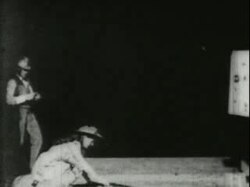
—Everyone tells the story of that day you hit 4,472 glass targets out of five thousand. And that ash on the Kaiser's cigar, in 1889?
The record, I didn't seek it for glory, but to prove a simple thing: a woman could keep up that pace all day without faltering, where they swore our nerves couldn't take it. Four thousand four hundred seventy-two out of five thousand doesn't come by luck; it's wrested through endurance. As for the German prince, much embroidery was done on that story of the ash I supposedly knocked off his cigar. You were there; you know what was true and what rumor exaggerated. I always preferred to let those legends run rather than correct them: they amused the public and filled the stands. But between us, I never liked pointing my gun at a living being, even a crowned one.
It doesn't come by luck; it's wrested through endurance.
—In 1898, on the eve of the war with Spain, you wrote to President McKinley offering a company of female sharpshooters. What did you really hope for?
I hoped they would stop believing a woman could only serve by bandaging the wounded. I proposed to the president to raise fifty lady sharpshooters, providing their own weapons and ammunition, ready to defend the country. I wasn't taken seriously, of course, and my letter went unanswered. But I wrote it in full awareness: I knew how to aim as straight as any soldier, and I wasn't the only one. You see, Frank, I spent my life teaching women how to handle firearms, thousands of them, not to turn them into warriors, but so that none would be helpless in the face of danger. A woman who knows how to defend herself walks taller in the street. That's what I wanted to slip to the president between the lines.
A woman who knows how to defend herself walks taller in the street.
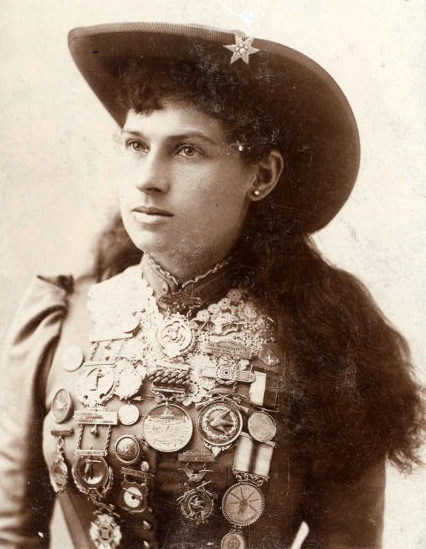
—You sewed your own costumes yourself, long skirts and gaiters, both practical and modest. Why were you so attached to that respectable lady look?
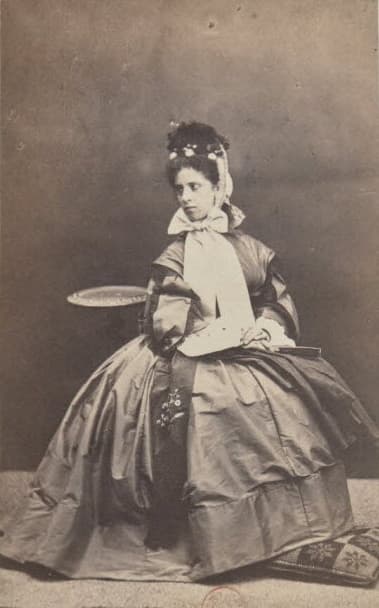
Because I was fighting two battles at once, Frank, and the second was won through my attire. A woman who shoots a rifle in front of crowds always risked being taken for a scatterbrain or worse. By sewing my skirts down to my calves, my gaiters, and my hats adorned with a star, I showed that one could master a man's sport without renouncing the expected decency. Every stitch was an answer to the gossips. I wanted mothers to bring their daughters to the show and say: here is an honest woman who excels. That was my way of pushing boundaries without loudly breaking them. They would have forgiven my skill less easily if I had given up my reserve. Modesty, for me, was not a constraint; it was a chosen armor.
Every stitch was an answer to the gossips.
—From 1903, you embarked on an endless battle against Hearst's newspapers, which had slandered you. Was it worth so many years of your life?
It was worth every day, every trip, every courtroom. Those papers had printed that I had been arrested for theft, that I had stolen to get cocaine — a lie from start to finish, spread across the country. Another woman would have kept quiet out of weariness. I sued nearly fifty newspapers, and I won most of those cases, one by one, city after city. They told me I was wasting my time and money; I answered that I was defending something greater than my purse. A woman's reputation, once dragged through the mud, can only be restored through stubbornness. You who saw me take the train tired for another hearing, you know it wasn't pride: it was justice.
A woman's reputation, once dragged through the mud, can only be restored through stubbornness.
—Here we are back in our native Ohio, far from the arenas. After all those tours and the 1901 accident, what do you remember from our long road?
I remember that we never really left those woods where it all began. The train accident broke my back and, they say, turned my hair white in a few hours; I was operated on many times, and yet I got back up to shoot, slower but still accurate. That is perhaps my true pride: not the records, but the fact that I got back up every time. We saw London, Paris with its brand new tower, the crowned heads of Europe, and yet I kept my frugal tastes of a Quaker farm girl. Fame did not change me, Frank; you made sure of that. What I wish for now is the calm of this veranda, your notebook lying there, and the thought that people will remember a woman who aimed straight in everything she undertook.
My true pride is not the records, but the fact that I got back up every time.
This imaginary interview was generated by artificial intelligence from sources documented in Annie Oakley's profile. It dramatises what the figure might have said based on what we know about them, but does not constitute attested historical testimony. For primary sources and factual documentation, refer to the full profile.