Imaginary interview with Annie Oakley
by Charactorium · Annie Oakley (1860 — 1926) · Performing Arts · Sports · Society · 6 min read

Autumn 1922. On the porch of a wooden house in Darke County, Ohio, a white-haired woman oils a gun barrel as others darn socks. She has put away the Wild West Show posters, but not her guns. She agrees to look back, for us, over sixty years of gunpowder and legend.
—Do you remember the day you first faced Frank Butler?
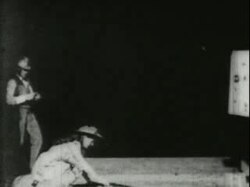
It was near Cincinnati, I was fifteen, a skinny kid fresh off the farm with her gun. This Frank Butler, a professional shooter, had bet a hundred dollars that no one in the county could beat him. He must have regretted letting a girl step up. We took turns shooting at released pigeons; he missed one, I missed none. I won by a single target, and believe me, it was the most profitable shot of my life. A humiliated man would have turned away; he courted me. We got married, and he put away his own gun to carry mine, announce me on stage, and manage my bookings. They say I married my opponent; I say I married the only man who wasn't ashamed to lose.
I won by a single target, and it was the most profitable shot of my life.
—How did a man beaten by his wife become her most loyal supporter?
Many don't understand how a man can hold the candle that his wife snuffs out with a bullet — because yes, Frank held between his lips the cigarette I shot off, night after night. It took a trust few couples know. He loaded my cartridges, sewed when my fingers couldn't manage, counted the receipts. In the showman business, the impresario usually takes everything and gives crumbs; Frank took half of nothing and left me the spotlight. For thirty years, he was my impresario and my assistant, never my master. When they ask me the secret of my career, I answer: a good eye, a good gun, and a husband who wasn't afraid to stand in my line of fire.
A husband who wasn't afraid to stand in my line of fire.
—Where does the nickname "Little Sure Shot" that has stuck with you come from?
In 1884, an old Sioux chief came to see me shoot. Sitting Bull — the man who had defeated Custer at Little Bighorn eight years earlier — was so struck by my accuracy that he wanted to adopt me in his own way, symbolically. He named me Watanya Cicilla, which the organizers translated as "Little Sure Shot." The name stuck to every poster. It's a strange thing, you know, that a victor of the Indian wars should baptize a white girl from Ohio in a show that reenacted his people's defeat every night. I kept that name without ever forgetting where it came from. On the track, we were figures; in the train car, we were two people whom life had led to an unlikely place.
A victor of the Indian wars baptized a white girl from Ohio.
—What did the Wild West Show represent for the public who flocked to see you?
Understand that the Frontier was closing beneath our feet even as we performed it. Hardly had the railroad stitched the country from ocean to ocean than Buffalo Bill was selling the West as a spectacle. People came to see cowboys, stagecoach attacks, Indians on horseback — and a woman in a long skirt who shot playing cards tossed in the air. They called a free ticket riddled with holes "an Annie Oakley," so much did my cards resemble punched tickets. In London in 1887, for the jubilee of Queen Victoria, then in Paris in 1889 under a brand-new iron tower, I shot before kings. They applauded a West that already existed only on lithographed posters.
They applauded a West that already existed only on the posters.
—How did you carve out your place in a sport that men considered theirs?
I never made speeches; I made numbers. One day, I hit 4,472 glass targets out of 5,000, launched in glass ball trap — count them, and then tell me a woman's wrist isn't worth a man's. I didn't ask to be believed capable; I showed it until doubt became ridiculous. I'm sometimes told it was just a carnival act; but a clay pigeon doesn't know the sex of who shoots it. Marksmanship grants no favors and asks none. All my life, I believed a woman didn't have to demand her place: she had to aim true, and let others make room.
A clay pigeon doesn't know the sex of who shoots it.
—Why did you offer President McKinley a company of female shooters?
In 1898, when war threatened with Spain, I wrote to President McKinley. I offered to put at his disposal "a company of fifty lady sharpshooters, who would supply their own arms and ammunition in case of war." I never got a reply, and I'm not surprised — the idea of a woman in uniform made the brass smile. But I firmly believed it: I taught shooting to thousands of women, convinced that each should be able to defend herself, without waiting for a man to do it for her. A well-held gun doesn't ask permission. My letter went unanswered, but it said aloud what I believe: a woman's safety belongs to her.
A well-held gun doesn't ask permission.
—In 1903, the Hearst press falsely accused you. How did you feel reading those articles?
They made me out to be a thief arrested to buy cocaine. A lie from start to finish — but printed, repeated from one newspaper to another in William Randolph Hearst's network, it ran faster than any of my bullets. I had spent my life riddling paper cards; now paper riddled me in turn. I could have kept quiet, let it pass. I didn't. I filed nearly fifty libel suits, from 1903 to 1910, and won the vast majority. It cost me more than it brought in, but money wasn't the issue. A woman's reputation is capital you can't repay; I defended mine, and a little bit of every other woman's.
I had spent my life riddling paper cards; now paper riddled me.
—Suing one of the most powerful men in America — wasn't that unreasonable?
Reasonable? Seven years of courts, train rides from state to state, lawyers more expensive than my guns — no, it wasn't reasonable. It was necessary. You see, a missed shot you can make up on the next target; a sullied reputation follows you to the grave if you don't clean it. Hearst's papers thought a showgirl wouldn't dare stand up to them. They aimed badly. I grew up in Quaker poverty in Darke County, where you neither lie nor steal, and a woman's honor is her word. I took that heritage before the judges. They thought I was only good for shooting off cigarette ashes; I showed I could also hold my ground.
They thought a showgirl wouldn't dare stand up. They aimed badly.
—What did a typical day on tour with the show look like?
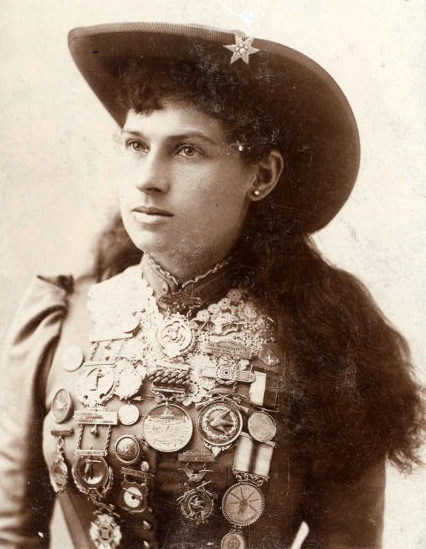
It started early, with the smell of oil and powder. First, my guns: I cleaned the barrels, checked every cartridge, loaded my own ammunition, because a misfire would ruin the act and no one else touched them. In the afternoon came rehearsals, sometimes two shows the same day. Between runs, I sat under the tent and sewed. I made my costumes by hand: skirt to the calf, gaiters, big hat with a star — enough ease to shoulder, enough modesty to be decent. At night, we took down that city of canvas and wagons and rolled to the next town. I read, wrote letters, embroidered in the swaying train. A star, they said; a seamstress who could shoot, I said.
A star, they said; a seamstress who could shoot, I said.
—Having known the courts of Europe, did you stay true to your humble origins?
I never forgot where I come from. Born Phoebe Ann Mosey in 1860 into a poor Quaker family in Darke County, I learned to shoot not for glory but to eat: rabbits, quail, partridge brought home, and hunting even paid off the mortgage on my mother's farm. That is the truth I wrote in my notebooks. Later, I dined among crowned heads, but my tastes remained frugal, my table simple. Luxury wears thin when you've known hunger; it never turned my head. They think a childhood of poverty makes you hard; it made me accurate. A child who must hit its prey on the first shot, or go hungry, learns a precision that no contest can teach.
A child who must hit its prey on the first shot learns a precision that no contest teaches.
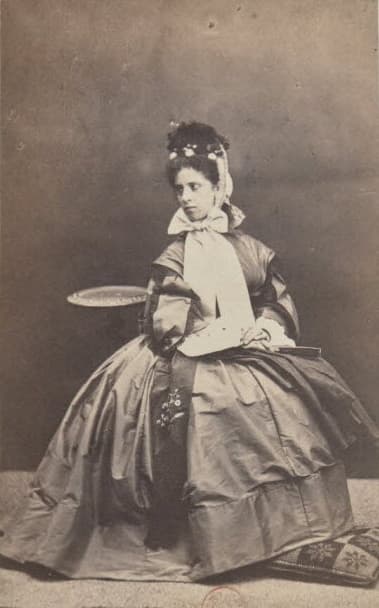
This imaginary interview was generated by artificial intelligence from sources documented in Annie Oakley's profile. It dramatises what the figure might have said based on what we know about them, but does not constitute attested historical testimony. For primary sources and factual documentation, refer to the full profile.