Imaginary interview with Ariel Sharon
by Charactorium · Ariel Sharon (1928 — 2014) · Military · Politics · 6 min read

Late afternoon at the Sycamore Farm, in the heart of the Negev. The old general receives in the warm dust of the desert, amid the smell of cattle and the distant rumble of his wars. He speaks low, but every sentence falls like an order.
—How did a farmer's son become one of the most offensive officers in his army?
I was born in 1928 in Kfar Malal, a village of earth and sweat where my parents, who came from Eastern Europe, grew citrus. There you learned to hold a hoe before you held a rifle. In 1948, when the state was born in fire, I was a young officer; I was severely wounded, left on the field for a long time, and that day I understood that survival was a matter of minutes and comrades. Five years later, I was entrusted with Unit 101. Our neighbors sent infiltrators to kill civilians at night; the army remained static on the defensive. I wanted a handful of men capable of striking beyond the border, fast, and returning. It was brutal, yes. But I believed that a people who had just escaped annihilation no longer had the luxury of waiting for blows without ever returning them.
—Did Unit 101 really change the way Israel waged war?
It changed a mindset before it changed a tactic. Until then, we wore the uniform of the IDF as one wears mourning: with dignity, but suffering. I wanted khaki to become a threat again. With Unit 101, then the paratroopers, I imposed the idea that you don't ask the enemy's permission to surprise him: you go find him at home. Many reproached me for my indiscipline, my orders taken alone, my habit of exceeding what was set for me. They nicknamed me the Bulldozer, and I never blushed at it. A bulldozer doesn't go around the obstacle: it goes through. This doctrine of movement and breakthrough I carried into the sands of Sinai, and it became, whether one likes it or not, a part of our army's character.
A bulldozer doesn't go around the obstacle: it goes through.
—Do you remember the night you led your men across the Suez Canal?
October 1973. The Yom Kippur War had begun with a slap: the Egyptians had crossed the Suez Canal, our lines were wavering, and at the rear they were already talking of catastrophe. I saw a gap between their two armies, a corridor to the water. I was ordered to wait; I pushed my tanks toward the breach. Getting armor across the canal on pontoon bridges under fire was gambling our existence on a throw of the dice. With my head bandaged after a forehead wound, I repeated to the crews that you don't cross a river halfway. We encircled their Third Army. What had started as a rout turned around. They called me a hero; I preferred to think I had simply refused to lose.
—The image of the general with the bandaged forehead remains famous. What did it represent for your soldiers?
That bandage was nothing but a clumsy dressing on a minor wound. But a soldier looks at his leader to know if he should be afraid. When they saw me, my head wrapped in gauze, standing on the bank of the Suez Canal, dusty like them, they understood that I didn't command from a map in the rear. I always thought a general must feel the same ground, the same heat, the same danger as his men. Later, they made that bandaged head an icon, put it on posters. I was a little wary of that: legends embellish what was only fatigue and chance. But I won't deny that in the Yom Kippur War, a bandage sometimes served as a speech. Men follow what they see, not what they are promised.
—In 1982, as Minister of Defense, you led the invasion of Lebanon. How did you justify this war?
In 1982, our northern border lived under threat: rockets, attacks, an armed organization installed just across. As Minister of Defense, I wanted to drive it out once and for all, push it far away, to Beirut if necessary. I believed a clean blow would be better than a wound that festers for years. We entered Lebanon. But a war launched to be brief bogged down in a fractured country I knew poorly, among militias, clans, and ancient vendettas. There I learned, in pain, that a tank can cross a border but no tank alone has ever understood a people. The Sinai can be crossed; Lebanon, however, holds you back. It is the campaign I speak of least willingly, and you can guess why.
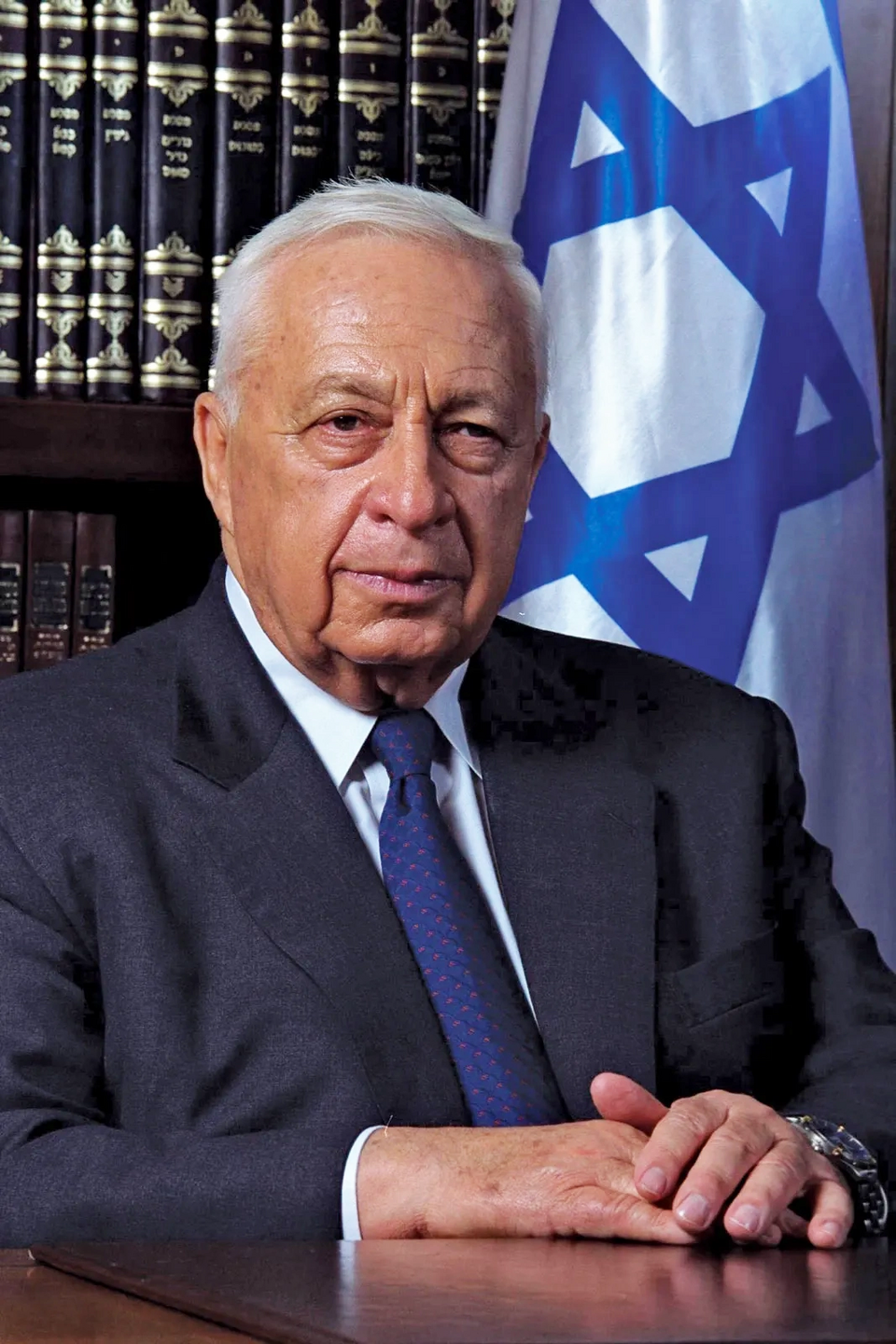
—The massacres at Sabra and Shatila durably tarnished your name. Do you bear a part of that tragedy?
Those days of September 1982 are a wound that time has not closed. In the camps of Sabra and Shatila, Lebanese militias massacred civilians. It was not my soldiers who held the knives — I said it, I maintain it. But the Kahan Commission judged that, as Minister of Defense, I should have foreseen what those men were capable of, and that I had not anticipated it. I was stripped of my portfolio. I lived that as an injustice and, at the same time, as the price of a function: he who commands also answers for what he failed to prevent. Many thought my career ended there. They were wrong. But I never claimed that those deaths weighed lightly on my memory.
He who commands also answers for what he failed to prevent.
—Far from the battlefields, you had a farm in the Negev. What did you seek there?
Silence, first. My Sycamore Farm, in the Negev desert, was my true home, far more than the official residences in Jerusalem. There, I rose with the animals, climbed on a tractor, walked on lands that the desert still disputes with man. They called me the Bulldozer, the man of iron, the general without nerves — and yet nothing calmed me like the smell of a herd at dawn. My parents had passed on this love of the land at Kfar Malal, and I think I never stopped being that farmer's son disguised as a soldier. In the evening, when state affairs allowed, I returned to the Negev to escape the pressure. A man who plowed so many battlefields surely needed a field where one sows for real.
—You are described both as a man of iron and a bon vivant. Did these two Sharons ever meet?
They dined at the same table, believe me. I loved good food, hearty dishes, hummus, meats, our salads — and my figure didn't hide it. A man who has known the hunger of night marches and the fear of fire learns to savor a full plate and a quiet evening. At the Sycamore Farm, I received guests, talked about my cattle more willingly than about politics. This earthy side disconcerted those who expected only hardness from me. But I never separated the two: it is the same appetite that made me love life and want to defend it. They nicknamed me the Lion of God, because Ariel means that in Hebrew; a lion eats, sleeps in the sun, and pounces when necessary. I never felt obliged to choose.
—In 2005, you, the ardent defender of settlements, ordered the withdrawal from Gaza. How did you get there?
All my life, I had encouraged the settlements; I had helped families build homes in the territories, brick by brick. And then it was I, in 2005, who ordered the evacuation of every settler and every soldier from the Gaza Strip. Understand: a leader does not serve his habits, he serves the security of his people. I looked at that small overcrowded strip, that permanent point of friction, and I judged that we were wearing out our forces there for almost nothing. I wanted, as I said then, to minimize friction between Israelis and Palestinians. I was called a traitor, in my own camp, by those who had acclaimed me. But I never confused fidelity to an idea with stubbornness. I had built; I could, if necessary, undo with my own hand.
I never confused fidelity to an idea with stubbornness.
—That decision cost you your party. Why found Kadima rather than bend?
The Likud, I had served it, I had embodied it. But after the withdrawal from Gaza, it no longer followed me; it wanted a leader of yesterday, not a man who moves forward. So I did what I have always done in the field: when the road is blocked, you open another path. I founded Kadima, which means "Forward" in Hebrew — the name was no coincidence. I wanted a centrist party, rid of old dogmas, capable of drawing borders and finally living without war. I didn't have time. In 2006, illness seized me mid-sentence, so to speak, and plunged me into a long sleep. A man who spent his life in motion suddenly stopped. If I have one thing left to say: never confuse strength with stillness.
This imaginary interview was generated by artificial intelligence from sources documented in Ariel Sharon's profile. It dramatises what the figure might have said based on what we know about them, but does not constitute attested historical testimony. For primary sources and factual documentation, refer to the full profile.