Kids interview Aristotle
by Charactorium · Aristotle (460 av. J.-C. — 401 av. J.-C.) · Philosophy · Sciences · 5 min read
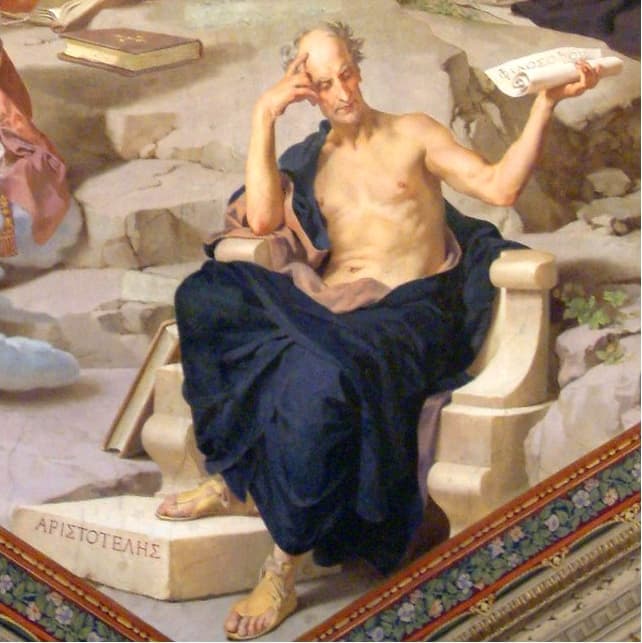
Two twelve-year-olds are on a school trip in Athens, notebooks in hand. Their teacher has sent them to meet someone unusual — a man who spent his entire life asking questions. Aristotle is waiting for them in the shaded walkway of the Lyceum, adjusting one of his rings.
—How old were you when the king asked you to teach his son Alexander?
I was about forty years old when King Philip II of Macedonia sent for me. He wanted a serious teacher for his son, not a flatterer. I traveled to a place called Miéza — a peaceful sanctuary surrounded by gardens and cool shade. Young Alexander was thirteen. He was curious, quick, a little stubborn. We walked and talked together, reading poetry, studying plants and animals, discussing how a good ruler should think. I taught him for about three years. You know, there is no greater task than helping a young mind grow — even when that mind will one day command armies.
—Were you scared when you had to leave Athens after Alexander died?
Yes — and frightened too, though I do not like to admit it. When Alexander died in 323 BC, anger swept through Athens. People blamed anyone who had been close to him. I was accused of impiety — that means not respecting the gods properly. But I had watched what happened to Socrates, condemned to drink poison on the same kind of charge. I was not going to let this city make that same mistake twice. So I gathered my scrolls and left for Chalcis. It was not cowardice. It was grief — and a quiet decision to stay alive.
I would not let Athens sin twice against philosophy.
—Why did you teach while walking instead of just sitting at a desk?
I had noticed something very simple: when the body moves, the mind moves too. The shaded walkways of the Lyceum were called the peripatos in our language — the walking path. My students strolled beside me, and somehow the ideas breathed better in the open air. We were not seated judges deciding who was right. We were travelers, thinking together step by step. My followers were later called Peripatetics — the walkers — because of this. I still believe the best thoughts come when you are moving, not stuck in one spot.
When the body moves, the mind moves too.
—What was your school like — did you really have lots of books?
The Lyceum was more than a school — it was a place to collect and sort the world's knowledge. We had a great library, one of the very first in Greece. Imagine a long room filled with rolled papyrus scrolls — each one recording a different animal, a law, a poem, a kind of government. My students used wax tablets and a small pointed stick called a stylet to take notes as we walked. We also kept sea creatures, dried plants, shells — specimens I had brought back from my travels. I wanted to understand everything. That may have been a little ambitious.
—Did you really cut open sea creatures to study them? Wasn't that disgusting?
I understand that reaction — I heard it from my students too! But here is what I discovered: when you hold a creature and look inside it, really look, you see things no one has ever described before. On the island of Lesbos, I spent months studying animals in the lagoon of Pyrrha. I was especially fascinated by cephalopods — creatures like the octopus, with arms where other animals have fins. I wrote in my Historia Animalium that one should approach the study of each animal without repugnance, for in each there is something natural and beautiful. I believed that then. I believe it now.
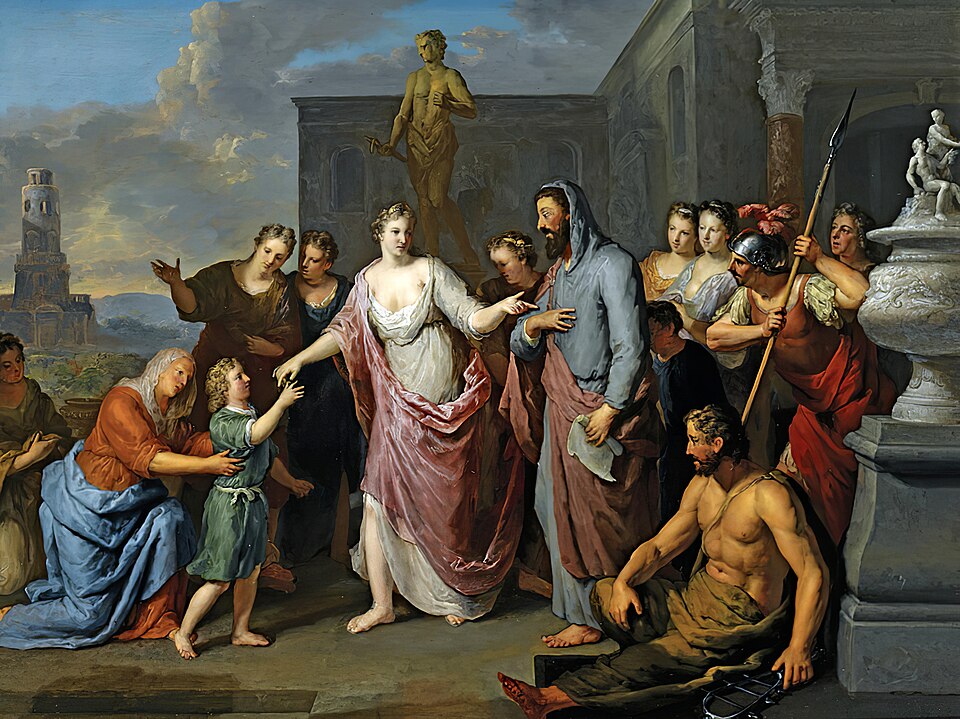
—What was the strangest creature you ever found on that island?
The octopus, without question. Eight arms, no bones — and it changes color when it is alarmed. I watched them hunt in the shallow water of Lesbos and described their insides carefully: the ink pouch, the suckers, how they breathe. Many people thought I was wasting my time on slimy sea creatures. But much later — long after my death — scholars confirmed that my descriptions were remarkably accurate. That tells you something important: careful observation, written down with patience, outlasts any clever idea invented without ever leaving your chair.
Careful observation outlasts any clever idea invented without leaving your chair.
—You weren't really a full citizen of Athens, were you? How did that feel?
You have spotted something important. I was born in Stagira, far to the north — so in Athens I was a metoikos, a resident foreigner. I could live here, open a school here, teach here — but I could not vote, and I could not own land. My house was rented. The ground beneath the Lyceum was not mine to keep. It is a strange feeling: to love a city, to help shape how people think about it, and yet to stand just outside its walls. Perhaps that distance made me see the city more clearly than those who were born inside it.
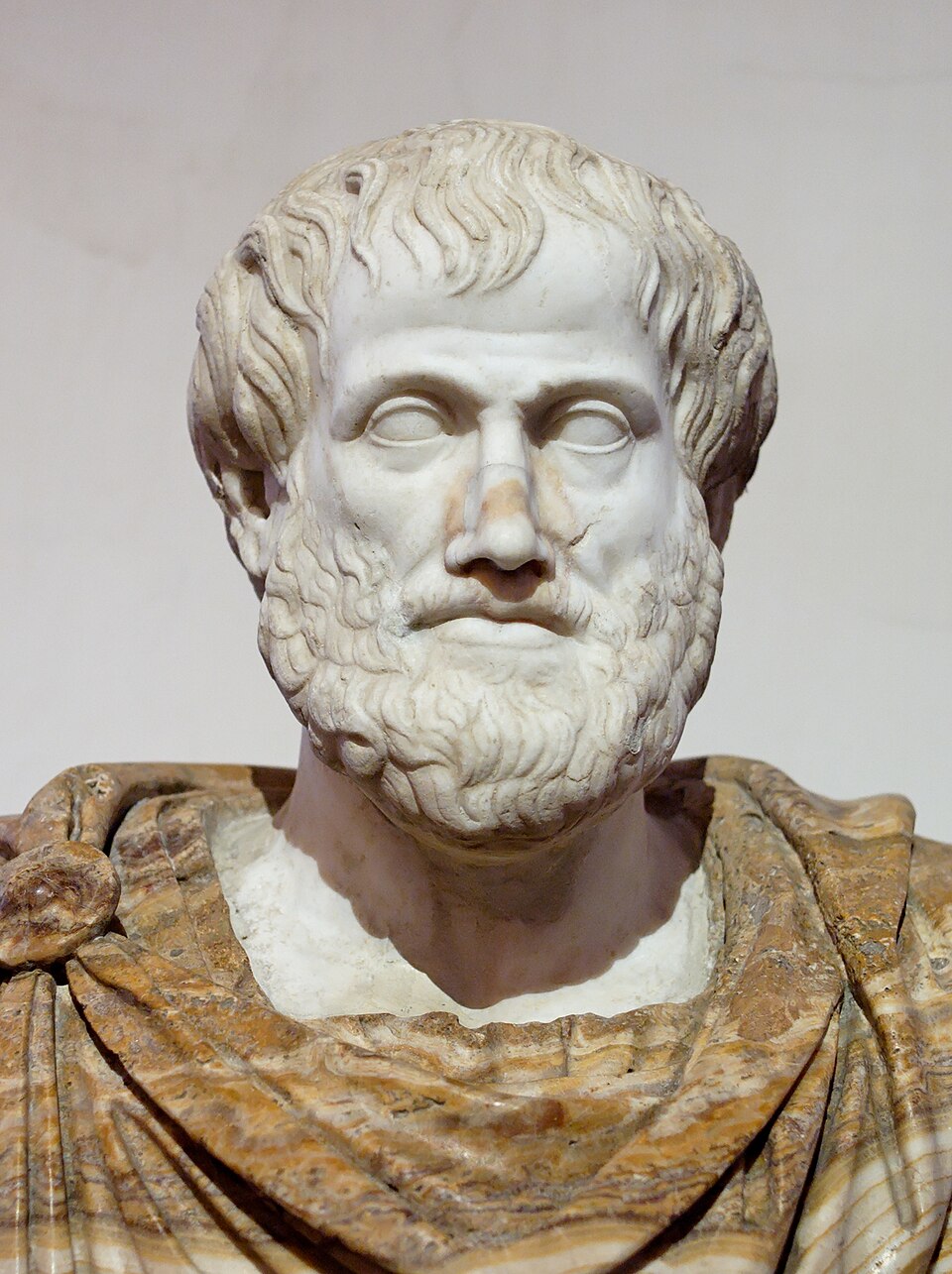
—You said people can't be truly human without a city — but you couldn't even vote in Athens. Did that feel strange?
It did — and it made me think harder. In my Politics, I wrote that man is by nature a political animal, meaning we only become fully ourselves inside a community with shared laws and customs. But I, the man who wrote those words, could not cast a vote in the city I called home. So I studied every kind of city I could find — over a hundred and fifty different constitutions from across the Greek world. I wanted to understand what makes a community truly just. Perhaps I searched so hard precisely because I was never fully let inside.
—Your book on happiness — the one you wrote for your son — what is the best thing it says?
I did not want to write a list of rules. I wanted to show something true: that happiness — what we call eudaimonia — is not a feeling that falls on you from the sky. It is something you do, every day. Imagine a flute player who owns a beautiful flute but never practices. They are not yet a musician. Happiness works the same way — it comes from using your best qualities in action, day after day. I dedicated that book to my son Nicomachus because I wanted him to understand: living well is not luck. It is a skill you build, slowly, like any other.
—Was it hard to write about happiness when sad things happened in your own life?
That is perhaps the wisest question you have asked me today. My first wife, Pythias, died while she was still young. In my testament — a letter written before my own death — I asked that her bones be placed beside mine when I was buried. That is what love looks like in its quietest moments. I left Athens twice, lost my teacher Plato, and was chased away by people I had lived among for twenty years. But eudaimonia does not mean a life without grief. It means keeping the best of yourself alive inside that grief. That is what I tried to give my son — not comfort, but courage.
Read further
This imaginary interview was generated by artificial intelligence from sources documented in Aristotle's profile. It dramatises what the figure might have said based on what we know about them, but does not constitute attested historical testimony. For primary sources and factual documentation, refer to the full profile.