Imaginary interview with Arthur Rimbaud
by Charactorium · Arthur Rimbaud (1854 — 1891) · Literature · 6 min read
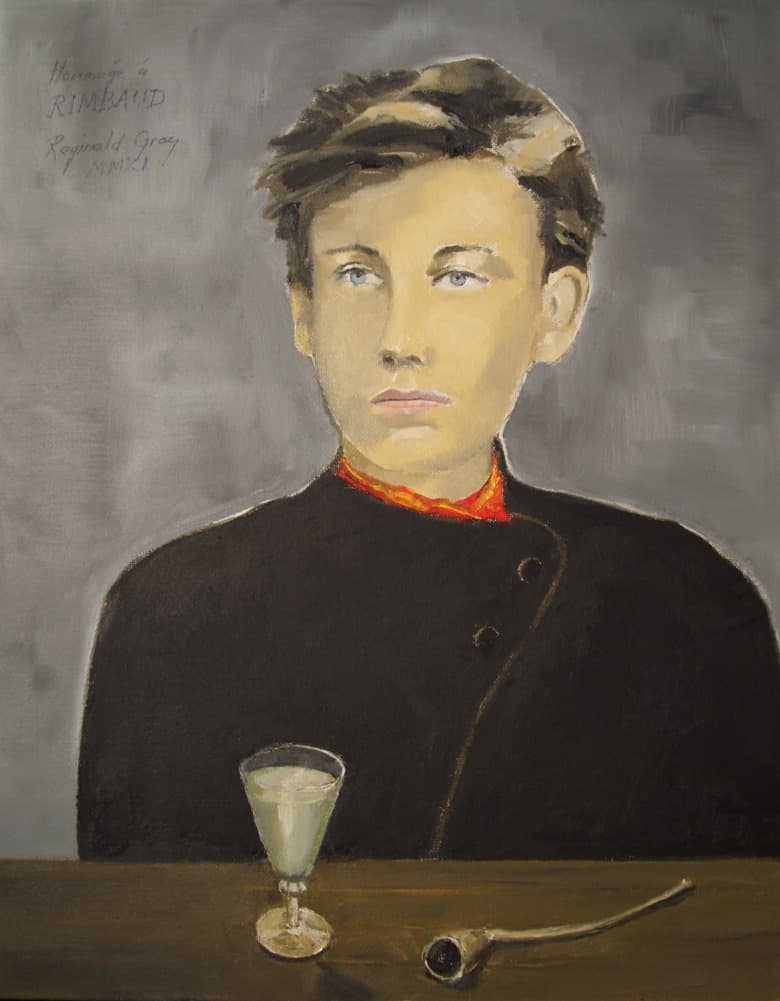
Harar, one evening in 1885. In a stone house in the old fortified city, a thirty-year-old man keeps his accounts by lamplight, his merchant's scale stored near the trunks. Nothing suggests that he was, ten years earlier, the enfant terrible who set French poetry ablaze. Tonight, he agrees to retrace the thread.
—You were sixteen when the war fell upon the Ardennes. How did that moment nourish your first verses?
I was sixteen, and the Prussians occupied Charleville — that town I called Charlestown, with all the contempt a boy can muster. On the roads of the Ardennes, you came across uniforms, convoys, and sometimes, in a hollow of grass, a man lying down who would never get up again. That's where The Sleeper in the Valley came from: a soldier who seems to sleep in the sun, his neck in the watercress, and then those two red holes in his right side that you only discover in the last line. I didn't mean to write a war poem; I wanted you to caress the light before stumbling upon death. Nature was beautiful and indifferent, she cradled that corpse like a mother lying to her child. At that age, you learn quickly that beauty consoles nothing.
—Before conquering Paris, you arrived there in the worst possible way. What happened?
By fifteen, I couldn't sit still. One day, I jumped on a train to Paris without a cent for the ticket — they picked me up at Gare du Nord like a vagabond and threw me into Mazas prison, until my teacher Izambard came to pay my ransom. But Paris was already burning in me. I came back later with, in my pocket, a hundred verses written without ever having seen the sea: The Drunken Boat. Imagine it — a kid from the Ardennes, a thousand leagues from any ocean, sending a ship down the impassive Rivers, freed from its haulers. That was my calling card. The Parisian poets wanted genius? I brought them an entire sea that I had invented only in my head.
—They say your entry into Parnassian circles was anything but discreet. How did you introduce yourself to those established poets?
Ah, that dinner of the Parnassians, in 1871... Verlaine had introduced me into that coterie of well-groomed gentlemen who recited their verses as if incensing an altar. I found it deadly solemn. So, at every alexandrine declaimed with unction, I let out a loud "Merde!" as punctuation. You should have seen their faces! Those temple guardians, scandalized by a sixteen-year-old provincial with too-thin wrists and muddy soles. They took me for a savage. Perhaps I was. But I hadn't walked dozens of kilometers on the roads to come and sit quietly and applaud art for art's sake. The Parnassus wanted perfection; I wanted the blaze.
The Parnassus wanted perfection; I wanted the blaze.
—In your letter to Paul Demeny, you formulate a true theory of the poet. What exactly were you trying to say?
In May 1871, I wrote to Paul Demeny a letter where I believe I said the essential of what I was seeking. "I say that one must be a seer, make oneself a seer. The Poet makes himself a seer by a long, immense, and reasoned derangement of all the senses." Understand well: it is not about gratuitous delirium. The word counts — reasoned. I wanted to disturb the order of my perceptions methodically, to traverse "all forms of love, suffering, madness," to reach the unknown and bring something back. The poet, in my view, is not a pretty maker of rhymes: he is an explorer who ventures where ordinary reason no longer leads, even if it means burning his soul there.
—In Vowels, you assign a color to each letter. Should we see a system there, or something else?
Take my sonnet Vowels. I give each letter a color: A black, E white, I red, and so on. Much has been glossed over this, people have looked for learned systems. The truth is simpler and madder: I actually saw sounds, the letters had for me a grain, a tint, a flesh. That is what it means to be a seer — to let the senses mingle and respond to each other. Later, in Illuminations, I broke even the mold of verse, I wrote in prose, in free verse, because vision does not fit into the count of syllables. The classical form, the sonnet that I mastered nonetheless, became a cage. I wanted a new language for things that no one had yet named.
I actually saw sounds: the letters had for me a grain, a tint, a flesh.
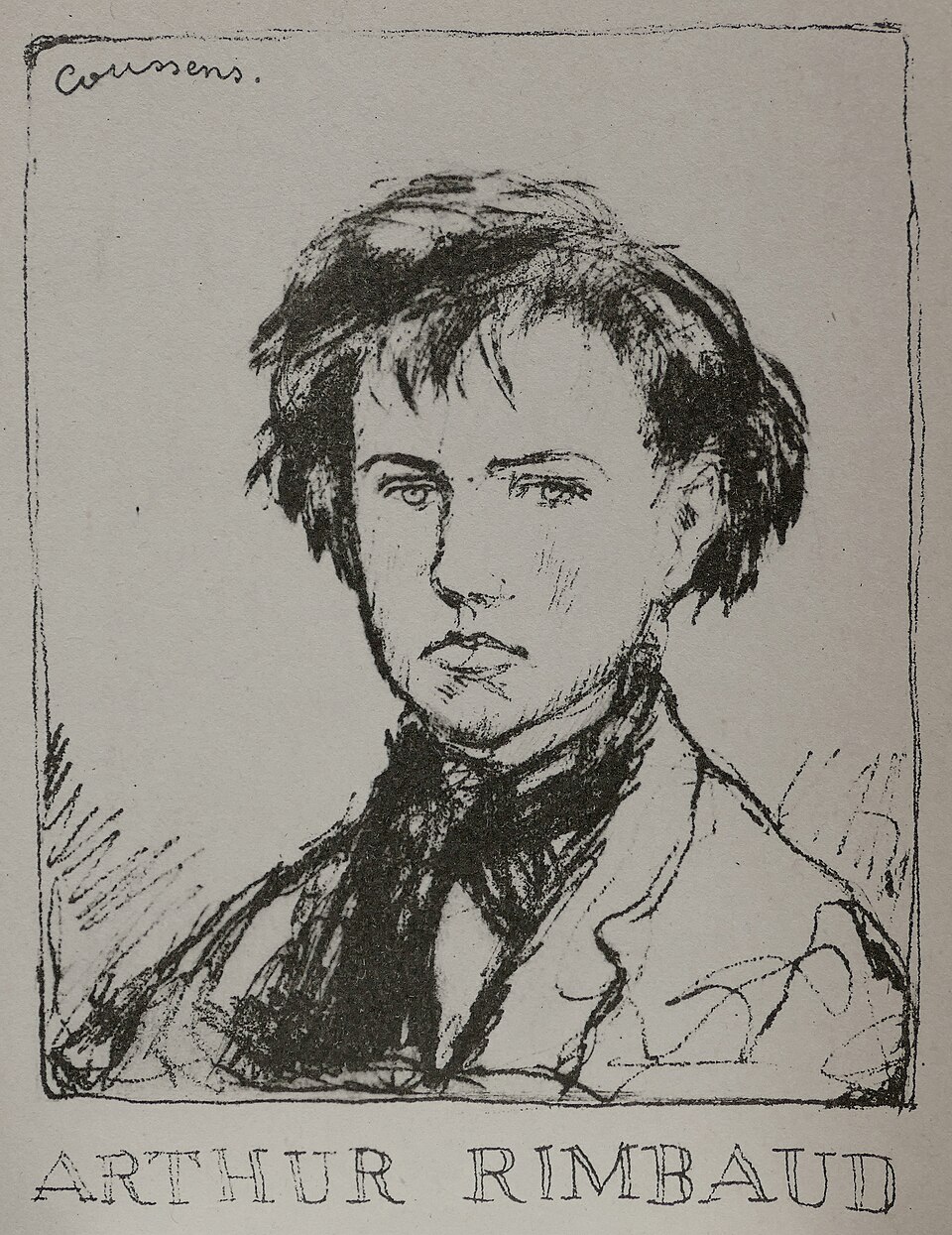
—Your meeting with Verlaine changed everything. How would you describe those two years spent together?
Verlaine... I had sent him my poems from Charleville, and he replied that I should come, that they were waiting for me there as a great soul. I came. We burned nearly two years together, starting in 1872 — Belgium, then London, where we lived on almost nothing, walking for hours, drinking absinthe and tearing each other apart. He nicknamed me "the man with soles of wind," and it was true: I could not stay put anywhere, and he could neither keep me nor let me go. Our friendship was a storm that never fully broke. Two men who loved and hated each other with the same fury — that could not end gently.
—That relationship ended in violence in Brussels. What remains of that summer?
July 1873, Brussels, a hotel room. I wanted to leave, to end this impossible life. Verlaine, drunk and desperate, pulled out a revolver and fired — two shots, one hit me in the wrist. We ended up at the station, him in prison. That is where our love led: to a bullet and handcuffs. I went back to hole up at the farm in Roche, in the Ardennes, and it was there, that summer, that I wrote A Season in Hell — the only book I published by my own hand, in my lifetime. I settled my accounts there: with Verlaine, with poetry, with myself. "I who called myself mage or angel, dispensed from all morality, I am returned to the soil, with a duty to seek, and rugged reality to embrace." Everything was already there.
That is where our love led: to a bullet and handcuffs.
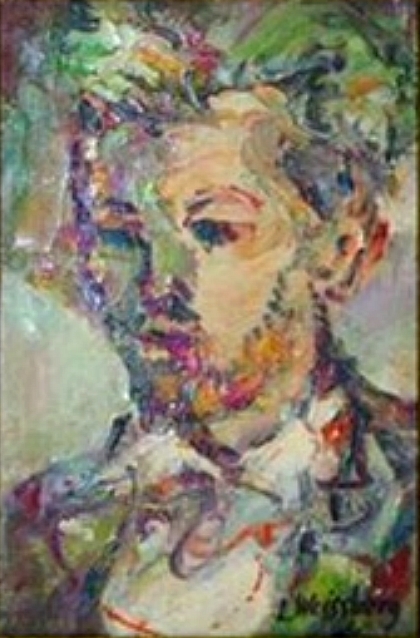
—While you were writing, Paris was in flames. What did the Commune mean to you?
In the spring of 1871, while Paris was rising up, my heart was with the insurgents. The Commune, for the kid I was, was not the disorder denounced by right-thinking newspapers: it was a people who dared to govern themselves, sweep away the masters, invent something else. I dreamed of it from Charleville, I saw in it the dawn of a world washed of its old hypocrisies. When you are sixteen and suffocating under bourgeois order, under the church, under school, under a mother who counts every penny, an insurrection looks like a promise. It was crushed in blood, of course. Free things almost always end up shot against a wall. But that blaze marked me: I understood that I would always be on the side of what burns, not what tidies up.
—At twenty, you abandoned everything. How does one go from poem to merchant's scale?
Around twenty, I put down the pen. Not out of spite — out of disgust for a certain lie. Literature no longer satisfied me, or rather I had nothing more to ask of it. So I walked south, ever further, all the way to Harar, in Abyssinia. There I became a merchant: I buy and sell coffee, hides, I weigh the sacks on my scale, I keep my accounts to the last cent. My days now smell of grain and dust, not ink. I order my goods in trunks, I organize caravans across the desert. Parisians may still think of me as a poet, or dead — me, I am just a man doing trade in the Horn of Africa, who writes nothing but business letters and complaints to his family.
—People were beginning to celebrate your work in France. Did you know that, over there, in your exile?
You speak to me of glory? In Harar, I knew nothing of it. While over there, in France, they were printing my verses — Verlaine even published my Illuminations without asking my opinion, believing me dead — I was sinking into a bottomless boredom. I wrote to my family in 1885: "I am very bored, always; I have never even known anyone who was as bored as I am." This existence without family, without occupation for the mind, weighed on me like a stone around my neck. Such is the irony of my life: they were crowning me a poet in Paris when I was no longer, in my own eyes, anything but a tired merchant dreaming of saving enough to return one day. A man's fame often arrives when he has ceased to be the one being celebrated.
They were crowning me a poet in Paris when I was no longer, in my eyes, anything but a tired merchant.
This imaginary interview was generated by artificial intelligence from sources documented in Arthur Rimbaud's profile. It dramatises what the figure might have said based on what we know about them, but does not constitute attested historical testimony. For primary sources and factual documentation, refer to the full profile.