Imaginary dialogue between Paul Verlaine and Arthur Rimbaud
by Charactorium · Arthur Rimbaud (1854 — 1891) · Literature · 5 min read
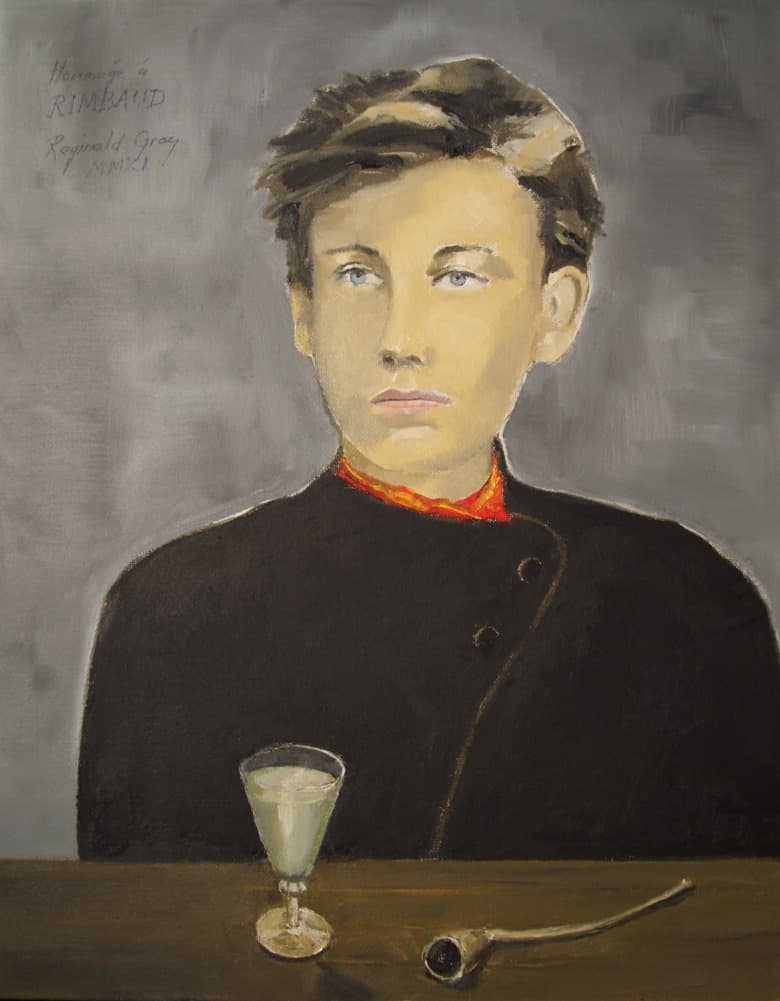
It is in a white room of the Hôpital de la Conception, in Marseille, that one autumn in 1891 Paul Verlaine finds again the friend he thought lost at the ends of Africa. The southern light falls oblique on the sheet, on the leg that is no more. Fifteen years have passed since Stuttgart, since the gunshots of Brussels, since they loved and tore each other apart in London lodgings. Verlaine comes without reproach, only to understand the one who at sixteen was the greatest and who, at twenty, fell silent.
—Arthur, when you recited Le Bateau ivre to me in Paris in 1871, I thought a sailor was speaking. How did you, the child of the Ardennes, write a hundred lines of ocean?
You who grew pale listening to me, Paul, you know well that I had never seen the sea then. In Charleville, I had only the muddy Meuse and the library where I devoured atlases and travel tales. The sea, I invented it truer than the real — the impassive rivers, the gaudy Redskins, I drew them from myself. I was sixteen and had a rage to leave that was worth all the tides. My Bateau ivre was my calling card thrown in the face of your stiff Parnassians. The poem preceded experience: I sailed before embarking. Later I saw a hundred oceans for real, and none was as stormy as the one I wrote without leaving my room.
The poem preceded experience: I sailed before embarking.
—You wrote Le Dormeur du val and Ma Bohème at sixteen too. Where did this precocity come from that crushed all of us, your elders?
Precocity, you say? I would rather say urgency. Le Dormeur du val, I composed it in 1870, when the Prussians were marching on the Ardennes and they were picking up dead soldiers in the grass. That young man with two red holes in his right side, I saw him in thought so clearly that the ending imposed itself. Ma Bohème was my runaways put into sonnet — my fist in my torn pockets, the stars for an inn. I did not work like you, filing the rhyme for months. Everything came out at once, burning. At that age, I was not afraid to write false: I cut into the language as into raw flesh. Youth was my only method, and I burned it quickly.
I cut into the language as into raw flesh.
—You once spoke to me of the poet-seer. In your letter to Demeny, in May 1871, you wrote that one must become a seer. What did you mean by that?
I meant what I wrote in black and white: the Poet makes himself a seer by a long, immense and reasoned derangement of all the senses. Understand the word reasoned well — it was not about stupefying oneself stupidly, but about forcing in oneself all forms of love, suffering, madness, to reach the unknown. The poet had to descend lower and rise higher than any man, even at the cost of losing himself. I wanted a language of the soul for the soul, which sums up everything — perfumes, sounds, colors. You others made pretty verses; I wanted to change life. It was a mysticism and a program. I believed in it until I burned my wings, and you saw, better than anyone, where that fire led me.
The poet had to descend lower and rise higher than any man.
—Do you remember the dinner of the Parnassians where I had introduced you? You punctuated their verses with a word that made them blanch. Why this provocation?
How could I forget — it was you who dragged me there, proud of your find from the Ardennes. Those gentlemen read their booming verses, and I, a sixteen-year-old kid, let out my "Shit!" at every well-measured foot. They were scandalized, these poets in vests who took art for a salon decoration. I had neither their fortune nor their manners, and I did not want their respectability. Their formal perfection stank of the embalmer. I arrived dirty, hungry, with poems worth a thousand times their polished sonnets, and I knew it. Provocation was my only weapon as a poor man. You were laughing in your corner, you — you had already understood that I had come to break everything.
Their formal perfection stank of the embalmer.
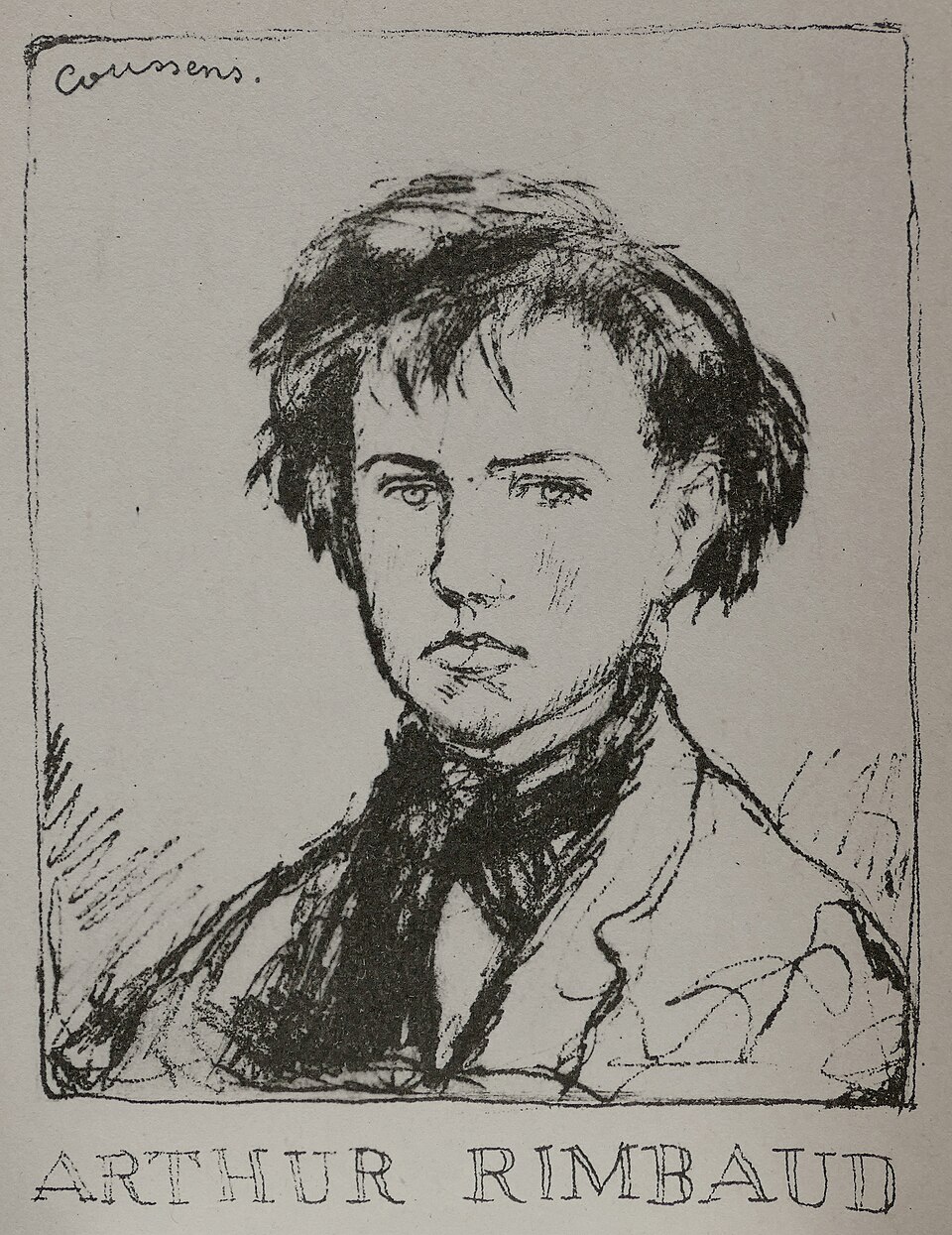
—Brussels, July 1873... that revolver. I have never spoken of it since. What remains in you of our season together, of London and Belgium?
Everything remains, and nothing remains. We were two magnificent damned souls, Paul — you the fleeing husband, I the rascal who pushed you ever further. London in the fog, our icy rooms, the quarrels and reconciliations: it was a season in hell, and I gave that title to my book. That shot at your wrist, pardon, at my wrist — I carried it like a wound and like a farewell. I do not hold it against you. We loved each other too much to stay wise, and not enough to save ourselves. You left wife and fortune to follow me; I led you to the prison of Mons. When I saw you one last time in Stuttgart in 1875, my mind was already elsewhere. Poetry and you, it was the same story ending.
We loved each other too much to stay wise, and not enough to save ourselves.
—Before all that, you were constantly fleeing your Charleville that you called "Charlestown". That first runaway at fifteen, stopped at Gare du Nord — tell me about it.
Ah, Charleville, my native prison! A stupid, clean town, where my mother reigned like a barracks and where I suffocated between good manners and mass. At fifteen, I could not take it anymore: I jumped on a train for Paris without a penny. They picked me up at Gare du Nord, lacking a ticket, and threw me into Mazas prison like a vagabond. It was my teacher Izambard who came to get me out — the only man who understood me in that hole. That runaway was the first of a long series: from then on I never stopped leaving. Walking, fleeing, starting over. My mother locked me up; the roads opened their arms to me. I had wind-blown soles long before you saddled me with that name.
My mother locked me up; the roads opened their arms to me.
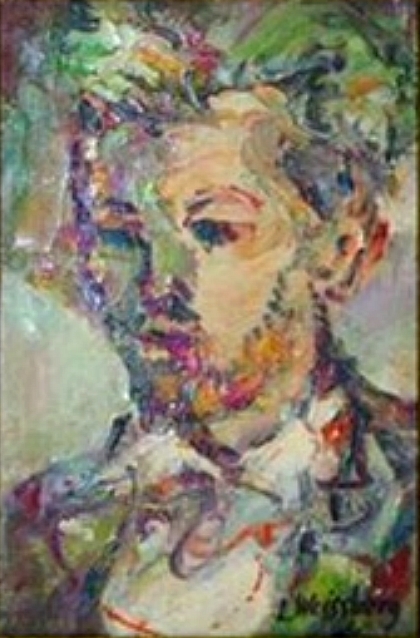
—That nickname, "the man with wind-blown soles", I gave it to you myself. That perpetual walking, where did it come from, my friend?
From the impossibility of staying. You saw it well, you who struggled to follow me on the roads of the Ardennes and Belgium — I could swallow thirty, forty kilometers on foot without fatigue, just for the pleasure of being nowhere. Walking was my true poetry, the one that is not written. As long as I moved, I was free; still, I suffocated. As a child I already ran away; as a man, I walked across the Alps, to Vienna, to the South. That wind under my soles carried me further than you imagined — far beyond Europe. You thought I was fleeing something; in truth I was running toward an elsewhere that perhaps did not exist.
Walking was my true poetry, the one that is not written.
—And then you fell silent. At twenty, not a single verse more. You were known as a trader in Harar, in Africa. How could you abandon the gift the gods had given you?
You ask the question that all Paris asks, and which I find pointless. Poetry, I wore it out to the bone, I had nothing more to get from it. So I changed my life like one changes a shirt. In Harar, I became a merchant: coffee, hides, gums, whatever you like. I weighed my bales on the scale, I kept my accounts, I organized caravans across the desert. Do you think I regret my Illuminations that you published without consulting me? No. I earned my living by sweat, in a burning country, among real men. You, back there, thought me a genius or dead; I counted my thalers. Literature? A youthful absurdity I was ashamed of.
Poetry, I wore it out to the bone, I had nothing more to get from it.
—In your letters to your family from Harar, you said you were bored like no one else. Was that adventurer's life really worth the exile and solitude?
I was bored to death, it is true, and I wrote it bluntly to my family. A life without family, without intellectual occupation, among fools and fevers — what misery, sometimes. And yet I would not have returned for an empire. I thirsted for horizons that France could not give me. I saw lands where no European had set foot, Harar, the country of the Gallas, roads you cannot even dream of. I had a camera sent to me to capture those faces and stones. Solitude was the price of that freedom. See where it led me: on this bed, one leg less, body consumed. But if I had to do it again, Paul, I would leave again. Immobility would have killed me faster.
I thirsted for horizons that France could not give me.
This imaginary interview was generated by artificial intelligence from sources documented in Arthur Rimbaud's profile. It dramatises what the figure might have said based on what we know about them, but does not constitute attested historical testimony. For primary sources and factual documentation, refer to the full profile.